

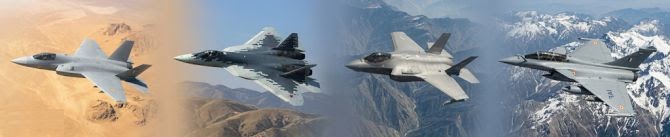
The F‑35 offers unmatched stealth and NATO interoperability, the Su‑57 provides affordability and payload flexibility with Russian ties, while the AMCA promises sovereignty but is years away from operational readiness.
India’s proposed acquisition of 114 Rafale fighter jets has slowed due to disagreements over system-level access. New Delhi insists on full operational control, particularly to integrate indigenous weapons such as the BrahMos and Astra missiles.
France has resisted, citing concerns over sensitive software exposure, especially given India’s defence cooperation with Russia. Without this access, India would remain dependent on French-certified weapons, limiting flexibility and raising costs. The issue has not yet been resolved despite Indian assurances that no third-party sharing would occur.
The Rafale deal is vital because the Indian Air Force currently operates only 29 squadrons against a sanctioned strength of 42, leaving a significant gap. The Rafale has already proven itself in Ladakh, Siachen and Rajasthan, offering reliable 4.5‑generation performance. Its cancellation would therefore create immediate capability shortfalls in a two‑front environment against China and Pakistan.
If the Rafale deal collapses, India’s alternatives are constrained. The F‑35 Lightning II, a fifth‑generation stealth aircraft, offers advanced penetration and precision strike capabilities but carries limitations in payload and multi‑role versatility compared to Rafale.
Moreover, U.S. export conditions and interoperability requirements could restrict India’s operational independence. The Su‑57E, Russia’s fifth‑generation fighter, provides stealth, super‑manoeuvrability and heavy payload capacity, but procurement risks include sanctions under CAATSA and dependence on Russian supply chains.
India’s indigenous AMCA program, approved in 2024, aims to deliver a prototype by 2032, but delays mean it cannot fill the immediate gap. While it promises sovereignty and stealth, it is not yet available for frontline deployment.
Meanwhile, India continues to rely on the Sukhoi‑30MKI fleet of around 250 aircraft, undergoing upgrades under the ‘Super Sukhoi’ program.
Indigenous projects like the TEJAS MK-1A face delays due to engine supply issues, with only about 30 aircraft ready but awaiting engines. The TEJAS MK-2, designed as a more advanced 4+ generation fighter, is also behind schedule. These delays compound the urgency of securing a proven platform in the near term.
Strategically, China has expanded its fleet with stealth aircraft such as the J‑20 and J‑35, while Pakistan is expected to induct the J‑35. This regional context intensifies pressure on India to maintain parity.
The Rafale deal was seen as a critical bridge until AMCA matured, but if it collapses, India may be forced into a hybrid solution—accelerating indigenous production, upgrading existing fleets, and considering limited imports of fifth‑generation fighters.
The negotiations with France remain pivotal. A compromise that balances India’s demand for operational sovereignty with France’s concerns over technology exposure would secure the Rafale’s role in India’s medium‑term air power roadmap.
Failure, however, could push India towards a split procurement strategy involving the F‑35 or Su‑57, while simultaneously fast‑tracking AMCA development.
Zee News
