

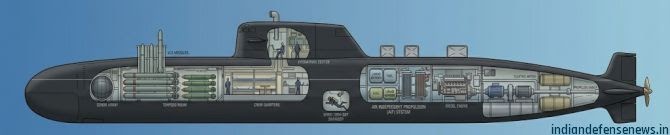
India’s Project-76 submarine program represents a decisive leap in indigenous naval capability, combining Air Independent Propulsion, lithium-ion batteries, advanced stealth, and Vertical Launch Systems to replace the ageing Kilo-class fleet.
The initiative is expected to deliver twelve hunter-killer submarines by the mid-2030s, significantly enhancing India’s deterrence and strike power in the Indian Ocean.
India’s Project-76 is a flagship initiative aimed at developing a new generation of diesel-electric hunter-killer submarines to replace the ageing Sindhughosh-class (Kilo-class) boats. The program is led by the Warship Design Bureau and the Defence Research and Development Organisation, with a strong emphasis on self-reliance under the Aatmanirbhar Bharat framework.
The submarines are expected to displace around 3,000 tonnes and incorporate cutting-edge propulsion and combat systems.
A defining feature of these submarines will be the integration of India’s indigenous fuel-cell based Air Independent Propulsion system, which allows extended submerged endurance without surfacing. This will be paired with high-capacity lithium-ion batteries, offering faster recharge, higher energy density, and sustained performance compared to traditional lead-acid systems.
Together, these technologies will enable stealthy patrols lasting over twenty days, a critical capability in the vast Indian Ocean Region.
The design also includes advanced stealth measures to reduce acoustic signatures, making detection by adversaries far more difficult. Vertical Launch Systems will provide the ability to fire long-range land-attack cruise missiles, giving the submarines a formidable offensive reach in addition to their defensive role with heavyweight torpedoes. This dual capability ensures both sea-denial and strategic strike options.
Construction is planned to be split between Mazagon Dock Shipbuilders Limited and Larsen & Toubro, with each yard expected to deliver six submarines. This parallel production approach is intended to compress delivery timelines and ensure steady induction into the fleet.
Production orders are anticipated around 2028, with the first submarines entering service by 2034. Financially, the program is estimated at approximately ₹70,000 crore, making it one of India’s largest defence investments.
Sea trials of the indigenous AIP module are scheduled aboard INS Khanderi later in 2026, serving as a demonstrator for Project-76 technologies. Successful validation will pave the way for integration into the new submarines.
The endurance and stealth profile envisaged will allow the Indian Navy to maintain persistent undersea presence, a vital factor in countering expanding Chinese and Pakistani submarine capabilities.
Project-76 forms part of India’s broader submarine modernisation roadmap. Alongside Project-75I, which involves German-designed AIP submarines, and Project-77, which will deliver nuclear-powered attack submarines, Project-76 bridges operational gaps and ensures balanced fleet capability.
The long-term Submarine Building Perspective Plan approved by the Cabinet Committee on Security envisaged twenty-four submarines over three decades, with Project-76 representing the second phase focused entirely on indigenous design and construction.
The strategic implications are significant. With the induction of twelve advanced submarines, India will not only replace ageing assets but also strengthen its deterrence posture in the Indo-Pacific. The combination of indigenous propulsion breakthroughs, advanced stealth, and long-range strike capability positions Project-76 as a cornerstone of India’s maritime security strategy.
IDN (With Agency Inputs)
