

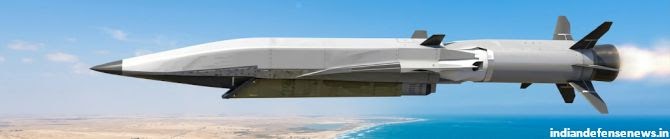
India’s Defence Research and Development Organisation (DRDO) is working on an
ambitious new hypersonic missile program known as Project Vishnu. This system
is designed to achieve speeds of up to Mach‑8, equivalent to around 10,000
kilometres per hour, making it virtually impossible for even the most advanced
air defence systems such as the American THAAD or the Russian S‑400 to track
and intercept.
The missile is intended to provide India with a decisive edge in modern
warfare, where speed and survivability against layered air defences are
critical.
At the heart of Project Vishnu lies the Extended Trajectory Long Duration
Hypersonic Cruise Missile (ET‑LDHCM). This missile is regarded as the most
vital component of the program, and DRDO has already begun manufacturing
specialised jigs and fixtures for booster integration.
These precision tools are essential for assembling the missile’s complex
components, ensuring structural strength and performance. Hypersonic systems
must withstand extreme temperatures and pressures, and the integration process
is therefore a critical step in ensuring reliability.
The new missile is being described as deadlier than India’s battle‑tested
BrahMos cruise missile, which demonstrated its effectiveness during Operation
Sindoor last year by devastating Pakistan’s military infrastructure.
Unlike BrahMos, the hypersonic cruise missile’s sheer speed makes it nearly
unstoppable, with radar systems unable to track it effectively. This leap in
capability represents a significant escalation in India’s missile technology,
positioning Project Vishnu as a strategic deterrent against adversaries
equipped with advanced air defence networks.
A key innovation in Project Vishnu is its propulsion system. The missile will
be powered by a state‑of‑the‑art scramjet engine, which distinguishes it from
conventional rocket systems. Scramjet technology burns fuel by drawing oxygen
directly from the atmosphere, eliminating the need for heavy oxidisers.
This makes the missile lighter, more efficient, and capable of flying long
distances. In January 2026, DRDO successfully conducted a 12‑minute ground
test of the scramjet engine, validating its durability and ability to maintain
thrust under demanding conditions.
Early details suggest that the missile will be able to travel at speeds of up
to 10,000 kilometres per hour, placing it among the fastest hypersonic cruise
missiles in the world. The initial variant will have a range of up to 1,500
kilometres, with plans to extend this to 2,500 kilometres in future
iterations.
It will be capable of carrying a payload of up to 2,000 kilograms, and can be
equipped with either conventional or nuclear warheads, giving India a flexible
and powerful strike option.
Project Vishnu represents a bold step forward in India’s missile development,
combining cutting‑edge propulsion technology with extreme speed and long‑range
capability. If successful, it will mark a significant milestone in India’s
quest for strategic self‑reliance and deterrence in an increasingly contested
security environment.
Below is a concise technical profile of the ET‑LDHCM (core system under Project Vishnu). Exact service‑level specifications are classified, so the table mixes officially reported figures with well‑substantiated public‑domain estimates.
Overview of Project Vishnu (ET‑LDHCM)
| Parameter | Detail |
|---|---|
| Program Name | Project Vishnu (Hypersonic Cruise Missile Development Program) |
| Missile System | ET‑LDHCM – Extended Trajectory–Long Duration Hypersonic Cruise Missile |
| Type of Weapon | Scramjet‑powered hypersonic cruise missile (offensive, deep‑strike / SEAD‑oriented) |
| Role | Deep‑strike, Suppression of Enemy Air Defences (SEAD), strike against hardened / time‑critical targets |
| Operational Range | Approx. 1,500–2,000+ km (reported strike radius around 1,500 km) |
| Speed Regime | Mach 5–10, with reported peak around Mach 8 (~11,000 km/h) |
| Warhead Options | Conventional high‑explosive / penetration warheads; nuclear‑capable architecture (reported) |
| Typical Warhead Weight | Estimated 1,000–2,000 kg class for conventional variants |
| Launch Platforms | Land‑based mobile launchers; air‑ and sea‑based variants reportedly under development (multi‑platform interoperability) |
| Propulsion | Two‑stage concept: solid‑fuel booster followed by air‑breathing scramjet cruise stage |
| Duration of Sramjet Burn | Ground‑tested scramjet engine for up to 1,000 seconds; indicates long‑endurance hypersonic cruise |
| Flight Altitude | Low‑to‑medium altitude cruise (terrain‑hugging / low‑altitude dash) to reduce radar detection and interception ability |
| Guidance & Navigation | Advanced INS augmented with satellite‑based position updates (likely NavIC / GPS); mid‑course corrections and terminal‑phase seeker‑based guidance expected |
| Terminal Seeker | Likely multi‑mode radar / IR‑based seeker for precision target engagement; not fully disclosed in public sources |
| Maneuverability | High‑G, unpredictable trajectory and glide‑manoeuvres to evade current generation ABM / SAM interceptors (THAAD/S‑400‑class) |
| Target Set | SEAD of air‑defence radars, command centres, naval fleets, hardened bunkers, and strategic infrastructure in deep‑strike campaigns |
| Materials & Thermal Protection | High‑temperature alloys, ceramics, and thermal‑protection tiles capable of withstanding up to ~2,000 °C |
| Stealth & Survivability Features | Low radar cross‑section shaping, reduced IR signature, and erratic flight path to enhance penetration of modern air‑defence networks |
| Status (As of 2025–2026) | Scramjet‑engine maturity demonstrated; flight‑test phase of ET‑LDHCM / Project Vishnu underway; formal induction into Indian Armed Forces not yet publicly announced |
Agencies
