

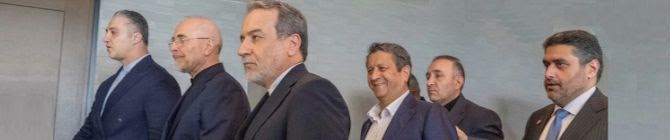
In am embarrassing turn of events at the Lake Lucerne Summit, the first round of US‑Iran talks in Switzerland was marked by a dramatic walkout by the Iranian delegation after President Donald Trump issued fresh threats, leaving mediators visibly stunned and US Vice President JD Vance watching closely.
Despite the disruption, negotiations resumed and produced limited progress, including steps towards sanctions relief and the release of frozen Iranian assets.
The talks at the Burgenstock resort began under the Islamabad Memorandum of Understanding, which brought together Iran, the United States, Pakistan and Qatar to reduce tensions after weeks of military escalation.
The Iranian delegation, led by Parliament Speaker Mohammad Bagher Ghalibaf and Foreign Minister Abbas Araghchi, refused to join a planned photo‑op with American officials, dismissing it as a publicity stunt. This refusal set the tone for the day.
Shortly afterwards, Trump posted on Truth Social that Iran must stop Hezbollah’s activities in Lebanon or face harsher military action than the previous week’s strikes. Iranian officials linked their brief walkout directly to these remarks, describing them as threats that undermined the spirit of negotiations.
Video footage showed Araghchi greeting Shehbaz Sharif before abruptly leaving the room with his delegation, leaving Sharif visibly surprised and gesturing towards Army Chief Asim Munir. JD Vance, standing nearby, observed the scene before approaching the Pakistani side.
The incident quickly went viral, symbolising the fragility of the process. Reports confirmed that Trump had also threatened in a Fox News interview to seize control of the Strait of Hormuz and collect tolls if Iran attempted to close it again. This rhetoric added to Tehran’s anger, especially after repeated clashes in Lebanon and Iran’s announcement of restrictions on the Strait.
Despite the tense atmosphere, the talks did not collapse. After about eighty minutes, discussions resumed behind closed doors. Iranian negotiators insisted that Washington must implement commitments under the MoU, particularly sanctions relief and financial measures.
State media reported that executive procedures for releasing frozen Iranian assets had begun with Qatari involvement. A draft concerning waivers on Iranian oil sanctions was also said to be finalised, raising hopes of near‑term implementation.
Mediators Pakistan and Qatar scrambled to keep the process intact. Sharif and Munir worked to persuade the Iranian delegation to return, while Qatari officials emphasised the importance of continuing dialogue. By the end of the session, both sides agreed to continue technical talks through the week, focusing on sanctions, nuclear commitments, and mechanisms to prevent escalation in Lebanon.
Observers noted that the walkout highlighted the delicate balance of the negotiations. The refusal to participate in symbolic gestures, the visible discomfort of Pakistani mediators, and the watchful presence of JD Vance all underscored the high stakes.
While progress was made on financial and sanctions issues, the incident revealed how easily the process could unravel under pressure from external rhetoric.
The talks concluded with mediators describing the atmosphere as constructive despite the disruption. A roadmap towards a final deal within sixty days was reaffirmed, with working groups established to address nuclear, sanctions, and monitoring issues.
Yet the viral footage of Araghchi’s departure remains the defining image of the day, a reminder of how precarious the path to a broader US‑Iran understanding remains.
Agencies
