

On August 9, Taliban officials claimed to have captured 74 light and heavy weapons that were allegedly being smuggled in from Pakistan to support what they termed “subversive and destabilizing activities.” Islamabad strongly denied the claim as baseless and urged Kabul not to let Afghan soil be used against Pakistan.
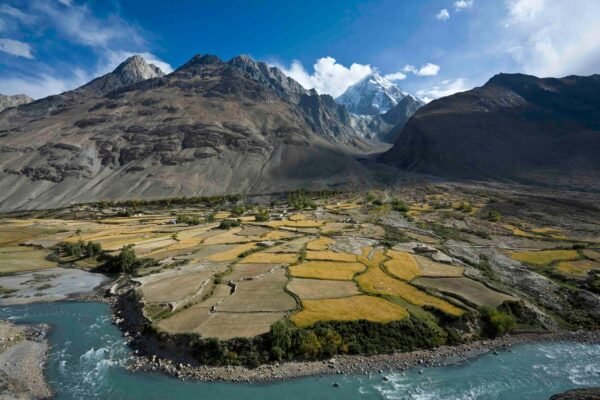
The Taliban’s claim insinuated that Pakistan was supporting the resistance movement that has been brewing for some time in northern Afghanistan but has escalated to alarming levels since July. The movement is especially strong in the strategically important northeastern Badakhshan province, which borders not only Pakistan but also China and Tajikistan.
Groups like the Ahmad Massoud-led National Resistance Front (NRF) and the Yasin Zia-led Afghanistan Freedom Front (AFF) announced resistance to the Taliban soon after their return to power in August 2021. But the resistance has remained limited and inconsequential until the more recently established Qayyum Malang-led Sipahiyan-i-Mihan, or the Homeland Guards, launched a far more aggressive campaign against the Taliban in Badakhshan last month. In mid-July, the Sipahiyan-i-Mihan even briefly captured Yaftal-e-Paeen district in the province. A few weeks later, the AFF claimed to have killed four members of the Taliban in two separate attacks in Jalalabad and Nuristan provinces. It has also been reported that Taliban personnel leave their posts at night in certain parts of Takhar province because of increasing attacks.
As trouble brews for the Taliban in Badakhshan and some neighboring provinces, ethnic Tajik groups like the Sipahiyan-i-Mihan, NRF, and AFF are not the only challenge the Taliban is facing in the region. The Islamic State Khorasan Province (ISKP), which has launched several high-profile attacks against the Taliban since the latter’s return to power, is also an ongoing source of concern. A couple of weeks after the district headquarters in Yaftal briefly fell to the Sipahiyan-i-Mihan, ISKP assassinated Badakhshan’s well-connected Taliban director for information and culture, Zabihullah Amiri, in the province.
The Taliban have responded to the challenge with increasing restrictions on movement in the province and by sending in largely Pashtun reinforcements to the Tajik-majority province. The Taliban are also having to rely on hardline but recalcitrant local powerbrokers within their ranks like Juma Khan Fateh. A former small-time shopkeeper from the Shakhdara village in Nusay district, he rose through the ranks of the Taliban since 2013 to become one of the most powerful figures in Badakhshan, and yet Fateh has remained an enigma for the Taliban leadership.
Reported to have stated that he has around 10,000 armed men under his command, Fateh has been consolidating his power in Badakhshan through gold mining revenues since becoming administrator of his home district upon the return of the Taliban to power in Afghanistan. His ideological rigidity, leading to reported cruelties against and forced conversions of local Ismaili and Twelver Shia communities, seems to have particularly endeared him to the Taliban’s supreme leader Hibatullah Akhunzada. Akhunzada put him in charge of poppy cultivation in the province in December 2024. Ironically, however, in March 2026, Fateh was moved out of Badakhshan and made the deputy governor of the Zabul province in southern Afghanistan following complaints from Dushanbe about his involvement in the smuggling of heroin across the border into Tajikistan.
Fateh proved difficult to control for the Taliban leadership as late as May, when he was reportedly still pulling strings in Badakhshan despite being posted far away from his power base. He is even reported to have continued gold mining operations in Badakhshan in defiance of the Taliban’s ban on such operations. Nevertheless, he was flown back to Badakhshan in August amid growing attacks by opposition groups, demonstrating the Taliban’s desperation for support against resistance to its rule.
Despite Fateh’s successful track record in the province through his strong-arm tactics, bringing volatile actors like him back into the provincial powerplay, along with measures like the replacement of ethnic Tajik officials with Pashtuns and increasing day-to-day hardships for local populations in the province, might ultimately help the resistance garner more popular support.
The Taliban government of Afghanistan is making the situation worse not only with ethnic Tajiks in Badakhshan but also with the predominantly Shia Hazara community in the central parts of the country. A recent case in point is the evacuation order issued by a Taliban court in April to the residents of the Omid Sabz township, spread roughly over 300 hectares of land. The order could affect around 6,000 individuals from the Hazara community living in the township. While the leaders of the community are going from pillar to post to get the evacuation order stayed, the Taliban’s justice minister, Abdul Hakim Sharai, seems adamant in implementing the court order. Omid Sabz is part of a sustained pattern of targeting and seizing Hazara properties starting from forcible evictions of hundreds of Hazara families from Daikundi, Oruzgan, Kandahar, Helmand, and Balkh as early as 2021 and continuing well into 2025 in other parts of the country as well.
Whether the resistance to the Taliban rule is supported by external actors like Pakistan is not certain. What is certain, however, is that the legitimacy of the Taliban’s monopoly over the use of coercive power in Afghanistan is highly questionable and its excessive use is forcing segments of already marginalized ethnic groups to rise arms.
As Rehman Hekmatyar, the son of the influential warlord and the leader of the former Mujahideen group Hizb-i-Islami, Gulbuddin Hekmatyar, has aptly remarked: if the Taliban could use force to come into power, so could others.
