

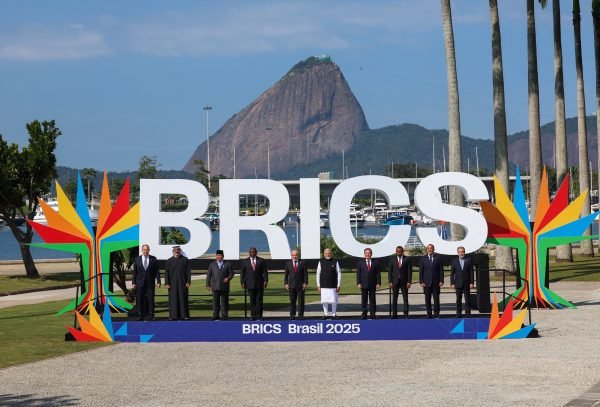
All eyes are on India right now. From September 12 to 13, presidents and prime ministers from Brazil, China, South Africa, Egypt, Indonesia, Russia, and more will converge on New Delhi for the 18th BRICS summit.
It’s India’s fourth time hosting BRICS, but leading the group today is a diplomatic minefield. Barely two months after Delhi took over as chair, the U.S. and Israel attacked Iran, a BRICS member. Tehran then retaliated against the UAE and Saudi Arabia – also BRICS members. Now, India has to sit all three in the same room.
The U.S.-Iran war made it impossible to ignore the serious conflicts within BRICS. In a major diplomatic fail, the BRICS foreign ministers’ meeting in May, also hosted by India, ended without a joint statement. The group’s members just couldn’t agree on how to approach the crisis in West Asia.
Some worry that the upcoming BRICS summit will also end without a joint statement. That would be a huge embarrassment for the host, India – and something Delhi is keen to avoid.
In 2021, the last time India hosted the annual summit, BRICS was just five countries, the ones that form its name: Brazil, Russia, India, China and South Africa.
Today, it’s an unwieldy 11-member bloc – or 10, depending on whether Saudi Arabia ever formally confirms it joined. Reaching a consensus was already tough when it was just India and China at odds within the group; now, BRICS includes rivals actively shooting at each other.
What does India get out of BRICS? And are the benefits worth the growing headache?
