

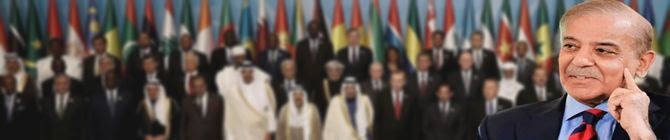
Pakistan’s renewed push for an “Islamic NATO” involving Saudi Arabia, Turkey, and Qatar reflects both ambition and fragility. While the idea is framed as a collective defence pact to reduce reliance on external powers after the Iran war, deep rivalries and divergent interests among the proposed members make its viability highly uncertain.
For India, however, the prospect of a nuclear‑armed Pakistan anchoring such a bloc alongside Gulf financial muscle and Turkish defence technology is strategically significant.
Pakistan’s Defence Minister Khawaja Asif has publicly signalled that the Strategic Mutual Defence Agreement signed with Saudi Arabia in September 2025 could expand into a four‑state military bloc.
He emphasised that Qatar and Turkey are in advanced discussions to join, suggesting that what was once a speculative concept is now moving into concrete planning. The Saudi‑Pakistan pact already contains a NATO‑style collective defence clause, meaning aggression against one signatory would trigger obligations for all. This clause mirrors NATO’s Article 5 and elevates bilateral cooperation into treaty‑based deterrence.
The timing of Pakistan’s announcement is crucial. The US–Iran war earlier this year destabilised the Gulf, disrupted shipping through the Strait of Hormuz, and exposed the absence of a coordinated Muslim‑majority defence mechanism.
Israel’s missile strike on Qatar in September 2025 had already highlighted vulnerabilities, prompting Saudi Arabia, Pakistan, and Turkey to explore a joint framework. The expanded alliance now seeks to combine Pakistan’s nuclear deterrent and missile capabilities, Saudi and Qatari financial leverage, and Turkey’s defence‑industrial base, potentially creating a multi‑domain bloc with reach from the Gulf to the Eastern Mediterranean.
Yet the proposal faces formidable obstacles. Saudi Arabia and Turkey have long competed for Sunni leadership in the Middle East, with their rivalry sharpened by the Qatar crisis of 2017. Qatar itself has historically clashed with Riyadh over regional influence, while Ankara’s ambitions often diverge from Gulf priorities.
Reconciling these differences under a single military structure would require unprecedented political compromise. Moreover, Iran’s hostility towards such a bloc would likely intensify, raising the risk of escalation rather than stability.
For India, the implications are complex. A functioning Islamic NATO could embolden Pakistan by embedding its nuclear deterrent within a wider Sunni security architecture, complicating New Delhi’s strategic calculus.
It could also alter Gulf energy security dynamics, with collective defence commitments potentially affecting freedom of navigation in the Strait of Hormuz. India’s reliance on Gulf energy flows and its deepening partnerships with Saudi Arabia and the UAE mean that any shift in regional defence alignments must be closely monitored. At the same time, the inherent fragility of the bloc may limit its effectiveness, offering India space to strengthen bilateral ties with Gulf states wary of over‑dependence on Pakistan.
Ultimately, Pakistan’s revival of the Islamic NATO idea deserves attention but also scepticism. While the rhetoric suggests momentum, the structural contradictions among Saudi Arabia, Turkey, and Qatar make it more likely to remain an aspirational concept than a fully operational alliance.
For India, vigilance and proactive diplomacy will be essential to navigate the uncertainties this proposal introduces into West Asian geopolitics.
Firstpost
