

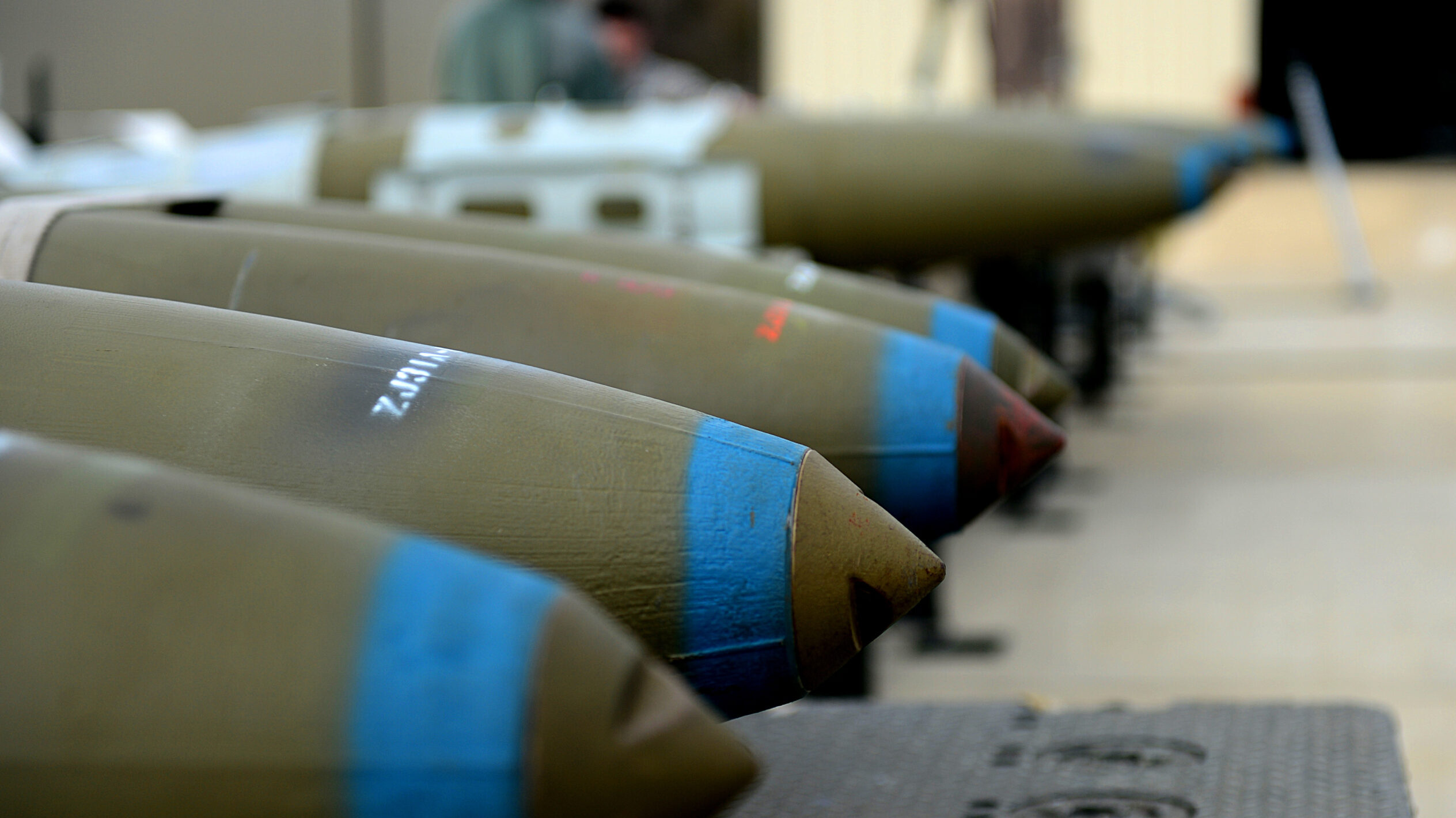
With wars in Ukraine and the Middle East consuming America’s weapons at extraordinary rates, the Pentagon’s fiscal 2027 budget includes badly needed boosts in funding for critical munitions and “Unleashing the Arsenal of Freedom.”
That’s good news, but as the Department expands weapons procurement and pursues new munitions programs, it should also consider the impact of new energetic materials to ensure it does not leave money on the table when it comes to getting the most bang for its buck in missiles, rockets, drones and bombs.
Energetics are the explosives behind every munition’s boom and the propellants in many of the US military’s most important missiles. Novel energetic materials have long promised to increase the range and explosive power of US munitions.
Compounds like CL-20 offer increased performance over older energetics and are being employed in Chinese and Russian weapons. As the US military looks to the Indo-Pacific, munitions with more range and power may be crucial to ensuring American troops maintain their edge in long-range strike, and many in Congress and the defense community have touted the potential benefits of materials like CL-20.
Yet many American weapons remain reliant on WWII-era explosives. Why? The most commonly cited barrier to the adoption of newer, better energetics is the higher costs of testing, certifying and producing them compared to existing materials. That’s fair: Improved explosives and propellants may cost more, especially while their production remains limited.
But considering only the price tag of a munition and its energetic filling may lead the military to seriously undervalue improved energetics. To weigh the true cost and value of these materials, the Pentagon must think about munitions not in isolation, but as part of the network of platforms and systems necessary for attacking targets.
At the Center for Strategic and Budgetary Assessments, we have argued for evaluating weapons not in isolation, but within “force packages” that reflect how the military actually fights. This approach offers a more holistic view of the cost of novel energetics. Considering munition and energetic costs within the context of their employment is particularly important because weapons constitute the final, essential link in every US military kill chain.
As such, improving the performance of individual munitions could have benefits that cascade and build as they work their way up the kill chain.
For example, munitions that leverage materials like CL-20 for increased explosive effects could lead to fewer munitions being expended over time to achieve the same objectives. More powerful weapons could inflict greater damage on targets, thus reducing the potential for follow-on strikes. Furthermore, strikes could have catastrophic effects rather than nuanced “mission-kill” effects. When viewed in the aggregate or over the course of a military campaign, even small gains in explosive power might significantly reduce total munition expenditures.
These reductions are valuable not only because the United States and its allies struggle to produce advanced weapons in the quantities that might be necessary in ongoing and future conflicts, but also because of the price of modern precision-guided munitions. With many of the US military’s critical munitions costing more than one million dollars each (and some hypersonic missiles expected to cost a great deal more), the additional costs of integrating new energetics should actually be compared to the expense of buying more weapons and maintaining larger stockpiles.
Similarly, newer and more efficient propellants could increase a munition’s range or reduce overall size and weight. These improvements would allow US aircraft, naval vessels and missile batteries to launch strikes from further away or carry more weapons per mission, which could combine to reduce the number of platforms exposed to enemy defenses. Reduced attrition not only saves the lives of American servicemembers but also preserves the limited number of advanced platforms the United States would rely on in a conflict with China or Russia. Here again, the near-term costs of adopting improved propellants must be weighed against the longer-term costs of purchasing more platforms and, potentially, replacing combat losses.
Expanding this analysis reveals a number of ways that investments in novel energetics could have outsized fiscal and military benefits, from reducing logistical burdens to smoothing broader strategic and political tradeoffs. These examples rely on hypotheticals, but the follow-on effects of improved munition performance can be plainly seen in how the introduction of precision-guidance radically altered US military force structure and the American way of war.
Thankfully, the US does not need to start from scratch on this issue. The Ukrainian military has successfully employed weapons containing CL-20, so there is proof of concept and data to draw from. And the fiscal 2024 defense bill mandated pilot programs to incorporate CL-20 into three American weapons.
To demonstrate the real benefits of novel energetics, these pilot programs should be expanded as the military rebuilds and grows its weapons stocks. In choosing which munitions to test with new materials, the Pentagon should focus on missions where additional range or explosive power are critical, and the added costs or risks associated with the material are minimized. For example, new explosives are crucial for reduced-size munitions and warheads for small unmanned systems, submunitions and special-purpose weapons intended to destroy hardened or buried targets. The added expense of novel energetics may also be more acceptable in hypersonic weapons, where maximizing the range or power of an already expensive missile is essential. New pilot programs should center on munitions that combine these characteristics to ensure the armed services get the most from weapons containing novel energetics.
As the closing link in military kill chains, munitions and their components are the ultimate “nail” when the “For Want of a Nail” proverb is applied to military operations. Too often, the second- and third-order effects of technologies like advanced energetics are overridden by more immediate cost concerns when planners and designers are determining munition performance requirements and weighing the costs of different weapons.
Integrating improved energetic materials into American munitions could have advantages far beyond increased range or explosive power, and the Pentagon must consider these long-term benefits when eyeing the price tag of new materials and considering their use in new weapons.
Tyler Hacker is a fellow at the Center for Strategic and Budgetary Assessments (CSBA), where his research focuses on long-range strike, precision-guided munitions, and the defense industrial base.
