

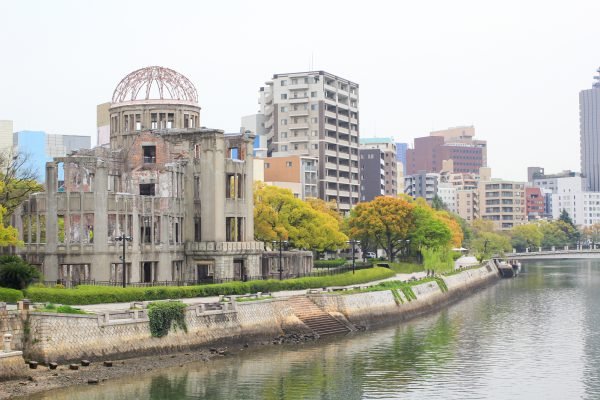
August has been a solemn month in Japan for more than 80 years. Although Japan formally signed the Instrument of Surrender on September 2, 1945, the atomic bombings of Hiroshima and Nagasaki on August 6 and 9, respectively, and Emperor Hirohito’s radio announcement on August 15 accepting the terms of surrender have made August a month from which the Japanese psyche cannot escape. Every year since the Pacific War ended in Japan’s defeat, during August the nation has mourned its war dead and reflected on the horrors of a conflict that inflicted immense suffering and destruction upon the country. The resolve that Japan must never again endure such an ordeal lingers in the air of the sweltering Japanese summer.
But this year, another issue besides the memory of war has been generating heated debate in the Japanese media: will the Takaichi administration revise the government’s Three Non-Nuclear Principles in the upcoming revision of Japan’s national security documents?
Japanese media outlets have been closely scrutinizing Takaichi’s remarks on Japan’s Three Non-Nuclear Principles, under which Japan pledges not to possess, produce, or allow the introduction of nuclear weapons into its territory. This attention stems from Takaichi’s previous position that at least the principle concerning the non-introduction of nuclear weapons should be reconsidered in the interests of Japan’s national security. In an edited volume she published in 2024, Takaichi even argued that Japan’s current nuclear policy was not “realistic” when it came to ensuring the credibility of the U.S. extended nuclear deterrent.
The fact that she has not categorically ruled out revising the principles since becoming prime minister has fueled speculation that she could embark on a major shift in Japan’s decades-old nuclear policy – essentially distancing the country from its longstanding commitment to refrain from assuming any role in the deployment of nuclear weapons, even for defensive purposes.
Questioned about her current stance on Japan’s nuclear policy, Takaichi has maintained that her government “remains committed to the Three Non-Nuclear Principles as a matter of policy.” At the same time, she has declined to “say definitively what their final wording will look like” in the revised security documents. In other words, Takaichi has reiterated – even on the anniversaries of the atomic bombings of Hiroshima and Nagasaki – that the existing nuclear policy remains in place for now, while leaving open the question of how nuclear weapons will be addressed in the future.
Defense Minister Koizumi Shinjiro, Takaichi’s point man for drafting the new national security policies, has also hinted that a revision of Japan’s nuclear policy may be on the table. Appearing on a conservative online program, Koizumi acknowledged that nuclear weapons are “a difficult issue for Japan to discuss,” but argued that it is one that cannot be avoided.
He went further, saying that “we must recognize the sense of crisis we face and discuss and pursue every possible policy option without treating anything as taboo.” He also referred to the efforts of Finland and France to strengthen their nuclear deterrence. For Koizumi, preserving existing policies should not take priority over the fundamental responsibility of protecting Japan.
Whether or not Japan’s nuclear policy is actually revised in the immediate future, the very fact that such a revision is being openly debated is a striking development in Japanese policy discourse. For decades, any positive discussion of the role nuclear weapons might play in Japan’s security policy could be a career breaker for Japanese politicians. In 1999, Parliamentary Vice-Minister of Defense Nishimura Shingo was forced to resign after a Japanese magazine quoted him as saying that Japan should consider becoming a nuclear power. And although he did not meet the same fate as Nishimura, LDP policy chief Nakagawa Shoichi came under intense scrutiny in 2006 after suggesting that Japan should debate nuclear policy in depth.
Even discussing the memory and legacy of nuclear weapons has been a tightrope for Japanese politicians. In 2007, then-Defense Minister Kyuma Fumio came under fierce criticism after saying that, although “countless people suffered terribly,” he viewed the atomic bombings as having brought the war to an end and that he had “no intention of holding a grudge against the United States over it.” He resigned less than two weeks after making the remarks.
However, based on the remarks by Takaichi and Koizumi, which appear to have generated little public backlash, statements about putting nuclear weapons on the table no longer seem to be regarded as political gaffes.
Japan’s Three Non-Nuclear Principles are among the few remaining national security taboos for a country that was once deeply committed to pacifism. Since entering the 21st century, Japan has crossed one security taboo after another: deploying the Self-Defense Forces to active conflict zones, legitimizing the exercise of the right of collective self-defense, establishing a National Security Council and centralized intelligence capabilities, opening a military base overseas, and greenlighting the export of lethal weapons. All of these would have been difficult to imagine in the previous century; today, they are established facts of Japanese security policy.
While Takaichi has not altered the Three Non-Nuclear Principles – yet – she has indicated that she would follow a precedent set by the Democratic Party of Japan government. In 2010, then-Foreign Minister Okada Katsuya stated that, in an extreme emergency threatening Japan’s national security, “the government of the day must make the decision with the nation’s fate at stake and explain its decision to the public.” This interpretation effectively creates a potential exception to the principle prohibiting the introduction of nuclear weapons into Japan, without formally abandoning the Three Non-Nuclear Principles themselves.
However, even if an existing exception has effectively rendered one of the Three Non-Nuclear Principles moot in practice, formally revising it would carry enormous symbolic significance. If the Takaichi administration embarks on an official revision of Japan’s nuclear policy, it would mark yet another postwar taboo overturned. Such a move would have been astonishing in 20th century Japan, but it would also fit the broader trajectory of Japan’s increasingly assertive security policy.
