

India is seeking to deepen its defence partnership with South Korea, with discussions underway for a third phase of cooperation that will emphasise greater technology transfer, co-development and joint design of advanced military systems.
At a media briefing in New Delhi, MEA Secretary (East) P Kumaran highlighted the steady expansion of bilateral defence ties, particularly in artillery systems, air defence and emerging technologies.
Kumaran noted that Korea has already supplied K9 Vajra systems and anti-aircraft platforms to India under two earlier phases. The third phase, he explained, will involve greater technology transfer and broaden the scope to include anti-aircraft guns and missile systems.
He stressed that while the earlier phases were focused on acquisitions and progressive localisation, Phase III will advance into manufacturing and technology transfer at a higher level.
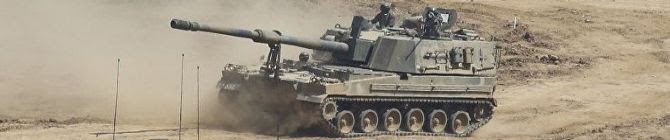
The K9 Vajra-T, a 155 mm, 52-calibre tracked self-propelled howitzer, remains central to this cooperation. Manufactured in India by Larsen & Toubro with technology transferred from South Korea’s Hanwha Aerospace, it is based on the K9 Thunder platform.
Designed for versatility across terrains such as deserts and high-altitude regions, the Vajra can fire a wide range of ammunition including high-explosive, smoke and illumination shells. Its 155mm/52 calibre gun, mounted on a 50-tonne chassis with welded steel armour up to 19 mm thick, can fire 47 kg shells at ranges of around 50 km.
The system boasts a high rate of fire, capable of three rounds in 15 seconds in burst mode and six to eight rounds per minute in sustained firing. It is integrated with a digital fire control system that enables multiple rounds to strike a target simultaneously.
Its advanced mobility allows it to manoeuvre effectively in combat, including the ability to pivot on the spot, enhancing operational flexibility in battlefield conditions.
Looking ahead, Kumaran emphasised that co-development, co-design and technology transfer of next-generation defence systems are areas India wishes to explore with South Korea. He also mentioned possibilities of cooperation in procurement of defence hardware, telecom equipment and cyber security.
This reflects the growing breadth of the partnership, which has steadily expanded to include trade, technology and maritime cooperation alongside defence.
While artillery production has been the highlight of the joint venture, ongoing talks are also focused on developing air defence systems, including anti-aircraft guns and missile platforms to counter emerging aerial threats such as drones.
Kumaran explained that these discussions are taking place against the backdrop of global instability, including conflicts in Ukraine and the Gulf region. He added that both sides agreed to cooperate in strengthening peace, security and multilateral institutions.
The partnership between India and South Korea has thus evolved into a strategic framework that links defence modernisation with broader technological and industrial cooperation. With Phase III of the K9 Vajra programme and expanded discussions on air defence, the relationship is poised to move into a new stage of advanced collaboration.
Agencies
