

Throughout its year as chair of the Association of Southeast Asian Nations (ASEAN), the Philippines has aggressively sought to push the China-ASEAN Code of Conduct (CoC) for the South China Sea to the top of the regional agenda and end the long and drawn out diplomatic saga, which dates back more than two decades.
The CoC is part of a long (and thus far inconclusive) quest to find peaceful resolutions to the many maritime and territorial disputes that persistently plague the sea lines of communications across a waterway that accounts for almost a quarter of world trade. A CoC would enable ASEAN to negotiate with China as a united entity, and after all that is what ASEAN is supposed to be all about: a centrist political and trade bloc that can represent the interests of 11 Southeast Asian states on the world stage through a rules based order.
It’s a process that does not suit China, which has done its best to belittle and intimidate Manila and specifically Philippine Foreign Secretary Maria Theresa Lazaro, who has demanded respect for international law while juggling heated diplomatic tensions and the ASEAN chair. Publicly, Beijing maintains its policy of non-interference and at times even espouses the virtues of potentially resolving maritime issues with Southeast Asian states through ASEAN. But behind the public spotlight, China has persistently used its proxies to obstruct and scuttle the CoC.
Cambodia was particularly useful in this regard. At the 2012 ASEAN Foreign Ministers’ Meeting, hosted by Phnom Penh, Prime Minister Hun Sen was signaling a significant shift in foreign policy toward China and the CoC was topping the agenda. The Philippines and Vietnam pushed to explicitly mention the ongoing Scarborough Shoal standoff and Chinese maritime encroachment in their Exclusive Economic Zones, but Hun Sen and his Foreign Minister Hor Namhong balked and declared that such disputes should be handled bilaterally.
For the first time in ASEAN history, no joint communique was issued at the end of the meeting. It was a major embarrassment for the Cambodians.
The CoC was effectively frozen, delays amid the COVID-19 pandemic followed, and whenever necessary Cambodia could be relied upon to do China’s bidding and scuttle the process.
That is what China wants; bilateral negotiations between individual states that enable it to reject international verdicts like the 2016 arbitral ruling on the South China Sea while protecting its expansive unilateral claims and military bases on artificial reefs.
China has also secured its state, military, and civilian investments along Cambodia’s limited coastline, but times have changed with the roaring days of the Belt and Road Initiative disappearing into the vacuum of history.
Given the colossal damage caused by online scam compounds, Beijing would prefer to exact penance out of Phnom Penh than scout for new investments, and the Cambodians, sources in ASEAN are saying, are not prepared to weather the diplomatic heat from blocking another effort to resolve the CoC.
Thus Beijing has considered and pressed its alternatives ahead of the 49th ASEAN Summit, to be held in Manila on November 16–18 and chaired by President Ferdinand Marcos Jr.
Myanmar could work, but it remains barred from ASEAN summits in retaliation for the ousting of Aung San Suu Kyi’s elected government in early 2021 by a junta led by current regime president Min Aung Hlaing. That could change next year.
Timor-Leste, ASEAN sources say, is moving rapidly into China’s orbit, but as the newest member remains unwilling to upset Vietnam, the Philippines, Indonesia, Malaysia, or Singapore on the CoC, nor to offend Cambodia after it shepherded Dili into the trade bloc.
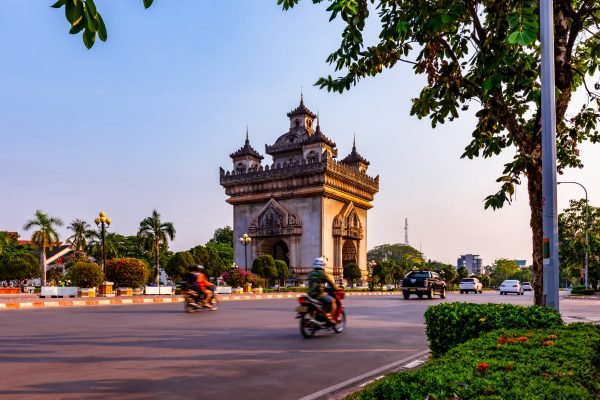
That leaves landlocked Laos, an economic basket case in a region struggling for growth, and an absolute dependent on Chinese largesse. There are shades of the Khmer-Sino relationship from a decade ago now emerging between Vientiane and Beijing.
Late last month, China and Laos announced the opening of a Military Joint Support and Training base north of Vientiane, which has already earned comparisons with China’s development of the Ream Naval Base in Cambodia. Joint military exercises known as “Peace Train 2026” were held in September.
“Cambodia does not have the appetite for this,” said a Western source privy to CoC negotiations between ASEAN states over the last 12 months.
“It’s overwhelmed by the mess created by organized crime, the scam compounds and the conflict with Thailand. Phnom Penh is now moving closer to the United States and it just can’t deal with any more pressure. Myanmar, not yet; Timor-Leste, watch this space.
“Laos? Laos has been tapped by China and will have to defend its interests, and it’s the only country in ASEAN that Beijing can lean on, and it has been doing precisely that. Laos is going to shatter the Philippine dream of using the chair to pass the Code of Conduct. It’s as simple as that.”
