

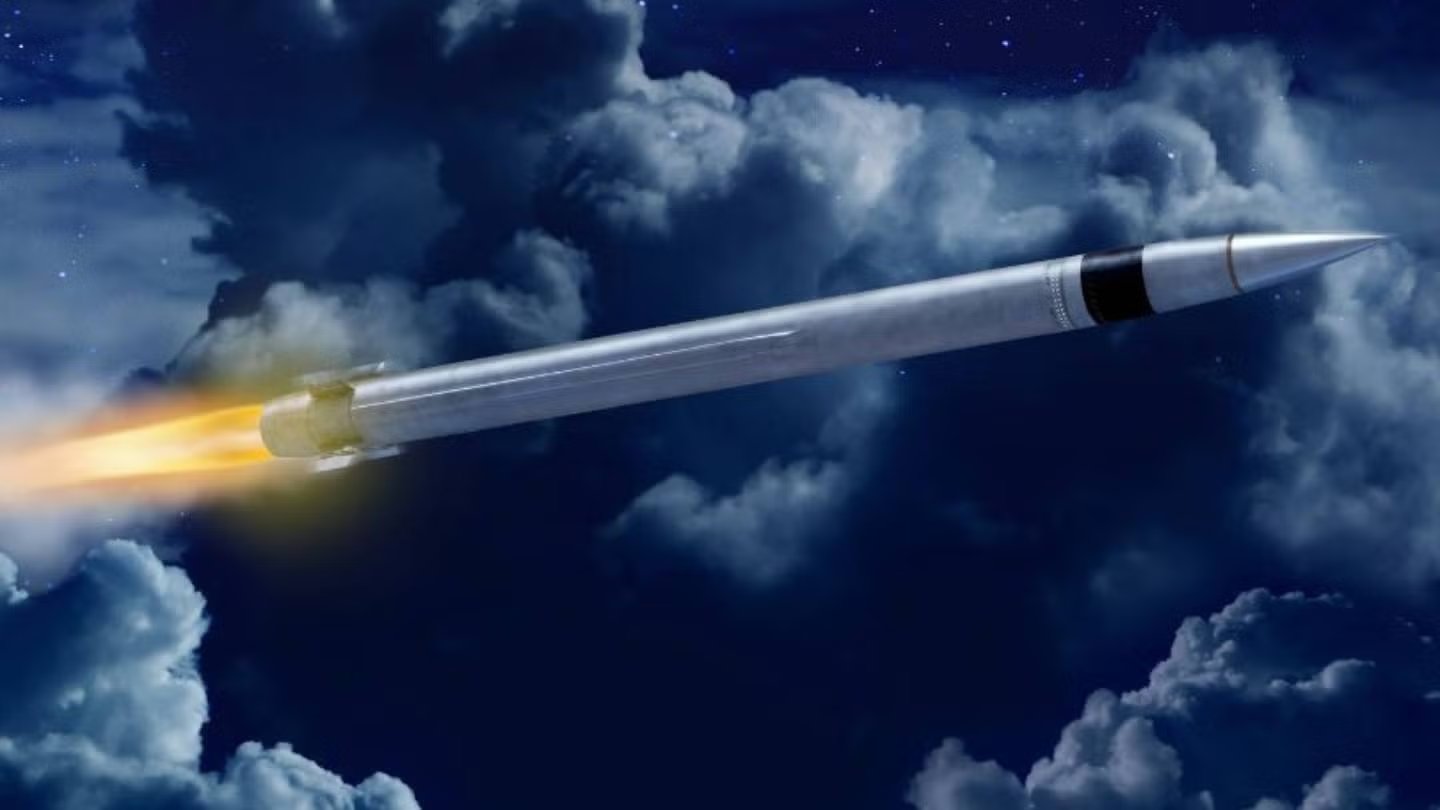
Lockheed Martin has been awarded a $1.08bn Other Transaction Agreement from the US Army to further develop and test the PAC-3 Edge interceptor, marking a significant step in the Army’s Future Interceptor programme.
Under the agreement, $660.4m in funding will be provided by the Army, with Lockheed Martin contributing $423m through cost-sharing.

Discover B2B Marketing That Performs
Combine business intelligence and editorial excellence to reach engaged professionals across 36 leading media platforms.
The PAC-3 Edge is designed to enhance the Army’s Integrated Air and Missile Defence (IAMD) capabilities by introducing improvements in engagement range, altitude, velocity, and manoeuvrability in response to emerging air, missile, and hypersonic threats.
The current contract covers the prototype phase, with Lockheed Martin and the Army collaborating on development, testing, and evaluation to determine system performance against established operational requirements.
In a statement on 29 October, the US Army stated that outcomes from this phase will shape decisions regarding further development and potential production.
US Army acquisition, logistics and technology assistant secretary Brent Ingraham said: “The contract for the Future Interceptor programme marks an important step forward in the Army’s efforts to address emerging threats by accelerating innovation and strengthening partnerships with industry.
“We are empowering the Army to make informed decisions, reduce acquisition risk, and deliver the next generation of integrated air and missile defence capabilities our Soldiers, partners, and allies need to fight and win.”
PAC-3 Edge, the newest addition to the PAC-3 Family of Systems, was recently introduced by Lockheed Martin and is intended to complement current interceptors such as PAC-3 MSE and THAAD.
According to the company, the system incorporates advancements from previous PAC-3 variants and is designed to operate against a range of aerial threats at extended distances and altitudes as part of a layered defence.
Development work under the new agreement emphasises rapid innovation and the use of proven technologies to counter increasingly complex aerial threats, the US Army said.
Testing and evaluation of the Future Interceptor are intended to measure its performance against operational requirements set by the Army, with future development and production decisions expected to be informed by the results of these assessments.
Lockheed Martin indicated that development and testing of the PAC-3 Edge are scheduled to begin in 2027, with potential deployment planned for 2031.
US Army fires portfolio acquisition executive lieutenant general Frank Lozano said: “Developing advanced interceptor capabilities is essential to maintaining our nation’s defensive advantage against increasingly sophisticated threats. The Future Interceptor programme reflects the Army’s commitment to accelerating innovation, leveraging proven technologies and strengthening the layered defences that protect our forces and national interests at home and abroad.”

