

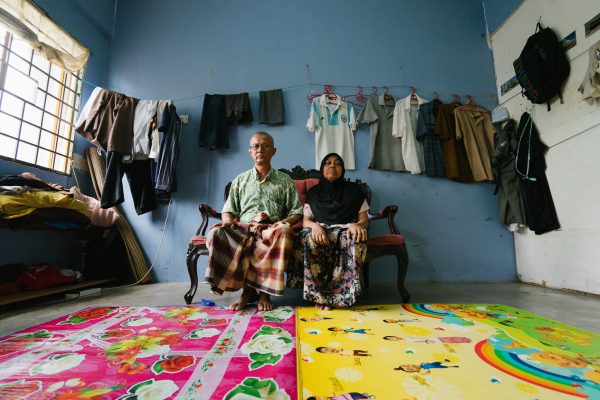
Last month, more than 400,000 people signed a petition on Change.org calling for the removal of Rohingya refugees from Malaysia. The petition is part of a widening hate campaign targeting Rohingya refugees and others, fed by fabricated allegations of criminality and dangerous misinformation about an already vulnerable community.
Malaysia has long been a refuge for various communities from Myanmar, including the Rohingya, Chin, Bamar, Karen, Rakhine and other ethnicities. No refugee community should be subjected to hostility or abuse, and the recent targeting of Rohingya refugees reflects a broader failure to protect people fleeing violence and persecution in Malaysia. The Rohingya, who have fled decades of genocide at the hands of the Myanmar military and renewed violence in Rakhine State by the Arakan Army, have been singled out for intense xenophobic hostility by the Malaysian public and some officials.
People are entitled to express concerns about public policy on migration and refugees. But freedom of expression is not a license to incite discrimination, hatred, or violence.
The danger is greater when prominent public figures lend legitimacy to this hateful rhetoric, calling Rohingya a “cancer,” “dirty” “threats or criminals,” and “intruders.” This is despite the fact that only 89 Rohingya have been convicted for criminal offences since 2024, according to the latest government statistics, making up a tiny 0.02 percent of all criminal cases in Malaysia during that time.
Nevertheless, the Deputy Inspector-General of Police has described the Rohingya issue as a barah (“cancer”) requiring urgent action. Elected officials have endorsed expelling Rohingya from Malaysia, an act that contravenes the principle of non-refoulment in international refugee law. Some have called for the demolition of Rohingya homes, the severing of water and electricity supplies, and the forced expulsion of refugees to Myanmar or Bangladesh.
Yet Prime Minister Anwar Ibrahim’s government has largely stayed silent as the hostility has escalated. The authorities should actively counter misinformation, fabricated crime allegations, and other false narratives targeting Rohingya refugees, and hold those responsible for inciting discrimination or violence accountable in accordance with the law.
Malaysia has long presented itself as a defender of persecuted Muslims globally. Remaining indifferent to and failing to protect Rohingya refugees, who are predominantly Muslim, risks undermining that reputation.
Even before the recent wave of hate, many refugees have described living in constant fear of arbitrary arrest, detention, and abuse by the Malaysian authorities. Rohingya refugees are particularly vulnerable to indefinite detention. A recent Fortify Rights investigation found that refugees had been detained without meaningful access to legal representation, fair judicial review, or any realistic prospect of release. Detainees are often subjected to ill-treatment and poor conditions, including inadequate healthcare, lack of clean water and food, and squalid conditions in detention, sometimes enduring such horrific conditions for years. Some have been forcibly repatriated to Myanmar or Bangladesh by Malaysian authorities.
Amid growing hostility against Rohingya refugees, Home Minister Saifuddin Nasution Ismail’s remarks on June 8 gave hope for a more constructive approach: “We cannot avoid managing this issue. It must be handled wisely and humanely, while safeguarding the country’s security, the people’s interests, and our international standing.”
This is the approach Malaysia should embrace. The Rohingya refugee crisis requires empathy, pragmatism, and strong regional cooperation – not the criminalization or vilification of refugees fleeing persecution.
First, Malaysia should continue providing protection to Rohingya refugees fleeing ongoing atrocities in Myanmar and inhumane camp conditions in Bangladesh. This includes adopting a zero-tolerance approach and taking strict action against hate campaigns to send a clear message that discrimination and incitement have no place in the country.
Malaysia should accelerate refugee registration, including for those who remain undocumented, and develop pathways to legalize their stay. Proper registration would provide authorities with accurate information, give proper control, strengthen protection, and reduce management challenges. Fortify Rights urged the government to ensure that the newly established Dokumen Pendaftaran Pelarian program, which seeks to register refugees present in Malaysia, is used to strengthen refugee protection, rather than facilitate the misuse of personal data, detention, or forced returns.
Furthermore, Malaysia should confront Myanmar and press it to restore Rohingya citizenship and end the ongoing atrocities in Myanmar.
Malaysia, together with a coalition of governments in the region, including ASEAN, should create a coalition of ASEAN governments, must exert diplomatic pressure on Myanmar to restore Rohingya citizenship, swiftly issue identification cards and passports to Rohingya, thereby providing them with legality, dignity, safety, and a future, and guarantee their rights and end ongoing atrocities.
With the enactment of Myanmar’s 1982 Citizenship Law by the former military regime under Ne Win, the Rohingya were deprived of citizenship and subjected to severe restrictions on movement, education, employment, marriage, and access to public services. In effect, the Citizenship Law stopped recognizing Rohingya as citizens of Myanmar, a policy that remains in place today. These policies created conditions that forced many Rohingya to flee Myanmar in search of safety, protection, and opportunity elsewhere in the region.
The situation deteriorated further in 2016, and 2017, when Myanmar’s military and local Rakhine collaborators carried out widespread attacks that forced some 700,000 Rohingya to flee to Bangladesh. Rohingya villages were burned, civilians were killed, and entire communities were displaced. The result was one of the largest refugee crises in recent history.
The United Nations, Fortify Rights, and numerous other international human rights organizations have documented widespread atrocities committed against the Rohingya, including genocide. The International Court of Justice is expected to issue its final judgment later this year in the case brought by The Gambia, which alleges that Myanmar violated the Convention on the Prevention and Punishment of the Crime of Genocide.
The growing number of Rohingya seeking safety in Malaysia is the direct consequence of the world’s negligence and inaction in response to decades of persecution, exclusion, and violence in Myanmar. Mass atrocity crimes have been perpetrated with impunity for far too long. The crisis has long since crossed Myanmar’s borders and become a regional challenge affecting governments in South and Southeast Asia.
For that reason, Malaysia can no longer treat the Rohingya crisis as an internal matter of Myanmar. The principle of non-interference should not prevent action when mass atrocities, forced displacement, and statelessness have regional consequences. Malaysia must abandon its policy of non-interference with respect to the Rohingya crisis and confront Myanmar and all relevant actors to restore Rohingya citizenship, guarantee equal rights, provide legal protection, create safe conditions, and ensure the dignified return of refugees.
