

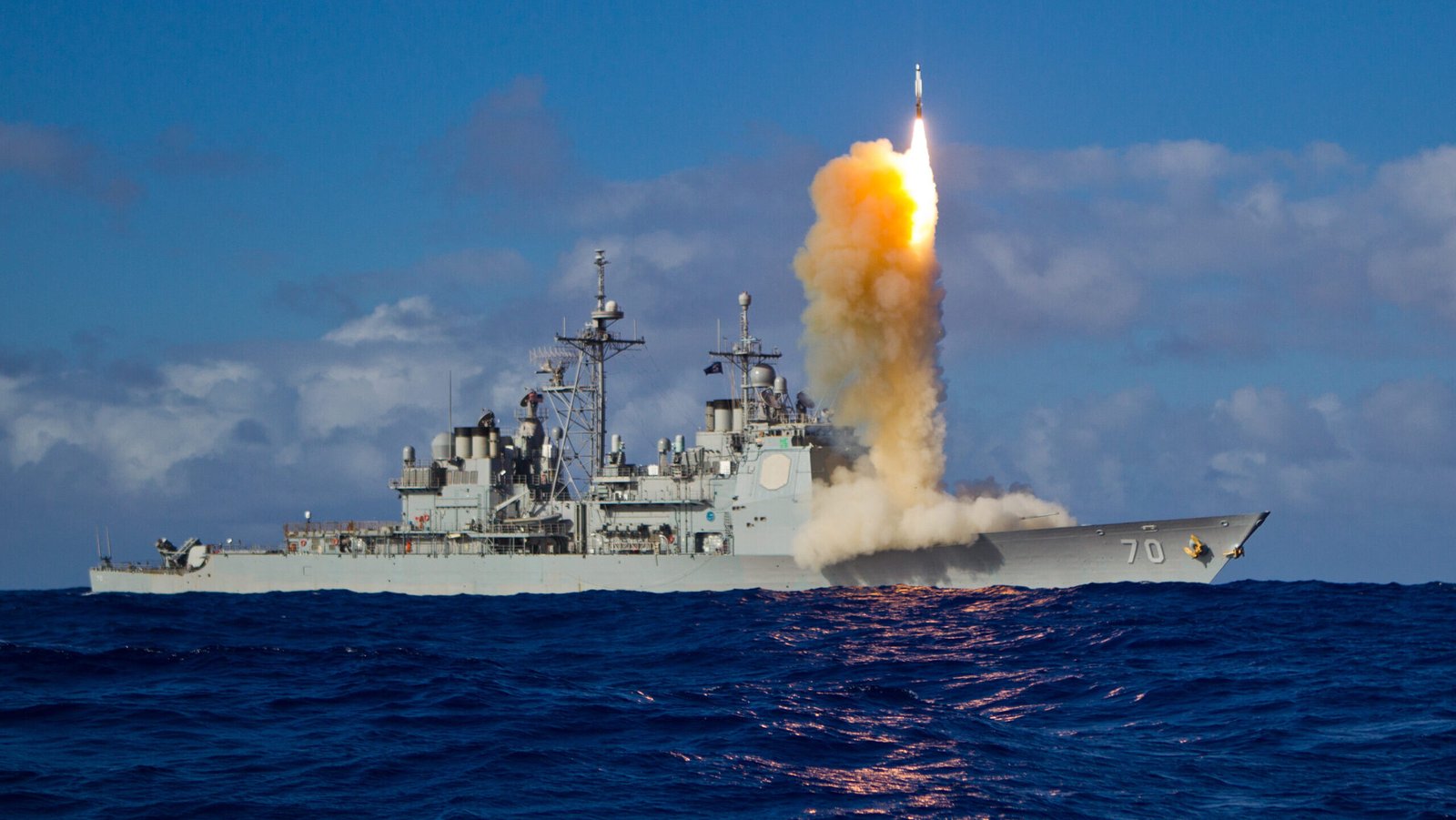
WASHINGTON — Seeking to boost Standard Missile-3 (SM-3) production numbers, the Department of Defense has inked framework agreements with Boeing and RTX to scale several hardware components, the Pentagon announced today.
“Both agreements will strengthen production of the series of critical ship-fired surface-to-air interceptors that underpin the Aegis Ballistic Missile Defense System and form the backbone of U.S. sea-based missile defense at home and abroad,” DoD said.
The Pentagon’s announcement was short on details, and spokespeople for the department did not immediately respond to Breaking Defense’s request for additional information. But in its own announcement, Boeing described the arrangements as “seven-year framework agreements” in which the company would “boost output of avionics and ejector assemblies for the SM-3 Block IB and Block IIA variants to enable increased production of the interceptors that form the backbone of U.S. sea-based missile defense at home and abroad.”
Boeing said it would provide critical components to primary contractor Raytheon, a subsidiary of RTX. RTX acknowledged the framework agreement in a post on X and said it is “advancing the framework agreements RTX signed earlier this year.” In February, RTX inked another framework agreement with the Pentagon designed to boost production of both SM-3 variants as well as Tomahawk, AMRAAM and SM-6 missiles.
While today’s framework deals are not contracts, they are intended to provide the two companies with added assurance as the government gets congressional approval to ink multi-year production deals and hammers out the terms.
“This gives us a clear demand signal to build and deliver SM‑3 interceptors at the levels needed to counter threats,” Bob Ciesla, vice president of Boeing Precision Engagement Systems, said in the company’s announcement. “The SM‑3 is an essential part of the layered air and missile defense architecture that protects the U.S. and its allies worldwide.”
In recent months, the Pentagon has been announcing a flurry of similar framework deals for weapons it deems critical including PAC-3 and THAAD interceptors, and the Precision Strike Missile (PrSM). Those deals come at a time of increasing scrutiny over dwindling stockpile numbers as the Iran conflict drags on.
While key Pentagon leaders have refuted such claims, they are clamoring for ways to boost weapon production numbers as quickly as possible.
“These agreements ensure our Warfighters get the munitions they need to win,” Michael Duffey, under secretary of Defense for Acquisition and Sustainment, said of today’s SM-3 announcement. “We are stabilizing our supply chains, expanding munitions production and putting our entire defense industrial base on a wartime footing.”
