

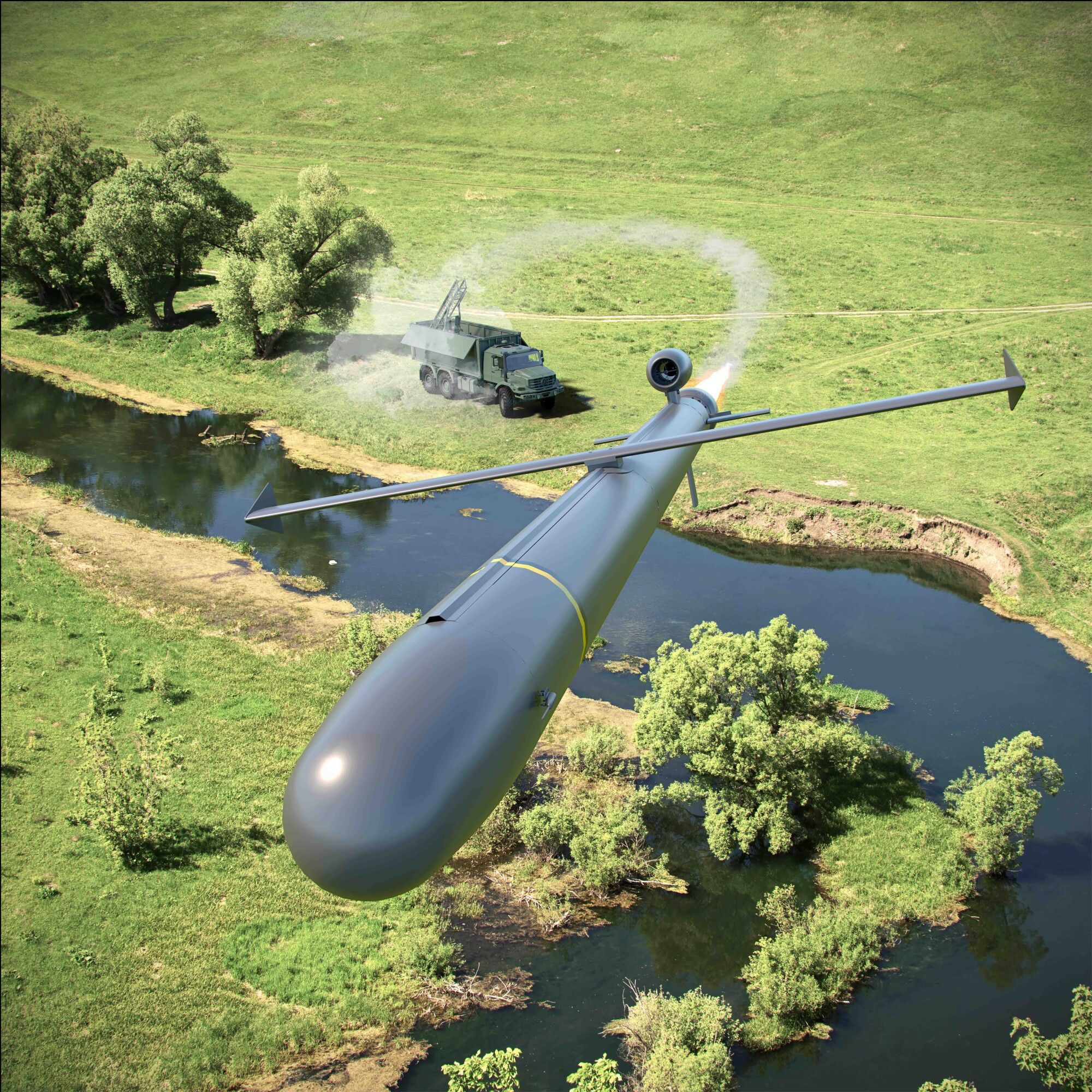
The United Kingdom has flight-tested three British-designed long-range strike weapons under Project Brakestop, a Ministry of Defence (MoD) effort to field a cheap, ground-launched deep-strike capability for Ukraine at wartime speed.
The MoD announced on 22 June 2026 that all three systems had been trialled at the Hebrides Range – a site managed by QinetiQ – only months after the competition opened. Follow-on contracts worth around £15 million each have now gone to the three remaining suppliers.
Project Brakestop was launched by the MoD’s Taskforce Kindred in November 2024, and it challenged UK industry to build a ground-launched weapon able to strike targets more than 500 km away while carrying a 225 kg warhead.
See Where Demand, Vendors, and Defence Priorities Are Shifting
Get clearer visibility into what procurement teams are looking for, how suppliers are positioning themselves, and where military requirements are evolving across EMEA.
The Requirements
Competitors were set a range of at least 500 km, a speed above 600 km/h, a warhead of at least 225 kg, and a target unit cost of around £400,000 excluding the warhead. The MoD also required the ability to produce at least 20 weapons a month within months of a production order.
A central condition was that the weapons contain no US components and use no US data, which – according to reporting by Bloomberg via the Kyiv Post – is intended to keep the systems free of third-country restrictions when gifted to Ukraine.
UK officials have framed that independence as a way to decide what to gift and how it is used without waiting on US approval, a constraint that earlier in the war slowed Ukrainian strikes on Russian staging areas and energy and defence infrastructure.
Officials have said the munitions will be less precise than the Anglo-French Storm Shadow but cost roughly half as much, with the aim of deploying them to the front line within a year. The competing firms have indicated they could produce around 40 units a month within three to four months of an order.
The competition drew 27 bids. After “Dragon’s Den” style technical pitches in February 2025, six firms received around £5 million each to build prototypes in seven months, and by December 2025 the field had narrowed to three.
Three Competing Effectors
MBDA UK is the only established prime among the finalists, and the maker of Storm Shadow. Its Brakestop entry, Crossbow, is a ground-launched deep-strike weapon that completed its first firings in December 2025 and February 2026, with production targeted for 2026.
MGI Engineering, an Oxfordshire firm founded by former Formula One technical director Mike Gascoyne, is competing with TigerShark in what is its first defence contract.
The company says TigerShark carries a payload of up to 300 kg at speeds up to 750 km/h out to a range of 900 km, and uses an Auterion-integrated navigation package built to work in GPS-denied conditions. Its payload bay is modular, with an open architecture intended for rapid upgrades.
Rotron Aerospace, a small UK firm now owned by Nasdaq-listed Ondas Inc., offers SkyLance, a propeller-driven one-way effector whose UK-designed propulsion the company says reaches up to 1,200 km with a full payload, and further with a lighter one. Rotron says the program has created over 160 UK jobs.
Specifications at a Glance
The three effectors solve the same requirement differently – one favours speed, one balances payload, and one maximizes range. The table below sets each against the MoD’s baseline.
| Attribute | MoD requirement | Crossbow (MBDA) | TigerShark (MGI) | SkyLance (Rotron) |
|---|---|---|---|---|
| Launch & type | Ground-launched one-way effector | Jet effector, ground-launched | High-speed jet effector, rail-launched | Propeller effector, rocket-assisted launch |
| Range | ≥ 500 km | > 800 km † | up to 900 km | up to 1,200 km (≈ 2,700 km with reduced payload) † |
| Speed | > 600 km/h | > 600 km/h † | 750 km/h | ~ 600 km/h |
| Warhead / payload | ≥ 225 kg | up to 300 kg † | up to 300 kg (modular) | 225 kg (modular; lighter for max range) |
| Propulsion | No US-origin content | Turbojet † | Jet engine | Rotron proprietary (propeller) |
| Guidance | No US components or data | In-house visual navigation † | Anti-jam GNSS + inertial + terrain reference (Auterion) | Anti-jam GNSS + optical / map-matching † |
| Test status | n/a | First firings Dec 2025 and Feb 2026; production targeted 2026 | Flight-tested; production scale-up from Q4 2026 | Flight-tested; 160+ UK jobs created |
Common to all three: a target unit cost of £400,000 or less excluding the warhead; output of at least 20 a month within months of an order (the firms claim up to 40); and a single, separately developed 225 kg warhead. Figures marked † rely on specialist reporting by Calibre Defence rather than published manufacturer data; TigerShark’s navigation is per Janes, and SkyLance’s range and speed per Rotron.
A Wider Support Surge
Brakestop’s next phase is already under way, with the £15 million contracts funding 15 improved effectors from each supplier, alongside launchers and support vehicles. Further UK trials are planned, followed by overseas testing, including in Ukraine.
The announcement came during a broader expansion of British support, including a £752 million aid package, 150,000 Ukrainian-made drones, and over 350 air-defence missiles and radars funded through the Extraordinary Revenue Acceleration loan.
Notes & Comments
Brakestop is one strand of a wider UK push to arm Ukraine with weapons it can field, and increasingly build, without Washington’s sign-off. The same MoD body behind it, Taskforce Kindred, has spun up several fast-tracked programs since late 2024.
The closest sibling is Project Nightfall, a ground-launched tactical ballistic missile carrying a 200 kg warhead beyond 500 km. It targets an £800,000 unit price and 10 systems a month, fires in salvos from ordinary vehicles, and is built to shoot and scoot in heavy jamming. Where Brakestop’s subsonic effectors trade speed for cost, Nightfall buys survivability with a ballistic trajectory that is far harder to intercept, and the MoD has said it carries “minimal foreign export controls.”
At the cheaper, higher-volume end sits Project Octopus, a low-cost interceptor drone for knocking down Russian Shaheds. It is a Ukrainian design that Kyiv has agreed to share, intellectual property included, so the UK can mass-produce it at thousands of units a month. Around these sits the bulk gifting already announced: 150,000 Ukrainian-made drones and hundreds of air-defence missiles, funded through the Extraordinary Revenue Acceleration loan.
These programs converge on the same handful of requirements, each built to a fixed price – £400,000 for Brakestop, £800,000 for Nightfall, a fraction of that for an Octopus interceptor – and to a monthly output rather than a single batch. Each is meant to run on a supply chain free of US or other foreign export controls, and each moves from competition to hardware in months rather than years.
The last thread matters most to Kyiv: each system is kept simple and well-documented enough for Ukraine’s own industry to absorb, co-produce, or build outright, whether through Octopus’s technology transfer or Brakestop’s planned trials and production inside Ukraine. The strike programs are also designed to keep working through the heavy jamming that now blankets the front.
The effort pays the UK back as much as it serves Ukraine: the MoD has said Nightfall will also inform future British long-range strike projects, and Brakestop has shown UK firms can carry a weapon from contract to flight test in a matter of months. Ukraine gains affordable mass it can sustain at the front, while the UK quietly rebuilds a munitions capacity it had let thin. Brakestop is the part that flew this month; the wider pattern behind it is the more durable development.
Quwa Pro
Follow The Signals Shaping EMEA Defence Markets
Follow what vendors are doing, what militaries are prioritizing, and where decision-makers are placing their bets through independent reporting, analysis, and briefings built for serious defence readers.
Featured & Trusted By
