

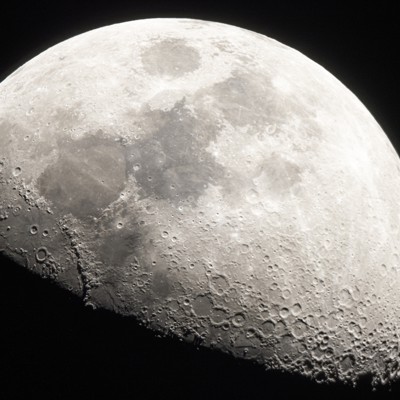
COLORADO SPRINGS, Colo.— Launch nuclear reactors to orbit as soon as 2028 and to the Moon as soon as 2030—that’s the White House’s new order to the Pentagon and NASA.
The six-page policy memo released on Tuesday calls for a dual design competition between the agencies that is to produce a “nearterm demonstration and use of low- to mid-power space reactors in orbit and on the lunar surface.”
“The United States will lead the world in developing and deploying space nuclear power for exploration, commerce, and defense,” the policy reads. “Agencies will establish cost-effective partnerships with private-sector innovators to meet near-term objectives that include safely deploying nuclear reactors in orbit as early as 2028 and on the Moon as early as 2030. Achieving these near-term objectives will establish technological viability essential to unlocking space exploration, commerce, and defense applications.”
Michael Kratsios, the director of the White House’s science and technology policy office, unveiled the policy at the Space Symposium here. He tied it to President Donald Trump’s December executive order that aimed to “ensure space superiority” for the United States.
“Nuclear power in space will give us the sustained electricity, heating and propulsion essential to a permanent robotic and eventually human presence on the moon, on Mars, and beyond,” Kratsios said.
The defense applications for a nuclear reactor are wide-ranging, said Todd Harrison, a space policy and budget expert for the American Enterprise Institute. With a reliable energy source, the military could use it to power some of its most crucial future missions.
“You could run data centers in space, you could use it to power mission-critical systems that can never really go without power, like missile warning, strategic communications, Harrision said. “Directed energy, jamming, data centers, all of those things could use a lot of power.”
Within 90 days, the Pentagon must brief the White House’s science and technology policy office, management and budget office, and National Security Council on “relevant use-cases and payloads” for the systems and “best use of the 2031 mission,” according to the policy.
Those offices, along with the Defense Department, will decide on the final mission for that technology.
On Earth, the Defense Department has worked for decades to field nuclear microreactors to power its military bases. Last year, the Army announced last year that it aimed to break ground on a microreactor on a U.S. base by 2027. As well, the Pentagon’s Defense Innovation Unit declared eight companies eligible to build those microreactors.
Last week, the Air Force and Defense Innovation Unit selected Buckley Space Force Base, Colorado, and Malmstrom Air Force Base, Montana, as possible locations for two microreactors. There is also a standalone pilot program that will test the operational benefits of a reactor at Eielson Air Force Base, Alaska.
Top U.S. officials have dismissed the fears of groups such as the Bulletin of Atomic Scientists, who have pointed out that microreactors on U.S. bases “could become attractive targets for an adversary.”
Currently, there are no nuclear reactors in space and no operational microreactors on Earth within the United States. Harrison said the White House’s timeline for moon-based reactors is ambitious.
“The timeline and feasibility strikes me as rather aggressive,” Harrison said. “Demonstrating a microreactor on Earth would be challenging by 2028, doing it in space is even more challenging.”
