

Credit ratings agency S&P yesterday affirmed Indonesia’s current sovereign credit ratings, stating that its outlook for the country’s economy remained “stable.”
In a statement, S&P said it was reaffirming its BBB/A-2 sovereign credit ratings, arguing that the country’s recent fiscal strains, which it put down to “high energy prices, higher interest rates, a weak currency, increased policy uncertainties, and accumulated debt,” were likely temporary.
S&P said that Indonesia’s policies to boost revenue and export earnings from the resource sector should also lift revenue over time, supporting the rating outlook.
“The stable rating outlook reflects our expectation that government revenue will continue to recover this year and export receipts will rebound with higher commodity prices,” it stated.
The news will no doubt come as a relief for Prabowo’s administration, which has recently courted friction with international investors. Since coming into office in October 2024, Prabowo has pursued high-spending populist social policies, including a multibillion-dollar free meal program, that have pushed the budget toward its 3 percent annual deficit ceiling. The former general has also increased the state’s involvement in the Indonesian economy in a bid to maximize the country’s return from natural resources and international trade.
These policies, along with the firing of respected Finance Minister Sri Mulyani Indrawati last year, has unsettled investors and undermined Indonesia’s hard-won reputation for fiscal conservatism.
Earlier this year, fellow ratings agencies Moody’s and Fitch cut their debt rating outlooks for Indonesia to negative, citing the unpredictable and fiscally expansive nature of economic policymaking under Prabowo. The latter cited the “increasing policy uncertainty and erosion of Indonesia’s policy mix consistency and credibility” and the “growing centralization of policymaking authority” under Prabowo.
The country’s stock market has also attracted negative scrutiny. In January, the global index provider MSCI threatened to downgrade Indonesia to “frontier market” status in January, due to a number of transparency concerns in its stock market, including the high concentration of ownership in certain companies and the limited “free float” of tradeable shares. The resulting stock sell-off has made the main Indonesian stock index one of the worst performing in Asia in 2026.
In response to MSCI’s threat, Indonesia’s government announced a long list of proposed reforms. Among these were a doubling of the minimum free float for listed companies to 15 percent. The top executives of the exchange and regulatory body also stepped down. As a result, MSCI has extended its review of Indonesia’s status as an “emerging” market economy until November.
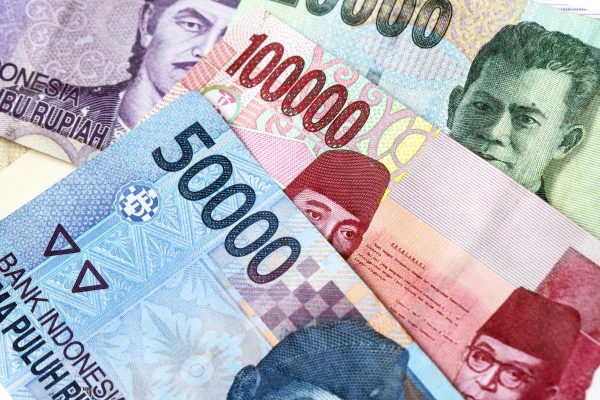
There is concern over Indonesia’s fiscal management slide in the value of the rupiah, which is now trading at more than 18,000 to the U.S. dollar, compared to around 15,500 at the time of Prabowo’s inauguration. The currency is now worth less against the U.S. dollar than during the Asian financial crisis of 1997-1998.
S&P said that there were a number of things that could prompt the agency to revise Indonesia’s ratings downward, such as a sharp increase in government debt or a structural overhaul in export receipts.
However, it expressed confidence that the Indonesian government “continues to view its 3% annual deficit ceiling as an important policy anchor.” In particular, S&P cited recently government pledges to cut spending, including on the Free Nutritious Meals Program, in order to keep the deficit below this 3 percent threshold.
In response, Reuters reported, the Indonesian government and Bank Indonesia said the rating reflects global investor confidence in the country’s economic management, and that such confidence would likely help support the rupiah.
