

The United States appears set to embark upon a significant military buildup. President Donald Trump’s proposed $1.5 trillion defense budget increases funding for shipbuilding, aircraft production, missile production, Golden Dome, and many other critical programs.
What should not be lost in the shuffle, though, is the need to redeploy theater nuclear forces to the Western Pacific.
North Korea routinely threatens to turn American, South Korean, and Japanese cities into a “sea of fire.” China continued to build up its nuclear arsenal, including precision missiles designed for low-yield nuclear attacks in East Asia. Yet Washington has, since the end of the Cold War, not deployed an offsetting regional nuclear deterrent.
While the US maintains ballistic missile submarine patrols in the Pacific, these stealthy platforms are generally loaded with less discriminate high-yield weapons meant to be held in reserve as a secure second-strike capability. These systems were designed primarily to deter an attack on the American homeland, not an attack on US and allied forces overseas. Allies and adversaries alike know this.
Our allies—particularly South Korea and Japan—have become increasingly concerned about the credibility of America’s commitment to their defense, in part due to North Korea’s and China’s nuclear breakout. Indeed, these concerns are so acute that many South Koreans are again thinking of establishing their own nuclear weapons program.
Some 70 percent of the South Korean population believes their country needs an indigenous nuclear deterrent, and senior government officials have even echoed this sentiment. No less than a sitting South Korean president, albeit one who would soon be removed from office, suggested that his country will have to either build its own deterrent or request the redeployment of US nuclear weapons to the peninsula.
Similar attitudes are growing in Japan. In November 2025, Prime Minister Sanae Takaichi refused to reaffirm her country’s commitment to not possess, produce, or allow nuclear weapons to enter Japanese territory. Other influential voices in Tokyo have explicitly recommended a reassessment of the prohibition of nuclear weapons on Japanese territory. They go so far as to recommend that Washington should consider bringing nuclear weapons into Japan under certain circumstances and that Japanese delivery systems might one day carry US-controlled nuclear weapons.
The nuclear dam in East Asia has not yet broken. But something needs to change — or else it likely will in the years ahead. By reintroducing US theater nuclear forces to East Asia—first in South Korea, and then more gradually in Japan — Washington can reassure its anxious allies, while also bolstering its own national security interests.
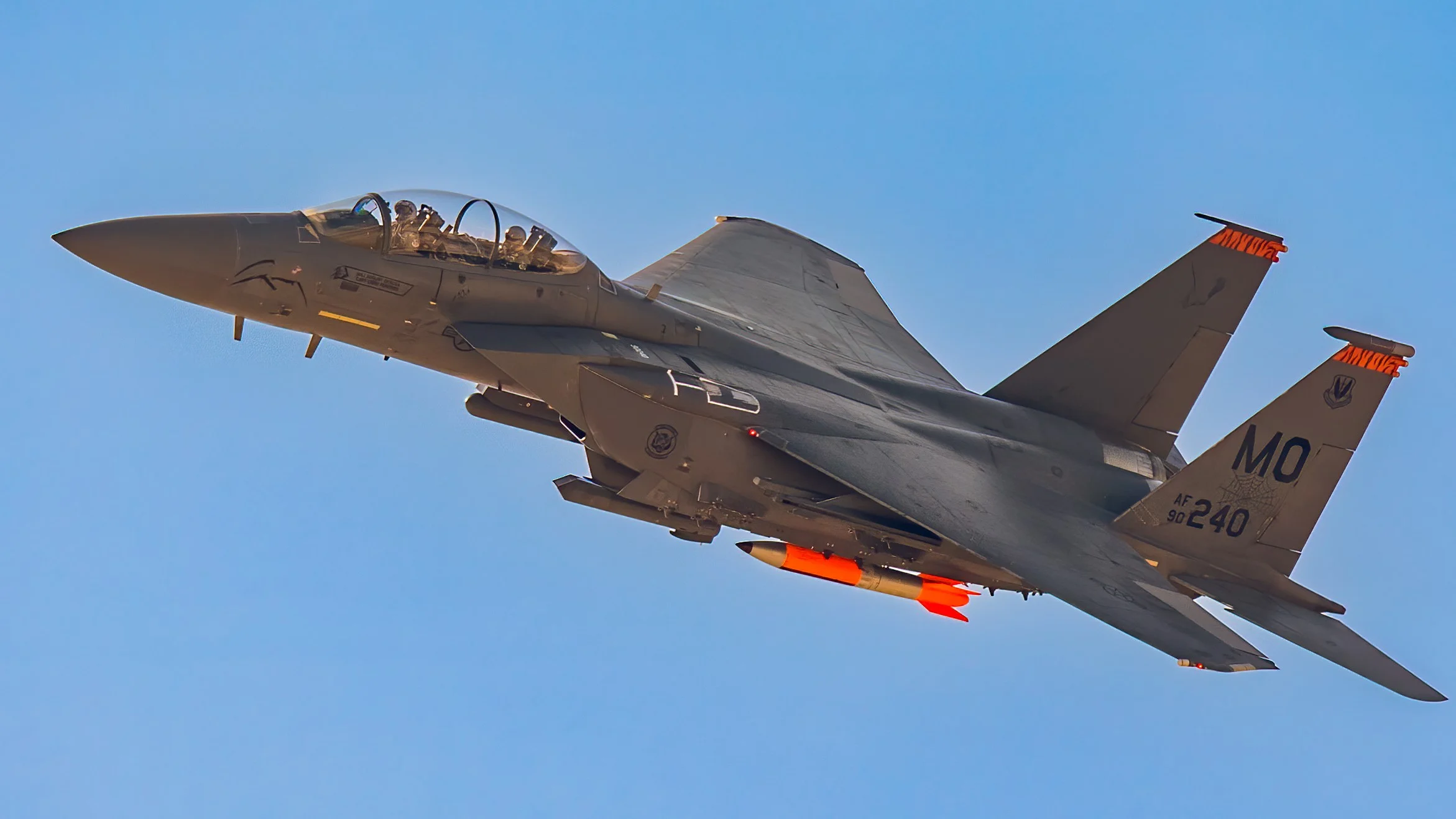
For South Korea, the NATO model would apply. Seoul would agree to host B61 gravity bombs on its territory, under US custody. A follow-on move would be to bring Seoul into a nuclear-sharing arrangement, in which the US certifies the Korean F-35A fleet to carry US-controlled gravity bombs in crisis or wartime. The US could — if it proves feasible — pull modified W80 warheads out of the reserve stockpile for Tomahawk cruise missiles. In a perfect conception, the long-term goal would be for the US and South Korea to operate road-mobile launchers armed with nuclear-capable Long-Range Hypersonic Weapons; however, such a capability is not actively under development for now, and would likely require a greater political push inside South Korea.
Given the unique political circumstances surrounding nuclear weapons in Tokyo, the process of incorporating Japan into the mix would be slower. The US would first station B61 gravity bombs on Guam and gradually have Japanese crews operate dual-capable aircraft from Anderson Air Force Base. Next, Japanese and American crews would operate the nuclear-capable Long-Range Hypersonic Weapon from Guam. And, should political conditions become amenable in the long run, nuclear-capable delivery systems could even operate on Japanese territory.
These changes are necessary to not only inhibit friendly nuclear proliferation but also to deter adversaries whose growing nuclear capabilities might embolden them to run greater risks.
The current paucity of US nuclear options in East Asia could give China the idea that its neighborhood is safe for conventional war-making. This is a real concern now that China boasts the largest navy and concentration of missiles in the world, as well as the fastest-growing fleet of fifth-generation aircraft.
If Washington lacks forward-deployed, low-yield nuclear weapons, Beijing may feel confident that it can press its conventional advantages without drawing a US nuclear response. It might calculate that the burden of escalation falls squarely on Washington, and that a US president would ultimately refrain from responding with a high-yield submarine-launched ballistic missile. All this might increase China’s willingness to roll the dice and initiate a conventional fight in the first place.
And should Beijing find itself stymied by Washington in a protracted conventional slugfest, Beijing might turn to its diverse menu of theater nuclear options to break the stalemate and coerce Washington into backing down. Beijing may perceive a gap in America’s comparatively bare menu of theater options, and this gap may incentivize Beijing to escalate its way out of a failing conventional war.
While the United States could respond to such a theater nuclear attack with a submarine-launched ballistic missile, this strategic option is far less credible than a more discriminate low-yield option based within East Asia. If Washington were to employ nuclear forces generated from the continental US, it is more likely that China or North Korea would feel justified in attacking the American homeland in retaliation. And this prospect might self-deter a US president from responding in the first place with nuclear weapons.
But if Washington were to employ a forward-deployed option instead, China might refrain from going up the proverbial escalation ladder and tacitly agree to return the fighting to the conventional level — maybe even terminate the conflict altogether. In this sense, broadening the range of US theater options would reinforce deterrence by shifting the burden of escalation back to China.
While some might contend that stationing US theater forces in the Pacific would provoke China and dash hopes of managing escalation in a conflict, China crossed that threshold long ago.
It is Beijing that illegally built artificial islands in the critical sea lanes of the South China Sea for military purposes. It is Beijing that routinely encroaches on the airspace and territorial waters of America’s closest Asian allies. It is Beijing that makes no bones about blockading and subjugating Taiwan in the name of “national rejuvenation.” And it is Beijing that has deployed several hundred nuclear-capable delivery systems that can hold allies hostage across the Western Pacific. Reintroducing theater forces would therefore help stabilize a region already destabilized by China.
It has been said that the US uses nuclear weapons every day to deter adversaries and reassure allies. Critics may dismiss this statement as cliché, but like most clichés it holds a fundamental truth. The US needs to begin “using” nuclear weapons to stabilize the deteriorating military balance in the Western Pacific. And to do that, it needs to begin deploying nuclear weapons within the region.
The time to start is now.
Kyle Balzer is a fellow at the American Enterprise Institute. Robert Peters is the Senior Research Fellow for Strategic Deterrence and the Assistant Director of the Allison Center for National Security at the Heritage Foundation.
