

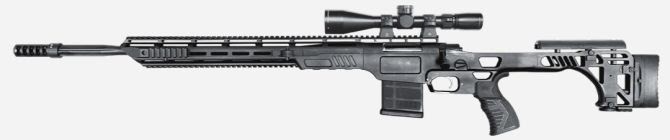
enter service with two Indian police forces after nine years of development.
This marks a significant milestone for India’s indigenous small arms industry,
showcasing the country’s growing confidence in its ability to design and
produce modern tactical weapons, according to a
post
in SSS Defence handle.
The Viper was conceived nearly a decade ago as part of SSS Defence’s ambition
to create a new generation of indigenous rifles tailored to India’s
operational requirements. Over the years, the weapon has undergone extensive
trials, refinements, and redesigns, shaped by a young cadre of engineers and
weapon designers who infused it with fresh ideas and technical innovation.
This long gestation period has given the rifle a new essence, reflecting both
resilience and adaptability in India’s defence manufacturing ecosystem.
Been 9 years since the @sssdefence Viper was born. It’ll finally go into service with 2 amazing police forces in less than a month.
This is what rebirth looks like. An entire generation of young weapon designers & engineers gave it new essence. I love the new spirit, it’s… https://t.co/ZB6RnWslzl— Vivek Krishnan (@Viv_Krishnan) May 24, 2026
The rifle is now poised to be inducted by two major police forces within the
next month, marking its transition from prototype to operational deployment.
This induction is not only a validation of the weapon’s performance but also a
testament to the persistence of India’s private defence sector in overcoming
challenges and delivering a product that meets stringent standards of
reliability and effectiveness. For the police forces, the Viper promises
enhanced firepower, precision, and durability, qualities essential for modern
law enforcement operations.
SSS Defence has consistently emphasised that the Viper will retain its name,
underscoring the importance of identity and continuity in indigenous weapon
design. The company has rejected suggestions of rebranding, asserting that a
name is more than a label—it represents the spirit and origin of the weapon.
This decision reflects a broader cultural confidence in Bharat’s defence
industry, which no longer feels the need to seek external validation or
compromise its identity.
The Viper joins a growing portfolio of indigenous small arms developed by SSS
Defence, including the Saber and Viper sniper rifles, the M72 carbine, and the
Raptor .300 Blackout carbine recently showcased internationally.
Together, these weapons highlight India’s emergence as a credible producer of
advanced small arms, capable of meeting domestic requirements while also
appealing to export markets. The induction of the Viper into police service
further consolidates this trajectory, signalling that indigenous designs are
now trusted for frontline deployment.
The rifle’s journey also symbolises a generational shift in India’s defence
industry. A new wave of engineers and designers has taken ownership of
projects like the Viper, bringing with them a spirit of innovation and
determination.
Their work reflects a broader national mood—one that is unapologetically
confident, self-reliant, and committed to building a future where Bharat
stands tall in the global defence landscape.
The Viper’s operational induction will be closely watched, as it represents
not just the success of a single weapon but the maturation of India’s
private-sector defence manufacturing. Its deployment will serve as a benchmark
for future indigenous projects, reinforcing the country’s resolve to modernise
its security forces with home-grown solutions.
SSS Defence
