

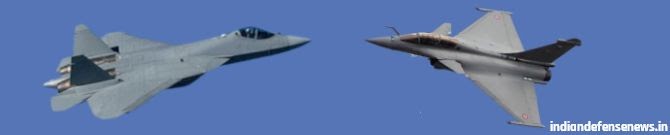
This undermines Moscow’s claims of fifth‑generation stealth and highlights the detection advantage of Western fighters such as the F‑35, whose radar footprint is about a thousand times smaller.
The Su‑57 has long been presented by Russia as a highly stealthy fifth‑generation fighter, yet its stealth credentials are questioned by its own patents. The frontal radar cross section is set between 0.1 and 1 square metre, a figure that places it on par with or above the Rafale’s minimal frontal signature, which Dassault engineers estimate at 0.06 square metre.
This comparison is based on clean airframes without external stores, but it highlights the Su‑57’s vulnerability to modern radars and explains why the F‑35 can detect the Su‑57 at a distance six times greater than the reverse.
The Rafale benefits from a smaller frontal signature, translating into earlier detection of the Su‑57 when radars of identical performance are applied. The F‑35’s radar cross section, about one thousandth of a square metre, explains the vast detection range gaps and supports its dominance in beyond‑visual‑range engagements. These figures remain tied to frontal aspect and surface condition, but they are critical in shaping operational outcomes.
In terms of airframe design, the Su‑57 does retain advantages. It carries R‑77 medium‑range and R‑72 short‑range missiles internally, preserving geometric stealth, and boasts an internal fuel capacity of around 10 tonnes compared with the Rafale’s 4.7 tonnes. This allows the Russian aircraft to extend endurance without external tanks, whereas the Rafale’s radar cross section increases once drop tanks or underwing weapons are fitted.
The balance shifts when sensors and protection systems are considered. The Rafale fields the RBE2 active electronically scanned radar, a frontal optronic system and the SPECTRA electronic warfare suite, widely regarded as more capable than the Su‑57’s onboard systems. Its weapons portfolio, including MICA, MICA NG, METEOR, AASM Hammer, and future Stratus and Smarcruiser munitions, offers superior engagement options compared with Russia’s current offerings.
Operationally, Russia’s Aerospace Forces operate between 32 and 42 Su‑57s, while the United States fields more than 1,300 F‑35s. This disparity in fleet size, combined with the radar footprint differences, directly influences interception distances and firing windows in beyond‑visual‑range combat.
Industrialisation challenges further complicate Russia’s ambitions. At the Shanghai International Aerospace Exhibition in 2024, observers noted visible rivets, screws and misaligned panels on a Su‑57 prototype, raising questions about production quality. Moscow still aims for 76 aircraft by 2027, but logistical strains and dependencies on precision equipment remain obstacles.
Propulsion is another limiting factor. Current Su‑57s fly with AL‑41F1 engines derived from the Su‑35, while the next‑generation Izdeliye 177 turbofan has yet to be serially integrated. Interim engines restrict prolonged supercruise, increase fuel consumption and raise infrared signatures, making detection by optronic sensors easier. These shortcomings weigh heavily on mission profiles in contested airspaces.
By contrast, the Rafale continues to evolve. The F4.1 standard began qualification in 2023, with operational persistence from 2024. Its modular computing architecture and data fusion support denser sensors and weapons, enhancing survivability in air‑to‑ground raids.
The F5 standard, reconfigured in the 2024–2030 Military Programming Law, promises conformal tanks, low‑signature drop tanks, advanced sensors and a collaborative combat drone derived from the nEUROn demonstrator. This drone, announced as more stealthy than the Su‑57, will allow the Rafale F5 to broaden operational offerings and strengthen export appeal.
Ultimately, while the Su‑57 retains advantages in internal carriage and fuel capacity, its radar cross section figures, propulsion limitations and industrial challenges undermine its stealth narrative. The Rafale, with superior sensors, electronic warfare systems and evolving standards, positions itself as a more balanced and survivable platform in the coming decade.
Agencies
