

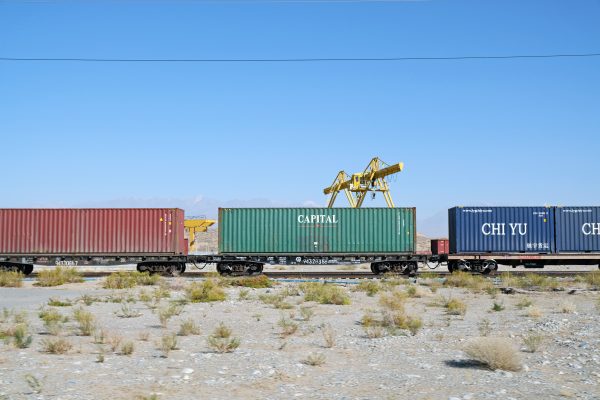
In an age of seemingly catastrophic disruptions to maritime trade, land-based routes are seeing renewed interest. Could one of the most iconic trade routes of all time be making a modern comeback?
For Central Asia, geography is both a blessing and a curse. The region has been, at various points in history, the center of the world or a geopolitical backwater. Until the rise of reliable long-distance maritime trade in the 15th century, what we now call Central Asia was smack-dab in the middle of the world’s most important trade networks. You’ve heard the term: The Silk Road.
Now a modern version aims to capitalize on the tumultuous twists and turns of contemporary geopolitics to resurrect an ancient pathway.
Today we’re talking about the Middle Corridor — a multimodal trade and transit route stretching across the Eurasian landmass, linking China to Europe. Since the early 2010s, the Middle Corridor has benefitted from three geopolitical shocks, as well as from China’s growth and Europe’s desire to diversify away from its reliance on Russia.
But is seizing an opportunity enough to overcome the sheer scale and clear advantages of seaborne trade?
