

The Global Progressive Mobilisation (GPM), convened in Barcelona on April 17 and 18, 2026 by Spanish Prime Minister Pedro Sánchez, brought together progressive and centrist political leaders from across the world. More than a conference, it functioned as a central hub for global political networks, with over 100 speakers engaged in discussions on the future of international politics.
At its core, the GPM represents an effort to defend and renew the foundational principles of the postwar international order – democracy, human rights, the rule of law, and free trade – through cooperation among progressive and centrist forces across national and party lines. At a time when these principles are increasingly challenged by nationalism and exclusionary politics, the GPM stands as a concrete manifestation of an emerging international political movement that seeks to sustain them through coordination rather than confrontation.
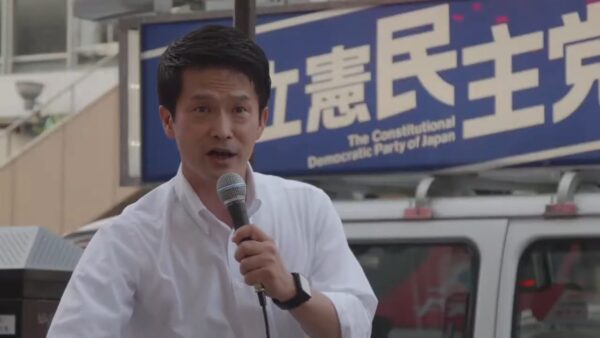
Among the participants was Junya Ogawa, President of Japan’s Centrist Reform Alliance, whose presence provides an important perspective on both the structural challenges facing contemporary politics and the evolving role of party diplomacy in Japan.
From Observation to Participation
Ogawa’s participation marked a turning point in how Japanese opposition actors engage internationally. In postwar Japan, diplomacy has largely been the domain of the government, with opposition parties playing only a limited role in global political engagement.
In this context, the GPM provided an opportunity not merely to observe international developments, but to participate directly within a multilateral political network. During his visit, Ogawa held more than 30 bilateral meetings with political leaders from Europe, North America, and beyond, engaging at levels typically associated with state diplomacy.
This shift – from engaging with international politics from the outside to participating within its networks – signals the emergence of party diplomacy as a complementary channel to traditional state-based diplomacy in Japan.
Structural Questions
One of the most significant outcomes of the GPM was not a collective declaration, but the process through which Ogawa raised key questions and deepened his understanding through direct dialogue with over 30 political leaders.
Throughout these exchanges, Ogawa consistently emphasized a structural challenge: the gap between a strong global economy and weak international politics. While capital and information move freely across borders, political decision-making and redistributive functions remain confined within sovereign states rooted in the Westphalian system.
Through dialogue, it became evident that many countries are grappling with similar challenges: widening inequality, the weakening of the middle class, and the resulting political instability. These conversations revealed a degree of resonance with Ogawa’s perspective, highlighting the shared nature of these concerns.
This process helped clarify that contemporary political instability should not be understood merely as ideological confrontation, but as a structural issue: the inability of political institutions to adequately respond to the realities of globalization.
While the GPM emphasizes the defense of democratic values and coordination among progressive forces, Ogawa’s involvement contributed to deepening the discussion by drawing attention to these underlying structural dynamics.
Within these dialogues, the importance of redistribution was widely acknowledged. At the same time, Ogawa gained important insights, particularly through discussions with Nordic political leaders, into the concept of “social investment.”
This approach views spending on children and education not as a cost, but as an investment that generates long-term returns in economic growth and social stability. It represents an evolution of traditional welfare policies and offers a practical framework for rebuilding the middle class.
In Japan, where policy debates are often framed as a trade-off between fiscal discipline and redistribution, this perspective provides a valuable alternative lens.
The GPM also served as a platform for reaffirming core principles – democracy, human rights, the rule of law, and free trade – at a time when these values are under increasing pressure.
It demonstrated that political actors committed to these principles exist across countries and party lines. Importantly, this alignment goes beyond the sharing of ideals; it reflects an emerging effort to translate these values into coordinated international political action.
Significance for Japan
Ogawa’s participation carries important implications for Japan. By engaging directly in international political networks, opposition actors can contribute to global discussions while presenting a more plural representation of Japan in international politics.
In this sense, party diplomacy functions not only as a channel of engagement, but also as a means of conveying the diversity of political perspectives within Japan to the international community.
At the same time, translating the insights gained at the GPM into concrete institutional design remains a significant challenge. Bridging the gap between the global economy and state-based political systems will require further innovation. In this respect, the GPM should be understood not only as a platform for political alignment, but also as an evolving attempt to turn shared values into coordinated global action. Its long-term significance will depend on whether dialogue can lead to sustained policy coordination.
This, for Japan, is the key challenge. Can it take these international insights and use them to produce concrete domestic policies capable of addressing the erosion of the middle class?
The GPM represents an important step toward addressing the structural disconnect between global economic realities and state-based political systems. Ogawa’s participation signals that Japanese political actors are beginning to engage directly with these global challenges.
Whether this development becomes a sustained feature of Japan’s political landscape will depend on the ability to institutionalize such engagement and link it to real policy innovation. If successful, it could contribute not only to redefining Japan’s role in international politics, but also to strengthening the foundations of democratic governance in an era of profound transformation.
