

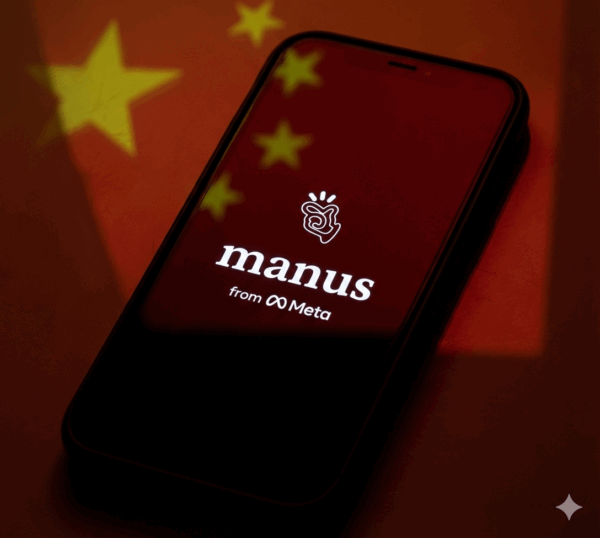
Within a couple of years of its incubation in 2023, Manus, an autonomous agentic AI start-up, made headlines in December 2025, when Meta announced its acquisition for $2 billion. Although the Chinese authorities rushed to order a probe into the deal, it took four months to finally unwind the transaction. Since the 2020 regulatory crackdown on technology enterprises, Beijing has been closely monitoring and directing the growth of tech startups. Despite that, China had to retroactively unwind the deal after the transaction had been consummated. The belated quashing of the Manus acquisition will create challenges in effectively disentangling the transfer of data, assets, and talent. More than that, the episode also represents significant structural tensions in China’s domestic industrial policy ecosystem.
First, the regulatory intervention in Manus’ case was unconventional. It was undertaken by China’s top economic planning body, the National Development Reforms Commission (NDRC), and not the anti-monopoly regulatory authority, the State Administration for Market Regulation, which had taken similar actions in the past. Notably, the NDRC’s intervention invoked the 2021 Foreign Investment Security Review Measures for the first time, which could be called a step toward institutional improvisation, rather than merely a regulatory intervention.
According to reports, the matter had been escalated to China’s National Security Commission. That not only indicates that China viewed the risk of Manus slipping into Meta’s hands as a national security problem, but it also holds enormous implications for existing regulatory clarity for AI companies. Chinese regulators appear to have drawn a red line at the popular practice of companies founded in China restructuring and operating from an offshore location (called “Singapore washing”). Chinese AI companies will look at the Manus fallout as a cautionary tale. But the unprecedented nature of the intervention means that Chinese AI startups cannot model regulatory risks with any precision.
The fallout is already visible in recent steps taken by leading Chinese startups. MiroMind is expected to suspend its services in Greater China due to ongoing business adjustments. The CEO stated that strict internal firewalls were needed between the company’s domestic and international operations. Moonshot AI is considering unwinding its special corporate structure, as Beijing has instructed it to pursue a listing in Hong Kong through a mainland Chinese entity, instead of the Cayman Islands.
Such a visible panic among Chinese AI startups has led the NDRC to issue an appeal that foreign investments do not need to be curtailed. In fact, days after the decision to block this acquisition, Chinese officials reaffirmed their open-door policies toward foreign investment. At the same time, reports suggest that the domestic funding in Chinese AI start-ups tripled in the first quarter of 2026.
China watchers often remain puzzled about the gap between its official stance on innovation and its regulatory policies. Research demonstrates that the Chinese state’s policies toward its technology enterprises can be defined as a policy of carrot and stick, which depends on a range of factors, including the functional role of a firm and its strategic alignment with the Chinese Communist Party’s broader objectives.
Perhaps Manus’ case is atypical. While most frame this episode as Beijing’s attempt to block Manus’ exit, it is rather questionable whether China has a legitimate exit strategy in place. Most of China’s AI ecosystem is built on heavily state-subsidized architecture, comprising government-guided funds, policy bank loans, local government equity participation, etc. In such cases, the state retains a strategic claim, and the question of foreign acquisition of such firms effectively becomes unviable. Zhipu AI, another young AI startup and a leading AI model developer, demonstrates this tale. While Zhipu AI has been able to immerse itself in the heavily state-funded ecosystem, Manus’ initial efforts to tap into the domestic ecosystem failed.
Two factors offer a perspective to understand this distinction. Unlike Zhipu AI, which is a frontier AI model developer, the core product of Manus operates at the application layer. The data dimension compounds this. Manus’s agentic frameworks derive their value precisely from operating across international digital environments. China’s data governance regime, designed for a closed information ecosystem, is structurally incompatible with building globally competitive agentic AI. Chinese regulators have previously penalized firms that handle vast amounts of sensitive public data.
Thus, despite gaining widespread media attention and hype from AI enthusiasts around the world, Manus lacked the strategic importance to fit into the core industrial policy ecosystem, which relies on heavy state-incentivized funding. Its sale was blocked because it exposed a contradiction that Beijing had never been forced to resolve publicly before. A belated response to this could trigger the state’s facilitation of external funding to Manus’ founders to buy their way back.
The Manus case does not end with Manus and other existing AI startups. The recent episode threatens the return calculus on which China’s AI talent strategy was founded. It signals to Chinese AI researchers and engineers, particularly those with international exposure, that the domestic AI ecosystem does not always guarantee an exit route, and that business decisions are subject to a political veto. Much depends on how Beijing’s lucrative policy architecture resolves this void.
From a broader perspective, the Manus case upgrades the analytical understanding of the China-U.S. AI race. Manus does not train models; rather, it develops frameworks that turn AI models into functioning agents. Beijing’s blocking of the Manus deal indicates that competition is no longer about chips or models alone but has broadened into product design and engineering. Consequently, AI agents can now be considered strategically sensitive products. If Beijing’s stated objective is to prevent the loss of critical technology and data to a rival’s hands, then its first obligation is to address the policy inconsistencies within its own domestic ecosystem.
