

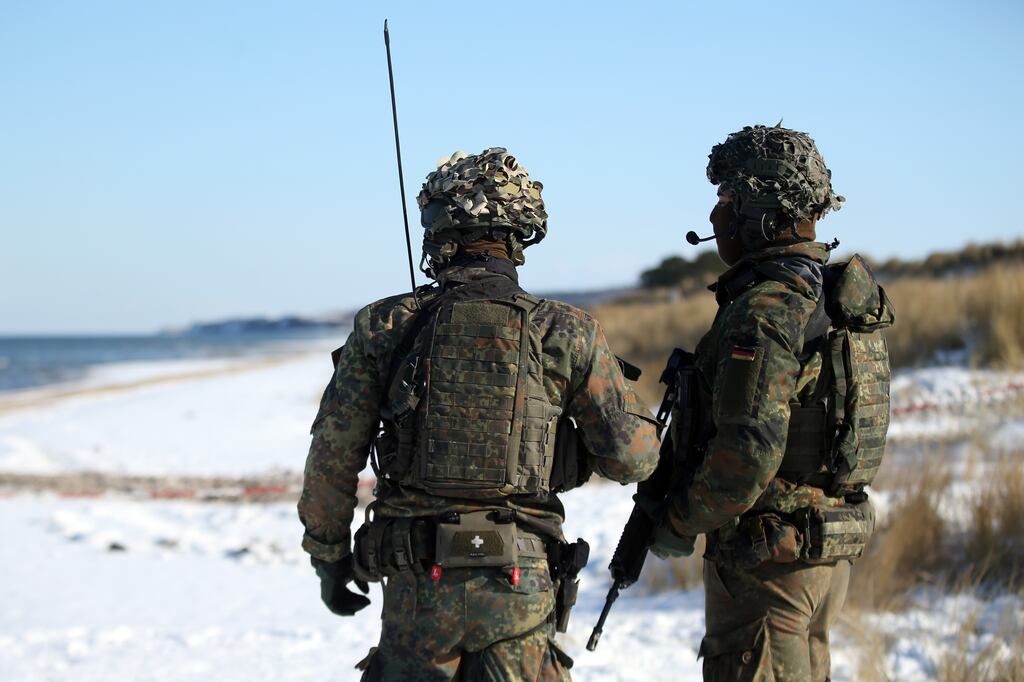
Germany’s government has introduced a comprehensive set of strategic documents designed to fundamentally reshape its armed forces over the next two decades. This landmark overhaul, the most extensive in recent history, sets a clear and ambitious objective: to establish the German military, or Bundeswehr, as the most formidable conventional fighting force in Europe by the year 2039. The package includes Germany’s first-ever standalone military strategy, a new capability profile, a detailed personnel expansion plan, and a redesigned role for its reserve forces.
The new plans were presented to lawmakers this week before being shared with the public. Defense Minister Boris Pistorius, who initiated the strategic review, emphasized the historical necessity of these measures in the current geopolitical climate. The documents are intended to be a long-term strategic foundation for the Bundeswehr, subject to ongoing revision as circumstances evolve.
A New Strategic Doctrine
Titled Verantwortung für Europa (Responsibility for Europe), the core military strategy explicitly identifies Russia as the principal security threat and considers potential scenarios involving attacks on NATO territory. While specific threat assessments remain classified, the strategy marks a significant doctrinal evolution. German defense planning will now adopt a one-theater approach, treating the security of NATO territory, the Middle East, and the Indo-Pacific as interconnected rather than separate domains.
This new approach signals a broader perspective on Germany’s global security responsibilities and how conflicts in one region can directly impact stability elsewhere. The strategy moves beyond a purely continental focus to a more integrated global view of defense and deterrence.
Redefining Military Strength
A key component of the reform is a shift in how the military measures its strength. The new capability profile moves away from a rigid focus on the quantity of tanks, ships, or aircraft. Instead, it prioritizes an effects-based model, concentrating on the outcomes the military must be able to achieve. High-priority areas for development include the ability to conduct deep precision strikes, defend against hypersonic missiles, and expand unmanned drone capabilities. The defense minister noted that Germany is building its long-range strike capacity almost from the ground up.
To achieve these goals, a significant expansion of military personnel is planned. The number of active-duty soldiers is set to grow from the current 185,420 to 260,000 by the mid-2030s. In parallel, the reserves will be substantially increased from around 60,000 to at least 200,000, creating a combined force of 460,000 combat-ready personnel. This growth is structured in three phases, focusing on rapid buildup, capability expansion, and technology integration through 2039. Recent legislation has codified these milestones, and it includes the possibility of reinstating conscription if recruitment targets are not met. Currently, military officials report that recruitment and application numbers are trending positively.
Modernization and an Elevated Reserve
The overhaul also reimagines the role of the military’s reserve component. Long considered a secondary force, the reserve is now positioned as an equal partner to the active-duty military. The new reserve strategy assigns them critical responsibilities for homeland defense and for ensuring Germany can function effectively as a logistics hub for allied forces during a crisis.
Finally, the package includes an ambitious agenda for streamlining the military’s notoriously cumbersome bureaucracy. Known as EMA26, this plan contains over 150 specific measures and nearly 600 implementation steps aimed at cutting red tape, digitizing administrative processes, and leveraging artificial intelligence. In a novel approach to prevent bureaucratic bloat, all internal regulations will now be issued with automatic expiration dates. Despite the detailed planning and committed funding, officials acknowledge potential headwinds, such as intense global demand for air defense systems, which could strain production capacity and affect timelines.
