

Russia’s Romanov dynasty and William Ernest Henley’s poem “Invictus” were repeatedly mentioned during the first two weeks of the impeachment trial of Philippine Vice President Sara Duterte, sparking heated commentaries and online debates on history, violence, and accountability.
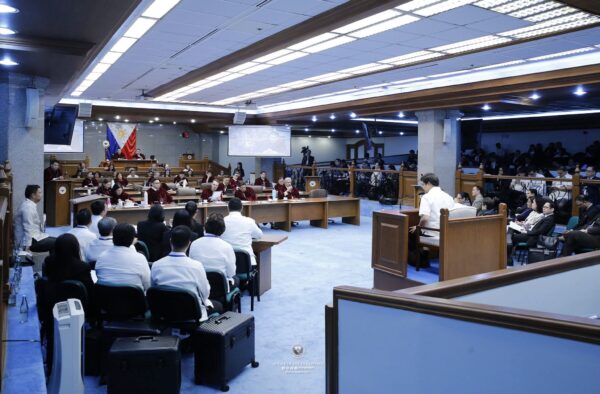
After being impeached twice by the House of Representatives for betrayal of public trust, Duterte is now on trial in the Senate, which is constitutionally mandated to deliver a verdict and decide if the vice president should be allowed to stay in office or be removed and barred from holding another elected position.
During the second day of her trial, Duterte appeared in the Senate to consult with her lawyers. She also faced the press and delivered a short sound bite: “In this bloodbath and bludgeoning, I will be bloodied but unbowed.”
The statement was obviously inspired by the Victorian-era poem “Invictus,” written by Henley. Invictus is Latin for being unconquered in the face of adversity.
The poem seems to be a favorite of the Dutertes. A few months ago, former President Rodrigo Duterte, Sara’s father, quoted another line from the poem, “I am the master of my fate, I am the captain of my soul.” Duterte is currently under the custody of the International Criminal Court in The Hague, and is facing trial for alleged crimes against humanity in connection with the bloody anti-drug campaign during his term.
The two Dutertes could be trying to assure their supporters that they will survive their trials while seeking to generate public sympathy. It echoes their earlier assertion that they are being unfairly persecuted by the government of President Ferdinand Marcos Jr. However, their critics insist that the suffering endured by the narrator in the poem is incomparable to the situation of the Dutertes, who are being held to account for their abuses of power.
The first issue presented by the prosecution was the allegation that the vice president was involved in a conspiracy to harm the First Family. Duterte is accused of making a threat to kill Marcos and his wife and cousin in a Zoom video press conference in November 2024. Through her lawyers, Duterte has denied the charge and claimed that her statements were taken out of context.
During the cross-examination of a witness, Duterte’s lawyer asked about an “Operation Romanov,” mentioned in the Zoom video, which prompted the vice president to react and rant against the First Family. Duterte’s camp believes it was a plot aimed against the family of the vice president.
But law enforcement officials testified that when they probed the issue, they were able to trace it to a speech given by Duterte’s brother, Davao City Mayor Baste Duterte, in January 2024. The mayor’s speech was actually directed to President Marcos.
”From now on, before you go to bed, think of the Romanovs, think of Benito Mussolini and his wife, think of what happened to you in 1986,” he said.
The Romanov monarchy was deposed and murdered after the Russian Revolution in 1917. Mussolini was killed by partisans during World War II. The Marcoses fled the country during the 1986 People Power uprising.
Based on this historical reading, the so-called “Operation Romanov” could be interpreted as a threat against Marcos, since he is the country’s current ruler.
Complicating the matter was the manifestation of a pro-Duterte senator-judge, who pointed out that the Romanovs and Mussolini were killed by communists. Based on this premise, he warned that Duterte’s life could also be in danger since her father waged an all-out war against local communists.
The whole “Operation Romanov” line of questioning was confusing and disappointing for the general public, but it reflects the capability of the Duterte camp to stretch even ludicrous narratives to provide justification for the vice president’s online outburst against the First Family and her critics.
The next issue in the impeachment trial concerns the alleged misuse of confidential funds and the suspicious financial transactions of Duterte and her spouse. Anti-corruption advocates consider this the substantive aspect of the impeachment, and in fact, many are hoping that the prosecution panel will focus on providing strong evidence to prove Duterte’s culpability.
If the first two weeks of the trial showed a glimpse of Duterte’s defense strategy, we can expect long debates on procedural matters. Duterte’s lawyers have, in fact, already opposed the release of financial records by citing privacy and bank secrecy laws.
Hopefully, there will be no more dramatic lines and improper historical references that only serve as a distraction in the trial. It may be mildly entertaining to see and hear politicians reveal the depth of their knowledge of literature and history, but the demand for truth and accountability warrants a more serious public discourse from all stakeholders involved in the impeachment process.
