

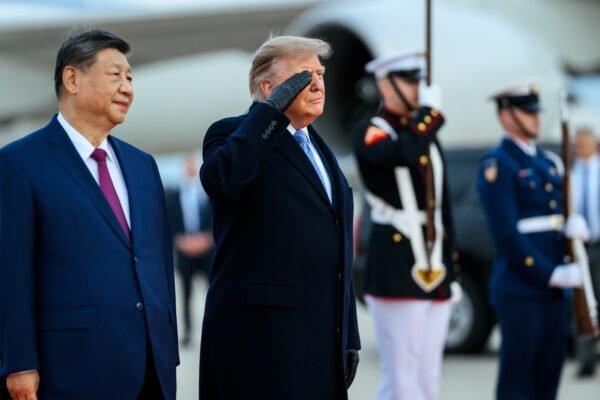
Xi Jinping’s September visit to Washington ended without a major breakthrough on trade or artificial intelligence safety. Most media coverage focused on the ceremony and the limited results. The official accounts, however, raised important questions about crisis management, which has gone largely undiscussed.
China’s readout said the two militaries had “agreed to sign a memorandum of understanding as soon as possible on strengthening crisis communication and prevention.” The White House “fact sheet” did not mention that commitment. A later South China Morning Post report said a U.S. official denied that the discussion had taken place.
Before any MoU can improve crisis management, Washington and Beijing first need a consensus that they agreed to pursue such a mechanism.
China and the United States already have several ways to communicate during military tensions. These include the Defense Telephone Link, direct contact between their leaders, and regular meetings between defense officials. They have also agreed on rules for military encounters at sea and in the air.
Yet having these arrangements in place does not mean they will be used when a crisis occurs. Officials may delay answering a call, and political tensions might lead either government to suspend talks altogether. The proposed memorandum should therefore focus on keeping existing contacts available when they are most needed.
For more than a year after then-U.S. House Speaker Nancy Pelosi’s August 2022 visit to Taiwan, senior U.S. and Chinese military officers had few opportunities to speak directly. Beijing had canceled talks between theater commanders and suspended other defense meetings in protest against the visit. The military contacts themselves were not the source of the disagreement, but they became part of Beijing’s response.
Presidents Xi Jinping and Joe Biden eventually agreed to resume military talks when they met in California in November 2023, and the U.S. Department of Defense welcomed the move. But restoring contact after a leaders’ meeting is one thing; making sure those channels remain open when relations are strained is another.
The current Defense Telephone Link is not designed for situations that require an immediate response. According to the International Crisis Group, arranging a call normally involves giving 48 hours’ notice, and the other side has another 24 hours to respond to the request. Senior officials may be able to work with these rules when arranging meetings in advance. An emergency – say, an aircraft collision in the South China Sea – would leave little time for such procedures. By the time a call was arranged, commanders might already have made decisions without hearing from their counterparts.
The 2001 EP-3 collision offers another example of how difficult communication can be during a military crisis. The U.S. embassy tried to contact Chinese officials after the collision between U.S. and Chinese military aircraft, but received few answers during the first 12 hours. Washington had little information about how Beijing was handling the incident.
The Defense Telephone Link had not yet been established in 2001, making the circumstances different from today. But recent precedent is not encouraging either. In early 2023, after the U.S. military shot down a Chinese surveillance balloon that had overflown the U.S. mainland, the U.S. defense secretary tried to arrange a call with his Chinese counterpart. China reportedly rejected his request for contact.
That episode underscored the limited value of existing crisis management mechanisms. When urgent calls go unanswered, military officers have to make decisions with limited information about the other side’s intentions.
The proposed crisis management MoU needs to handle these two problems. Even if regular military talks break down, both sides should still be able to reach each other in an emergency. It should also require an acknowledgment within 30 minutes of an urgent message being sent. The officer receiving the message would simply confirm that it had arrived and that the information was being checked. Neither side would have to admit fault or agree with the other’s account at this stage. They could leave those disagreements for later, once the immediate risk had been dealt with.
For Beijing, accepting a message is different from deciding how to respond to it. Chinese officers may have to consult their superiors before commenting on an incident, particularly one involving sovereignty or military activity. That process can take time. A simple reply verifying receipt would allow those discussions to continue without leaving Washington unsure whether its warning had been heard. Beijing could still decide what to say after reviewing the incident, while keeping the military line open during the most urgent stage of a crisis.
The International Crisis Group has called for crisis simulations in which Chinese and American officials examine how each side might respond as tensions develop. A hypothetical aircraft collision over the South China Sea would be a useful scenario for a joint exercise before the November Trump-Xi meeting on the sidelines of the APEC summit. The U.S. military could make the initial test call and wait for a response from its Chinese counterpart, following the same procedures that would apply in a real incident. The exercise would give both sides a chance to see how long a message takes to reach the officer responsible for answering it. Any delay caused by the need to seek approval would become apparent.
An emergency channel should focus on what is happening at the time of a crisis. If an incident occurs, both sides need to know where it happened, whether anyone was injured, and whether their forces might come into contact again. They should not have to settle wider disagreements before sharing such information. Questions over Taiwan, technology restrictions, and U.S. military deployments can still be discussed through existing diplomatic and defense channels. Keeping these issues out of emergency communication would allow officers to deal with the immediate situation without waiting for progress in political negotiations.
Xi’s remarks in Washington called for the Chinese and U.S. militaries to “maintain regular dialogue, and improve mechanisms for crisis communication and prevention.” Leader-level diplomacy can authorize this work, but that doesn’t guarantee progress. By the next Trump-Xi summit at APEC, both governments should at least confirm the same commitment and complete a test of the contact route. The MoU itself may take longer if the two sides are still negotiating its terms.
The leader-level summits will matter more if the two governments can agree on how to handle calls during a military crisis. In the past, political disputes have led Beijing to suspend military exchanges with Washington. The same problem could arise again, leaving officers unable to contact their counterparts at a critical moment. One way to prevent this would be to keep emergency hotlines separate from regular defense talks. The first measure of progress is therefore simple: whether both militaries can agree that an urgent message must be acknowledged within 30 minutes.
