

- UK has paused Project Stokes to replace the Army’s 105mm gun and 81mm mortar, pending funding decisions
- It was assessing off-the-shelf 120mm mortar options, but is absent from recent Defence Investment Plan
- Drone-threat “kill-zones” are making towed artillery riskier, increasing demand for mobile fires
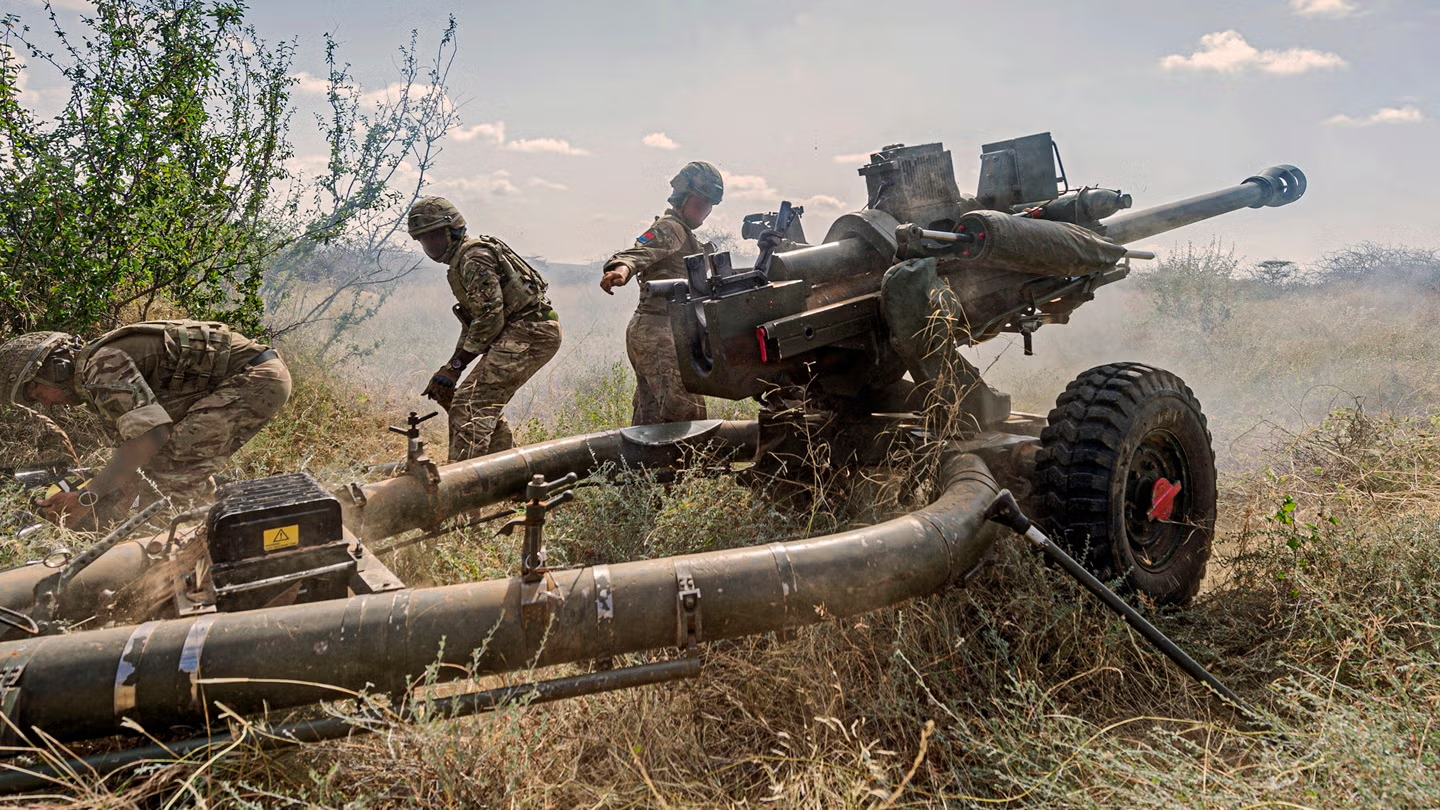
The UK Ministry of Defence has revealed it has paused the planned replacement of the British Army’s L118 105mm Light Gun and L16 81mm mortar, with both systems currently planned to be removed from service by 2030.
In a UK parliamentary written response on 17 July, UK Minister for Defence Readiness Luke Pollard said the replacement programme, dubbed Project Stokes, was tasked with examining options to provide the UK Armed Forces with close indirect fire support.

Discover B2B Marketing That Performs
Combine business intelligence and editorial excellence to reach engaged professionals across 36 leading media platforms.
To this end, Project Stokes was intended to “rapidly assess mature market options” to identify a 120mm mortar to replace the British Army’s extant 105mm artillery and 81mm mortar.
“However, Project Stokes is currently paused pending future decisions on prioritisation, resourcing and funding,” Pollard revealed.
The lamentably vague Defence Investment Plan, published after nearly a year-long delay earlier this month, made no mention of Project Stokes or British Army requirements to acquire a 120mm mobile mortar solution.
The L118 105mm Light Gun has been a mainstay in British Army service since its introduction in the 1970s, with 126 units thought to still remain in service, although exact numbers are difficult to determine given previous donations to Ukraine and an emergent UK Government reluctance to provide equipment figures.
A range of 120mm mortar options have been showcased in UK-based defence exhibitions in recent years, installed on platforms like the ubiquitous Jackal mobility vehicle.
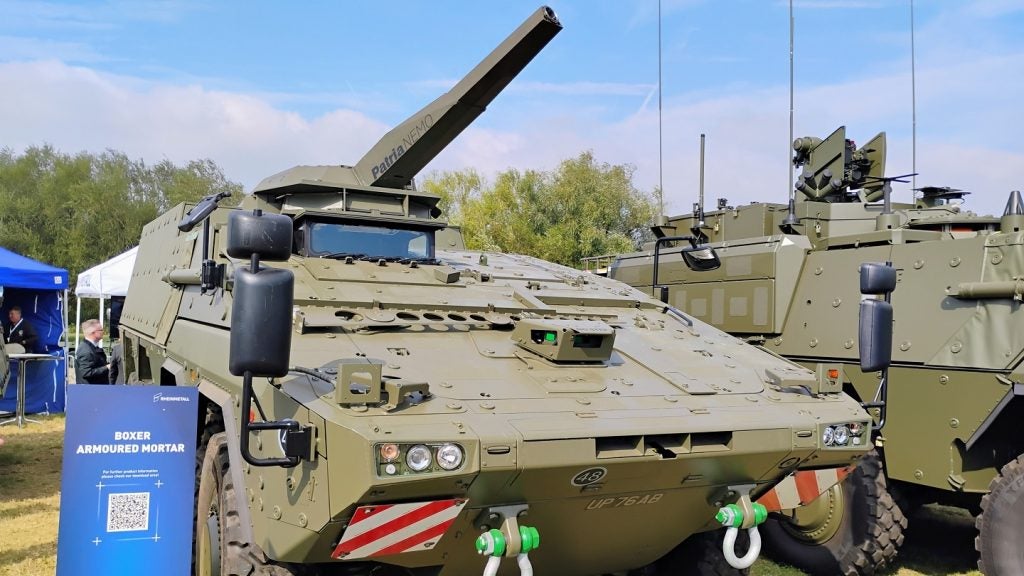
At DVD 2024, a Patria NEMO 120mm mortar turret fitted to a Boxer armoured vehicle was showcased, with British Army officials indicating a potential 2029 entry-into-service date for such a capability.
However, little has been seen of such Boxer variants in subsequent exhibitions and government literature, as a funding crisis continues to be felt across the UK Ministry of Defence.
Drone kill-zones swamp indirect firing ranges
The need to find a mobile short-to-medium range indirect fires capability is becoming critical on the battlefield, with towed artillery like the L118 effectively obsolete, given its 17km firing range now falls well within the 20-40km drone kill-zone radius along the Ukraine-Russia frontline.
As a result, crewed fires in a future battlescape would be required to operate on the move, employing the shoot-and-scoot tactic to avoid being ‘counter-batteried’ by suicide drones.
However, a 120mm mortar, despite the mobility in being fixed to a 4×4 platform, would have a range likely of no greater than 10km, pushing personnel deeper into a drone kill-zone. Elbit Systems’ SLING 120mm mortar has a range of 7km with standard M933 or equivalent ammunition.

