

Britain’s Chagos deal has been put on hold after Donald Trump refused to support the plan, describing it as “terrible”.
Ministers have admitted the controversial and politically sensitive agreement over the strategically important islands cannot go ahead without American backing.
Andy Burnham, the prime minister, agreed to review the plans to transfer sovereignty of the Chagos Islands to Mauritius after Trump described the deal as “terrible” and “ridiculous” during their first face-to-face meeting.
Wes Streeting, the defence secretary, confirmed on Wednesday that the plans were on hold, adding: “We’re not going to go ahead without the Americans.”
Trump and Burnham met for the first time on the fringes of the United Nations General Assembly on Tuesday, with the president praising the prime minister as a “natural business person”.
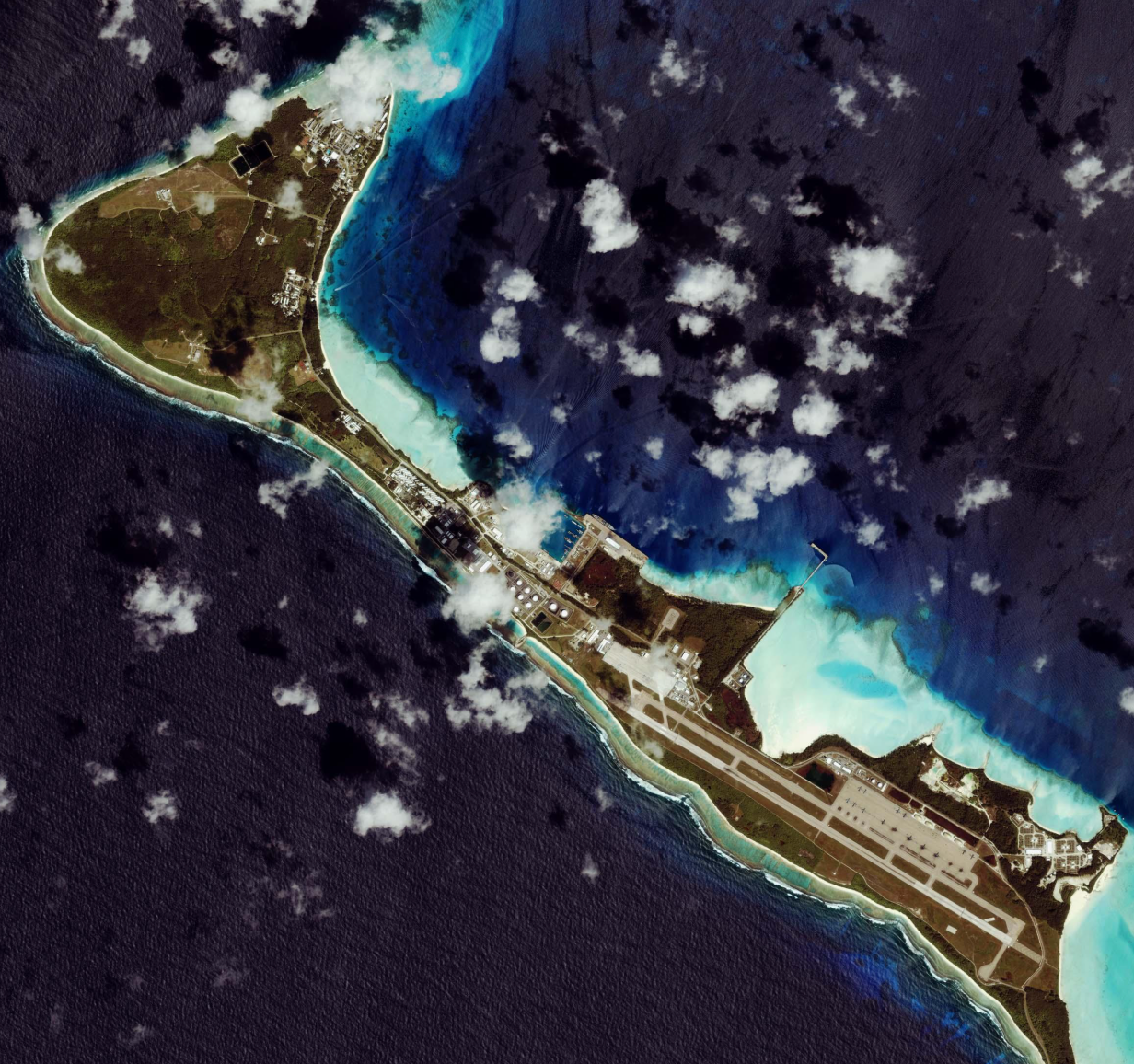
But he made clear that he remained opposed to the deal to transfer sovereignty of the islands while Britain pays to retain the use of Diego Garcia, home to a strategically important joint UK-US military base in the Indian Ocean.
Trump said Burnham had agreed to “look at it” again, describing Diego Garcia as a “very important piece of real estate, both militarily and strategically”.
The president said: “I don’t support it. I think it’s terrible. It was a terrible deal. They [Mauritius] all of a sudden say they have ownership. Somebody has ownership that never showed up before after decades and centuries. I think it’s ridiculous.”
He added: “We were talking about that, and [the islands are] strategically very important. Very important. You know, we had to send our B2 bombers … back home to Missouri, as opposed to flying for a short period of time.
“It’s amazing how strategic it is, and I think the prime minister is going to be looking at it.”
Burnham replied: “Yep.”
When asked whether the Chagos deal was dead, Burnham said: “I’ve inherited the situation and we need a resolution. It’s critical to safeguard the future of the base and that matters to us for security reasons but also clearly to the United States as well.
“So what I said in the meeting is that we will work to find that resolution between the different sides and we’ll work hard to find it.”
Streeting confirmed on Wednesday that the deal could not go ahead without the approval of Washington.
He told BBC Radio 4’s Today programme: “This deal, as it is currently constituted, can’t go ahead without American support.
“So we have to get a deal to a place where it commands American support as well as the agreement of the government of Mauritius and our government.
“And the reason why that is important is because we are trying to safeguard, not just now but for the longer term, the base at Diego Garcia and the capability it provides the United Kingdom and the United States for our national and collective security.”
Streeting said Trump’s concerns were about “how it would operate in practice and how it would impact on the ability of the Americans to conduct their operations through the base”.
However, he said the government had not abandoned the principle of transferring sovereignty. Asked on Times Radio whether the government still believed an agreement needed to be reached, he said: “Yes.”
Less than 48 hours earlier, Burnham had held a call with Navin Ramgoolam, the prime minister of Mauritius.
Ramgoolam’s government said Burnham had pledged to do “everything possible” towards ratifying the treaty. Downing Street said Burnham had committed to working with Mauritius and the United States on a way forward that secured the operation of Diego Garcia and protected UK national security.
Separately, Burnham used his speech to the United Nations General Assembly to vow to “stem the poisonous tide” of Russian disinformation by establishing a new National Centre for Information Defence to tackle hostile-state propaganda and AI-generated deepfakes.
He said Britain had “tiptoed around this for too long” and accused hostile actors of promoting “negative, corrosive” and false depictions of life in the UK.
Burnham said: “Over the last decade we have given too much ground to those who want to run a negative, corrosive narrative about life in Britain, which bears no resemblance to reality. Well, no more.
“We are going to be much prouder in standing up for our values and the rule of law. And we are going to help our people to strengthen their resilience — because, faced with this information warfare, security starts in every home.
“If you’re struggling with the cost of living and your life is not improving — or if you’re a young person not in employment, education or training — then you are going to be much more vulnerable to this kind of influence.
“So part of the challenge is to lift our people up and create the opportunities they need.”
Earlier, Burnham had used a meeting with business leaders to call for a “single set of global principles and standards” to ensure the safe development of artificial intelligence.
