

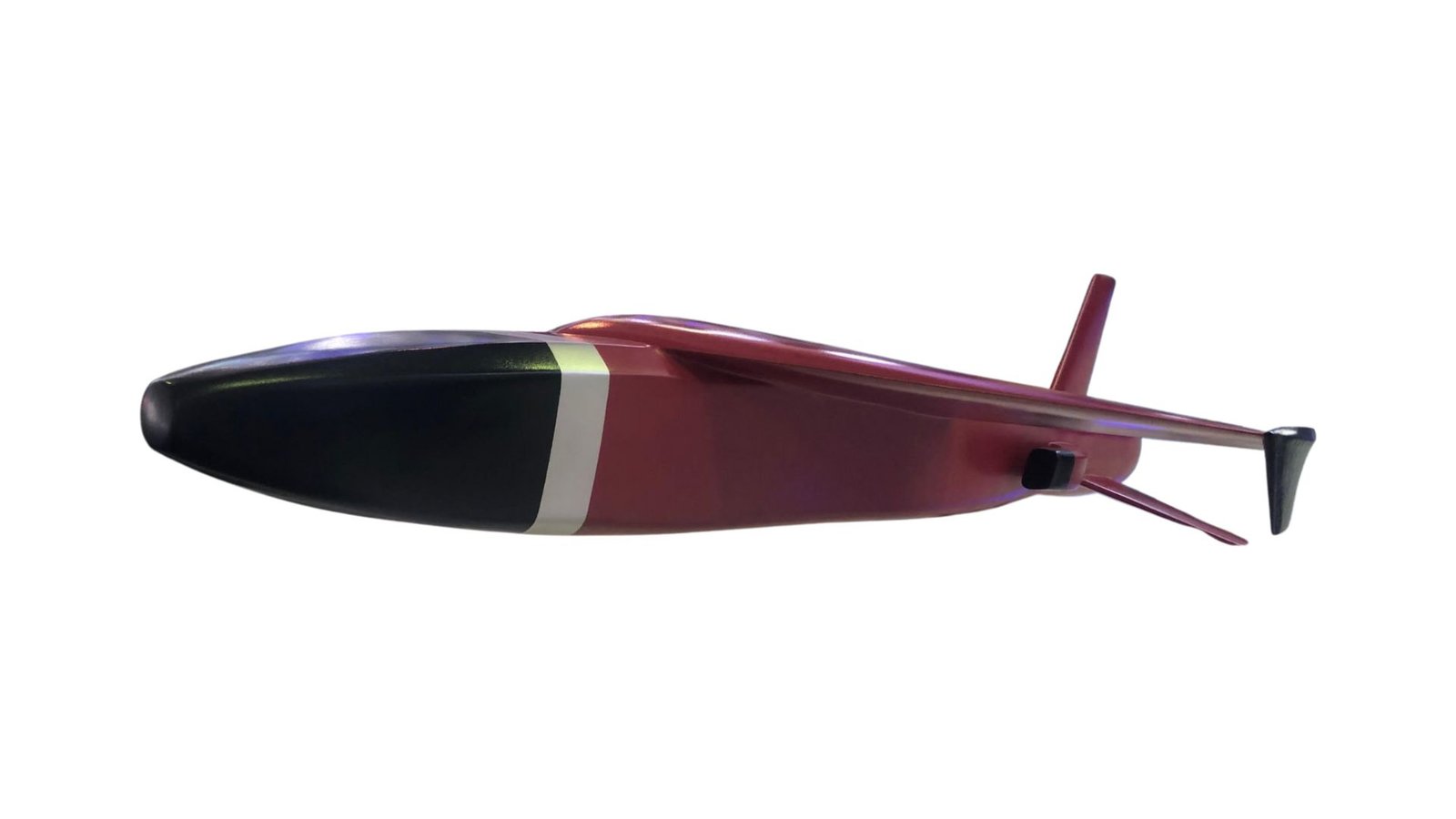
One of the lessons Pakistan appears to be drawing from the Russia–Ukraine War is the importance of having large stocks of subsonic, turbojet-powered cruise missiles and one-way attack (OWA) drones. Quwa’s recent assessments of the Fatah-4 and Fatah-4-ER, for example, identified an apparent shift towards simpler, scalable and lower-cost cruise missile designs.
In tandem, Pakistani private-sector firms and state-owned enterprises (SOEs) are working on turbojet-powered OWAs, including Sarfarosh, KaGeM V3, Delta Baaz, HiMark-25 TJ and Nimbus 2K. Quwa’s six-month assessment of Pakistan’s one-way effector market traced the emergence of dedicated jet-powered designs alongside the country’s existing missile programs.
Pakistan is also investing in piston-powered loitering munitions analogous to the Shahed-136. However, its parallel interest in jet-powered weapons is notable, particularly as Russia’s use of these systems becomes a central topic of study and the wider market for expendable long-range strike weapons continues expanding.
Russia’s Geran-4 and Geran-5 are assuming a growing proportion of its strike mix in Ukraine. At a parliamentary hearing on 06 October 2026, Ukrainian Air Force deputy commander Yurii Cherevashenko said jets represented approximately 40% of the UAVs Russia was employing against Ukraine, and forecast that their share could reach 80%.
The 80% figure remains a forecast, while the 40% denominator encompasses attacking UAVs more broadly. Nonetheless, the direction of growth is clear: Air Force spokesperson Yurii Ihnat reported approximately 350 jet-UAV launches in June, 1,500 in July, 2,800 in August and 3,500 in September, a tenfold increase across that period.
