

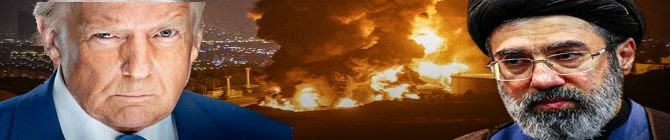
US President Donald Trump has formally signed an agreement with Iran aimed at ending the conflict in the Middle East.
The signing took place during a dinner with French President Emmanuel Macron at the Palace of Versailles following the G7 summit.
Macron announced the development in a post on X, stating that the agreement paves the way for lasting peace and allows the reopening of the Strait of Hormuz. He emphasised that this was an important step in the right direction and would soon enable a decrease in energy prices for citizens.
Iran also confirmed that it had signed the deal. Iranian Foreign Ministry spokesman Esmaeil Baqaei, quoted by the state news agency IRNA, said that the text of the Islamabad Memorandum of Understanding had been finalised with the signatures of the presidents.
He added that the next stage would be to test the implementation of the agreement. Tehran clarified that although the formal signing had originally been planned to take place in Switzerland on Friday, the Geneva meeting was still on track.
With the document now signed, the United States and Iran will have 60 days to negotiate the terms of a final agreement. This period is expected to cover critical issues such as sanctions relief, Iran’s nuclear program, and regional security arrangements.
The signing marks the beginning of a delicate phase where both sides will need to demonstrate compliance and build confidence in the process.
Earlier on Wednesday, US officials released the text of the agreement during a conference call, responding to growing public pressure over the lack of transparency surrounding the deal. The Memorandum of Understanding calls for the immediate and permanent termination of military operations on all fronts, including in Lebanon. This provision is seen as a major step towards stabilising the wider region.
Under the terms of the agreement, the United States has committed to removing its naval blockade of Iran within 30 days. During this period, vessel traffic is expected to be restored to pre-war levels.
The memorandum also stipulates that the US will withdraw its forces from the vicinity of Iran within 30 days of a final deal being concluded. These commitments are designed to ease tensions and restore freedom of navigation in the Strait of Hormuz, a critical artery for global energy supplies.
The document further states that Iran will make arrangements using its best efforts to ensure the safe passage of commercial vessels with no charge for 60 days.
This clause highlights Tehran’s responsibility in guaranteeing maritime security during the interim period. It also reflects Iran’s attempt to demonstrate goodwill while negotiations continue.
The signing brings to an end a war that had lasted around 110 days, beginning when the United States and Israel launched strikes on Iran on 28 February. The conflict had severely disrupted global energy markets, heightened regional instability, and raised fears of a wider confrontation.
The agreement now offers a framework for de-escalation, though its success will depend on the ability of both sides to honour their commitments and resolve outstanding issues during the 60-day negotiation window.
Agencies
