

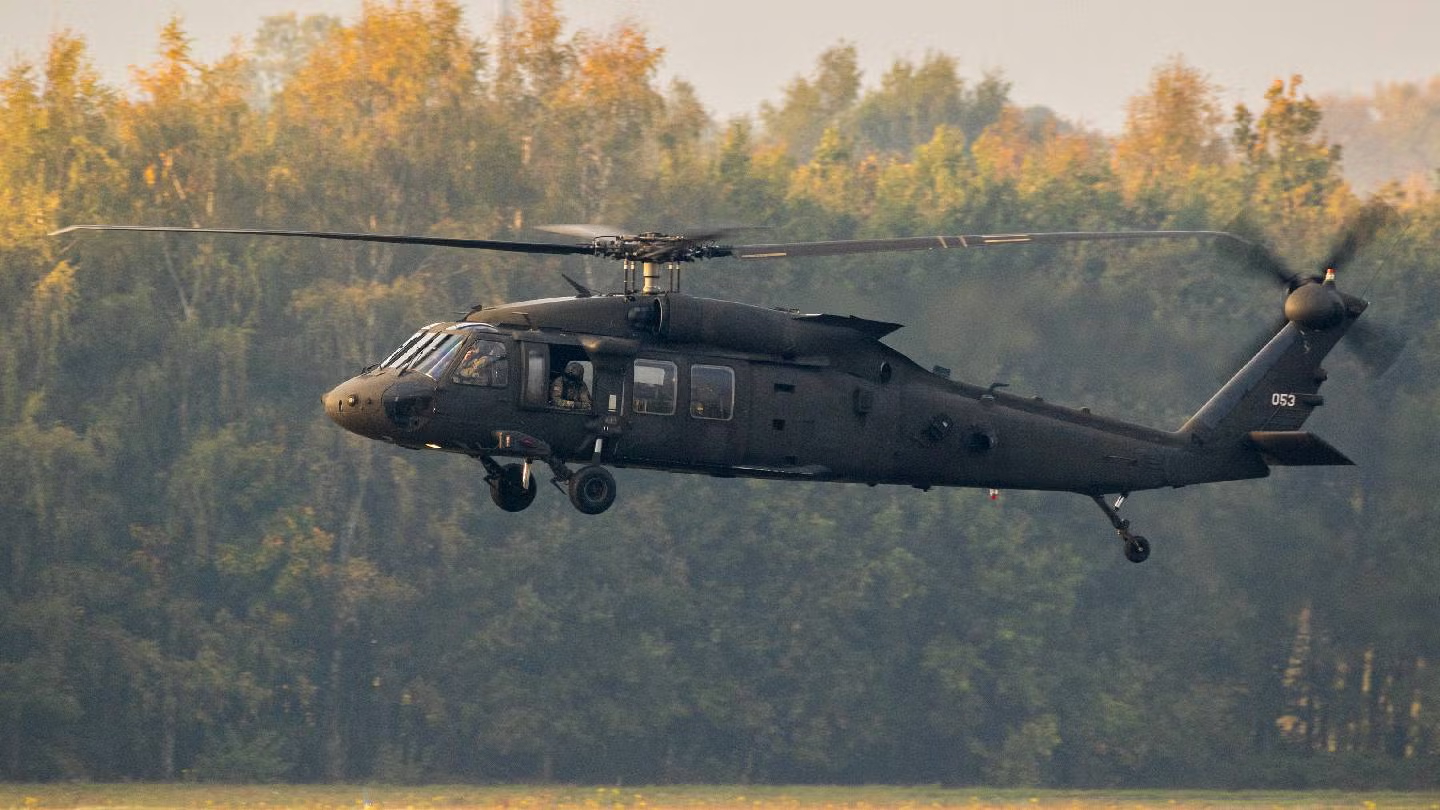
The US Department of State has granted approval for a possible Foreign Military Sale to Austria, involving the purchase of 12 UH-60M Black Hawk helicopters.
The transaction, which is estimated to be worth $1.5bn, also covers equipment, support, and training services.

Discover B2B Marketing That Performs
Combine business intelligence and editorial excellence to reach engaged professionals across 36 leading media platforms.
Austria’s government requested a range of hardware and systems as part of the deal, including 26 T700-GE-701D engines, as well as missile warning and countermeasure systems, communication equipment, and other avionics.
The request includes five each of the AN/AAR-57 Common Missile Warning Systems, Common Infrared Countermeasure Systems, and AN/APR-39E(V)2 Radar Warning Receivers, as well as 30 EAGLE-M+429 units and 30 AN/ARC-231A RT-1987 VHF/UHF/LOS SATCOM radios.
The package also covers navigation, identification, and radar devices, as well as safety equipment like emergency locator transmitters and fire extinguishers.
The sale is expected to include support equipment, organisational gear, technical publications, and training for personnel. Logistics support, as well as US Government and contractor engineering, will also be supplied.
Sikorsky, a Lockheed Martin company, has been named as the principal contractor for the programme.
To support implementation, around 15 representatives from the US government and a similar number of contractor staff are expected to travel to Austria for duties such as equipment de-processing, system checks, and training.
The State Department indicated that the possible sale forms part of its aim to reinforce foreign policy and national security goals by supporting Austria’s military capabilities.
It stated that “this proposed sale will support the foreign policy and national security objectives of the United States by helping to improve the security of a partner that is a force for political stability and economic progress in Europe.”
The proposed acquisition is expected to strengthen Austria’s ability to deter threats and contribute to coalition operations, while furthering both US and Austrian goals for improved military interoperability.
The State Department said the deal would not affect the basic military balance in the region, nor will it have an adverse impact on US defence readiness.

