

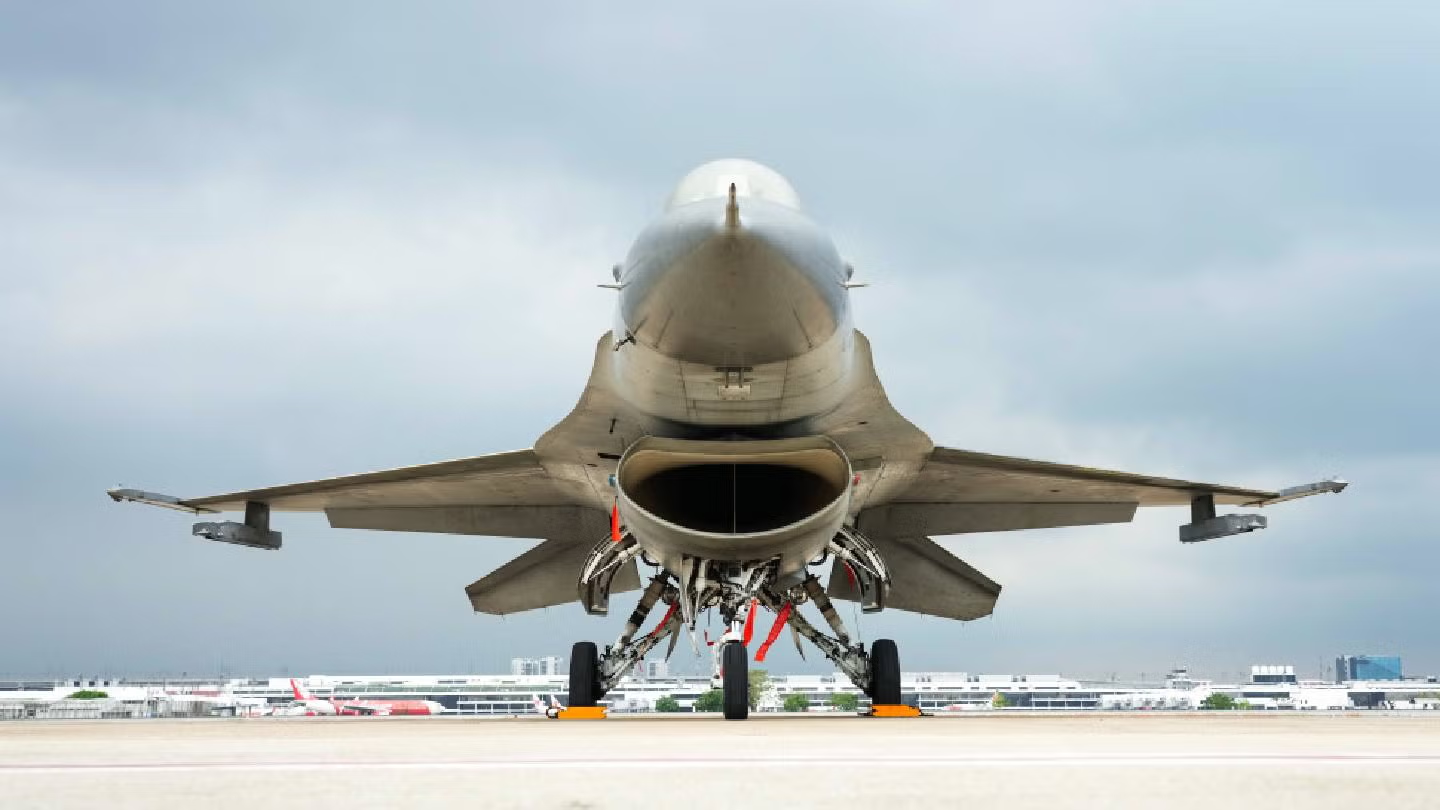
The US Embassy in Peru has confirmed that Peru selected Lockheed Martin’s F-16 Block 70 fighter jets, ending uncertainty over the status of the deal.
Financial terms of the deal have not been disclosed, but Reuters reported that Peru’s government made a $462m payment on 22 April 2026, as the first instalment.

Discover B2B Marketing That Performs
Combine business intelligence and editorial excellence to reach engaged professionals across 36 leading media platforms.
The F-16 Block 70 is among the most advanced fourth-generation fighter aircraft, featuring advanced avionics, an Active Electronically Scanned Array (AESA) radar, integrated weapons systems, and updated flight controls.
Peru launched a competitive bidding process for its fighter aircraft fleet in 2024 and invited the US to participate.
The US presented a “comprehensive package” for Peru, centred on a new and fully customised F-16 Block 70 fighter jet.
The offer also includes a comprehensive training package that will enable Peruvians to carry out the long-term maintenance, sustainment, and engineering required to keep the aircraft operational.
“The Peruvians will have full and total control of their fleet,” the US Embassy in Peru said in the statement.
Confirmation from the US on the selection comes after Peru allegedly postponed the deal’s technical signing via national radio.
Lockheed Martin was initially informed in writing of its selection on 14 April 2026, with a signing scheduled for 17 April.
However, the technical signing between authorised parties took place on 20 April 2026, with the full awareness of the highest levels of the Peruvian government, the Embassy said.
“There is a correct way to do serious, credible business,” the Embassy said, adding that “when a manufacturer plans for the delivery of a product of this calibre, there is no such thing as a small and inconsequential delay.”
Amid the negotiations, Peru’s Defence Minister Carlos Diaz and Foreign Minister Hugo de Zela reportedly stepped down, citing opposition to the country’s interim President Jose Balcazar’s handling of the talks.
Reuters cited Diaz’s resignation letter, which said: “A strategic decision has been taken in the area of national security with which I have a fundamental disagreement.”

