

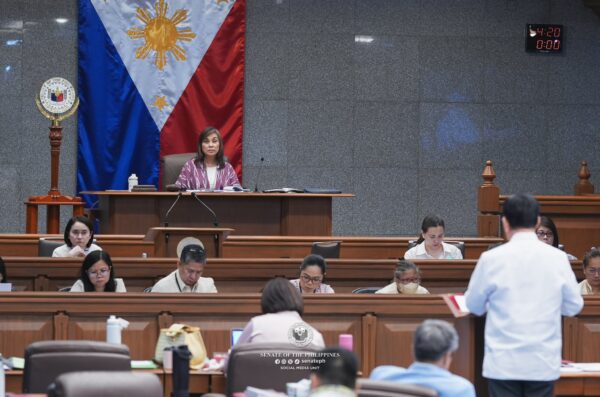
The Philippine Senate has convened an impeachment court that will hold a trial for Vice President Sara Duterte, who is accused of betraying public trust for alleged misuse of confidential funds, accumulation of unexplained wealth, and involvement in a plot to assassinate President Ferdinand Marcos Jr. What should we expect from the Senate, and can it conduct a credible and speedy trial amid the intense bickering of its members?
Under Philippine law, it is the House of Representatives that initiates impeachment complaints, and the Senate that acquits or convicts impeached officials.
Duterte was twice impeached by House members. The first impeachment in February 2025 did not lead to a formal trial because the Senate remanded it back to the House, and the Supreme Court nullified it because of procedural flaws. After the one-year bar on the filing of additional impeachment complaints, the House voted again to impeach Duterte last month and assured the public that there was no more basis to question it in court.
Unlike last year, the Senate was quick to constitute itself into an impeachment court. It gave Duterte until the first week of June to respond to the allegations incorporated in the articles of impeachment transmitted by the House. Congress is set to adjourn its sessions on June 3, but the impeachment trial is allowed to proceed with its work. The Senate has scheduled the first day of the trial for July 6, and both the prosecution and defense are expected to finish their presentations within two to six months.
The timetable is tentative because of the frequent changes in the Senate leadership. Duterte allies currently control the majority, but they could easily lose the leadership post if one or two of their members switch sides to the minority.
Several of their members also face possible arrest for the non-bailable charge of plunder. One of them has a warrant of arrest issued by the International Criminal Court for being an alleged co-conspirator in the bloody campaign against illegal drugs waged during the term of former President Rodrigo Duterte, Sara’s father.
The Senate presidency is crucial in determining how the impeachment trial will be conducted. The Duterte bloc has moved for the revision of rules to allow online voting, which is clearly intended to benefit their allies who might skip plenary sessions to avoid being arrested. During the trial, the Senate leadership can also restrict the evidence to be presented, expedite or delay the sessions, and limit or expand public access to the documents and records shared by prosecutors.
As a political process, the conclusion of the impeachment remains uncertain even if Duterte’s allies wield significant influence.
During the impeachment trial of former President Joseph Estrada in 2001, his allies composed the majority in the Senate, but public outrage over the refusal to open key evidence triggered a mass uprising, which led to his ouster from power. In 2012, the impeachment conviction of a former Supreme Court Chief Justice was attributed to the testimony of witnesses who provided strong evidence of corruption.
It is not just the Senate leadership squabble that will affect Duterte’s impeachment trial, since it also coincides with the ICC trial preparation of the vice president’s father, who is detained at The Hague. The next presidential election may be two years away, but all political blocs are expected to turn the impeachment trial into a platform to boost their prospects.
Duterte can also resign as vice president to avoid conviction, but in that instance, the Senate could still decide to continue the impeachment trial. Aside from the impeachment, Duterte faces a number of plunder raps filed before the Ombudsman’s office.
The Senate will continue to be the center of political drama in the second half of the year as it prepares to conduct an impeachment trial involving the frontrunner for the 2028 presidential election. It is convenient to describe this as a manifestation of the fierce rivalry of the Marcos and Duterte clans and their political allies, but the emergence of the massive anti-corruption movement in 2025 is a reminder that the impeachment is also being pursued by various stakeholders demanding truth, accountability, and justice.
