

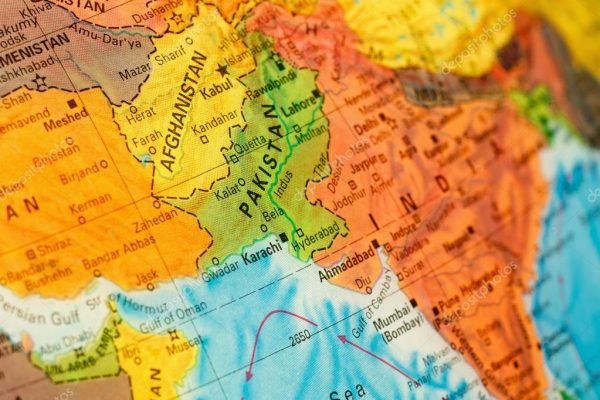
In his address to the 81st session of the United Nations General Assembly, Pakistan’s Prime Minister Shehbaz Sharif described Afghanistan as a haven for terrorist groups carrying out attacks against Pakistan. He specifically named Tehreek-e-Taliban Pakistan, or the TTP, and the Balochistan Liberation Army (BLA), and called on the Afghan Taliban to take decisive action to prevent Afghan soil from being used against Pakistan and other countries.
Coming from a Pakistani official, this demand raises many questions. The first is: since when has Pakistan decided that supporting armed groups in a neighboring country is dangerous? When the Taliban were fighting in Afghanistan against the Republic government and the Afghan people were the victims, where was this concern? Why does the same government that supported the Taliban for years now speak about terrorist sanctuaries as though it had no role in creating this situation?
Pakistan’s support for the Taliban is not merely an allegation made by Afghans out of anger or without grounding. Financial support, the training and recruitment of fighters, the transfer of ammunition and fuel, and cooperation between Pakistani military and intelligence officials and the Taliban have been extensively documented over the years by credible international organizations. For much of the last 25 years, Pakistan helped strengthen a force that imposed war and repression on the people of Afghanistan.
The Haqqani network is a clear example of this conduct. Its sanctuaries in North Waziristan and its ties to Pakistan’s intelligence apparatus have been the subject of reports and official objections for years. In 2011, Mike Mullen, then chairman of the U.S. Joint Chiefs of Staff, described the network as effectively an arm of Pakistani intelligence, an allegation Islamabad denied. Now that Pakistan is complaining about sanctuaries across the border, it must explain why it refused to meet the same demand regarding the Haqqani network more than a decade ago.
Even after the Taliban returned to power in 2021, then-Pakistani Prime Minister Imran Khan spoke of Afghans breaking the “shackles of slavery.” The political meaning of this response was clear: the Taliban’s victory was welcomed in Islamabad. But now that the Taliban are not behaving as Pakistan expected, that same victory has become a threat. Has the Taliban’s nature only just become apparent, or has Pakistan’s calculation that it could control the Taliban’s behavior simply proved wrong?
To me, this reversal shows that the central problem is a selective definition of terrorism. When the Taliban were fighting in Afghanistan and helping expand Pakistan’s influence, justifications could be found for supporting them. Now that groups close to the Taliban are fighting against Pakistan, Islamabad is suddenly concerned about sanctuaries, support, and the responsibility of the host state. Human lives should not suddenly become valuable simply because the place where people are killed has changed.
Of course, the people of Pakistan are, indeed, the victims of terrorism. No disagreement with Islamabad’s policies can justify killing Pakistani citizens. The TTP is a real threat and must be confronted. But the same standard must also apply to victims in Afghanistan and India of groups supported by Pakistan. Pakistan’s government cannot use its own people’s suffering to erase its record of supporting forces that have devastated lives in other countries.
Pakistan’s hostility toward the TTP is not new. It has conducted operations against the TTP and other groups that target Pakistan. The issue, therefore, is not that Islamabad has never fought terrorism; it is why its response to armed groups has varied depending on where their attacks are directed. If opposition to terrorism is a matter of principle, networks that recruit fighters, raise funds and organize attacks against neighboring countries must be viewed as equally unacceptable.
As long as this contradiction remains, Pakistan’s statements about terrorism cannot be taken seriously. That can only change if Pakistan moves beyond general statements and actually fights terrorism, something it appears to have no intention of doing. Lashkar-e-Taiba is one of the clearest examples. The U.N. Security Council’s sanctions committee identifies this Pakistan-based group as responsible for numerous attacks against military and civilian targets, including the 2008 Mumbai attacks. The same records identify Jamaat-ud-Dawa, also based in Pakistan, as a front for financing, training and supporting Lashkar-e-Taiba.
Jaish-e-Mohammed (JeM) is another example. Founded by Masood Azhar after his release from prison in India, the group is on the U.N. sanctions list, too. The Security Council has documented its links with al-Qaida and the Taliban, as well as its role in attacks in Kashmir. In May 2025, JeM was reported to be based in Bahawalpur, in Pakistan’s Punjab province.
Hizbul Mujahideen is another longstanding group active in Kashmir, fighting to end Indian rule and unite the region with Pakistan. According to U.S. State Department reports, the group has carried out numerous attacks against Indian security personnel and politicians and has been involved in abductions and killings. Reports from June 2026 also describe its leader, Syed Salahuddin, as being based in Pakistan.
Harakat-ul-Mujahideen is another example of these cross-border networks. The Security Council’s records identify Muzaffarabad and Rawalpindi as bases for the group and record attacks against military and civilian targets in Kashmir, the training of fighters and cooperation with other groups. The hijacking of an Indian aircraft in 1999 has also been attributed to the group. This history shows that the connection between Pakistan-based groups and violence across the region has not been limited to the Afghan Taliban and stretched across decades.
In April 2025, Pakistani Defense Minister Khawaja Asif was asked in an interview with Sky News about the country’s history of supporting, training and financing terrorist groups. He replied: “We have been doing this dirty work for the United States for about three decades, and the West, including Britain.” He called this policy a mistake and spoke about its costs for Pakistan. But what about the price the people of Afghanistan have paid? How does pointing to the role of the United States and the U.K. remove the responsibility of Pakistani officials?
If Pakistan wants its words to be taken seriously, it must demonstrate at home the same thing it demands of the Taliban: action against international terrorism and measures that can be verified. The fight against terrorism has credibility when past political ties to a group do not stand in the way of action against it. Pakistan’s statements about terrorism can be taken seriously only when it acts to cut off funding, stop recruitment and dismantle the operational structures of known terrorist groups on its own soil.
Until then, these words will remain just words; neither the problem of terrorism in Pakistan nor the threat that has driven it to make these statements will go away. Otherwise, the very danger then U.S. Secretary of State Hillary Clinton warned about in 2011 will persist: “You can’t keep snakes in your backyard and expect them only to bite your neighbors.”
It is the continuation of this same policy that makes Pakistan’s language about terrorism difficult to take seriously in 2026.
Islamabad wants an end to the threat directed at itself, but it must show that it judges its neighbors’ security by the same standard. Terrorism was no less dangerous or criminal when it helped extend Pakistan’s influence. To give its words credibility, Pakistan must demonstrate that its concern is terrorism itself, even when terrorists are fighting against another country.
So far, what we can see is that Pakistan’s current dispute with the Taliban does not, in itself, mean it has abandoned its longstanding policy of using armed groups to further its aims. The test of change is an end to the logic of using such groups. If Islamabad raises its voice only when these groups defy its wishes, what has changed is the relationship between the patron and the group; the value of human life is still judged by the same selective standard.
Before Sharif describes Afghanistan as a haven for terrorism, he must explain what role his own country has played in bringing Afghanistan to this point. The people of Afghanistan never invited Pakistan to support the Taliban, and they should not now have to pay the price for that failed calculation.
