

For decades, China maintained double-digit GDP growth, yet this period was accompanied by numerous structural problems. When growth slowed, these contradictions became even more severe, manifesting as immense pressure in the fiscal and debt sectors.
While Western nations might view a 2 percent or 4 percent growth rate as a spectacular success, China faces a shock even with a slight dip in its much higher figures. To understand this issue surrounding Chinese growth, one must look beyond conventional statistics and examine the operational mechanisms of its industries (the meso level of its economy) and enterprises (the micro level).
China’s dependence on high growth rates stems from a distorted industrial model. As the “world’s factory,” China’s manufacturing sector is highly vulnerable to economic cycles, international trade, and rising labor costs. As it stands, “Made in China” has been forced into hyper-intense cost competition. To survive, Chinese enterprises have adopted a volume-driven model, relying on incremental expansion rather than per-unit profit.
In a conventional model, an enterprise must sell a product above its cost to remain viable. However, many Chinese firms operate outside this norm, often selling at or below cost. Their secret lies in high-turnover sales. Under such a model, as long as the influx of incremental revenue keeps cash inflows higher than outflows, the industrial machinery continues to turn. While Western companies calculate costs based on real profits and losses, Chinese firms evaluate survival through the lens of cash volume. This allows them to take on “loss-making” business that competitors cannot match.
However, this model depends entirely on a single prerequisite: market demand and scale must expand uninterrupted. The moment the economic growth rate fails to support this, the model’s inherent vulnerabilities surface. The struggle to break even instantly solidifies into a systemic crisis.
This was evident in China’s real estate spiral. Once the possibility of incremental expansion disappeared, the industry imploded, leading to the defaults and vacancies seen today. The core issue is not a lack of housing delivery or a need for restructuring, but a fundamental flaw in the economic survival model itself.
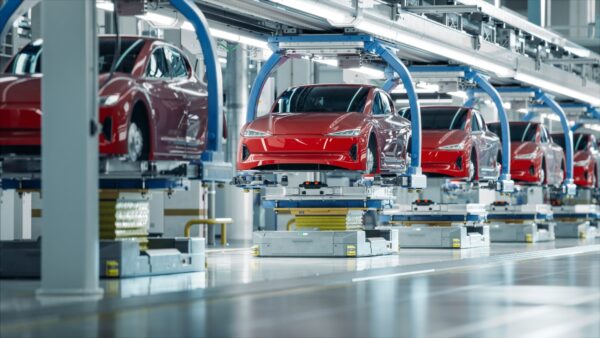
This logic extends to various sectors, including food production and new energy vehicles (NEVs). The competitiveness of Chinese NEVs is heavily dependent on volume and incremental growth rather than advanced international quality standards. Consequently, these products often carry high debt and lower quality, with safety incidents becoming increasingly common as firms prioritize cash flow over value.
The result of this systemic reliance on volume and growth is a “supply-side depression.” The current fiscal pressure on local governments is a precursor to even harder times. At present, taxes are collected based on the bookkeeping turnover of corporate production. If taxes were levied on true profits, fiscal revenue would be significantly lower, as many enterprises are hiding “cost black holes” behind their cash flow.
This phenomenon is not unique to China; Warren Buffett recognized similar vulnerabilities in Walmart’s low-cost, incremental-consumer-dependent model before divesting in 2018. Yet, in the case of China, it is the cornerstone of the entire economic system.
If China’s growth rate continues to shrink, the system loses its ability to cover expenditures with incremental growth. The foundation of industrial survival will be shaken, and the accumulated “cost black holes” of past decades will erupt, triggering an intractable supply-side depression and debt crisis. This would lead to widespread corporate collapse, unstable taxation, and massive employment problems.
Ultimately, the issue of China’s economic growth is a question of market values. To address this crisis, policy incentives must shift the focus of the production sector away from a reliance on volume and toward true value-based management. Only genuine value can sustain production and manufacturing in the long term. Anything that merely maintains nominal prosperity is unsustainable and destined to be disrupted by the inevitable shifts in economic cycles and technology.
