

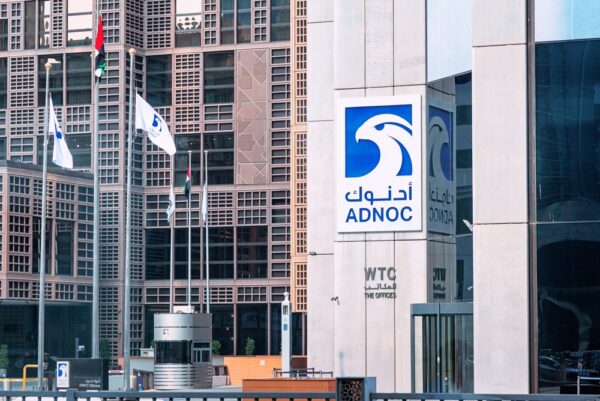
Abu Dhabi’s exit from OPEC and OPEC+ on May 1 was framed in restrained language: a review of production policy, current and future capacity, and national interest. The reasoning Vienna received was procedural, but the vision behind the move is monumental – and so are the ramifications for Asia.
Three variables had been compounding for years. The fourth, the Iran war, was by no means a trigger as this move was likely inevitable.
The first variable is capacity. The Abu Dhabi National Oil Company (ADNOC) has spent a decade building toward 5 million barrels per day, a target now pulled forward to 2027. Under OPEC+ quotas, actual UAE output ran roughly 30 percent below capacity in the period before the war. That is close to a million barrels short on any given month – that’s billions in foregone revenue, tens of billions a year as the expansion completes. No producer builds that kind of capacity to leave it idle on someone else’s schedule.
The second is fiscal asymmetry. The UAE breaks even at around $50 a barrel. The regional median sits north of $80. A quota framework calibrated to higher break-evens transfers cost from producers who need price support to producers who do not. Abu Dhabi was effectively subsidizing the fiscal positions of states whose economies look nothing like its own.
The third is divergence in national horizon. The Emirati diversification path is real, funded, and moving, with sovereign capital going toward AI infrastructure, logistics, the defense industry, and finance. The economy is being rebuilt for a future where hydrocarbon revenue funds the transition rather than defines the destination. Coordinating production with partners who have different time horizons for the resource itself, and different views on what comes after, was always going to fray.
The Iran war was perhaps only an accelerant. Gulf output collapsed in March as the conflict and disruption in the Strait of Hormuz hit regional flows. The UAE itself absorbed missile and drone exposure during the conflict. When a coalition framework cannot protect your barrels, cannot price your barrels, and constrains your commercial behavior while your sovereignty is being tested, the case for staying inside it does not survive contact with reality.
Lastly, the move is a further demonstration of the UAE’s post-ideological vision where it puts its national interests above those of foreign-imposed ideas. The departure from OPEC is perhaps the boldest foreign policy decision the UAE has made since the Abraham Accords. Like those accords, the OPEC departure is by no means meant to close the UAE off from its oil-producing neighbors but to continue to engage with them on the UAE’s own terms.
What does all this mean for Asia?
China, India, Japan, and South Korea are the four largest destinations for UAE crude, with China and India taking the bulk of it. An unconstrained UAE means more light, relatively low-sulfur Murban crude flowing into the Asian market through the back half of the decade. That arrives at a moment when Asian refiners are managing a complex picture: demand growth in India and Southeast Asia, demand plateauing in China, and a Japanese and Korean refining sector that is consolidating rather than expanding.
More UAE barrels will do two things. First, they soften the price pressure that comes from quota-constrained Gulf supply meeting Indian and ASEAN demand growth. And second, they make ADNOC a more reliable term-contract counterparty, since its commercial behavior is no longer subject to a Vienna negotiation.
The second effect is on pricing. Murban has been traded on ICE Futures Abu Dhabi since 2021. It has been quietly building a role as a regional benchmark for Gulf crude into Asia. The war pushed that further along. With the Platts Dubai basket narrowed to effectively two deliverable grades during the conflict cycle, price discovery has been migrating toward Murban futures on IFAD, where exchange-based pricing kept working when assessment-based benchmarks came under strain. An ADNOC outside OPEC+ has both the volume and the flexibility to deepen that contract’s liquidity. For Asian refiners and the trading houses that serve them, a more liquid Murban is a real improvement over continuing to lean on Dubai or Oman structures designed for a different era.
For China, the frame is the wider Gulf relationship. The UAE has built itself into a hub for Chinese commercial activity in the region, from technology partnerships to logistics through Jebel Ali and Khalifa Port. A UAE that sets its own production policy is a better counterparty, from Beijing’s view, than one whose output gets negotiated alongside Russia. Chinese state refiners have always preferred bilateral term arrangements to spot exposure, and an unconstrained ADNOC reinforces that channel.
For India, the implications are more direct. India imports roughly 85 percent of its crude, and the Gulf supplies most of it. The UAE is among India’s top crude suppliers, and the 2022 Comprehensive Economic Partnership Agreement already gave the bilateral relationship its own architecture, separate from any multilateral frame. Additional UAE barrels feed both energy security and the rupee-dirham settlement work New Delhi has been quietly pushing. For Indian refiners running expansion projects in Gujarat and on the east coast, secure Gulf supply at the back end of the decade is materially useful.
For Japan and South Korea, crude is important, but gas may matter more over time. ADNOC Gas has been building toward a serious LNG export profile through the Ruwais expansion. This gives Abu Dhabi more room on the integrated oil-and-gas commercial strategy that underpins those projects. Japanese and Korean utilities, both restructuring long-term LNG portfolios after the post-2022 European demand shock, have a real interest in a UAE that can move on its own timeline.
For analysts in Tokyo, Seoul, New Delhi, Beijing, Singapore, and Jakarta, the operative takeaway is that the bilateral channel into Abu Dhabi is now the pathway that matters. OPEC+ coordination was always a partial proxy for what actually drove the relationship: the term contract, the upstream equity stake, the downstream joint venture, the LNG offtake. Those instruments now run without the overlay of a quota framework that limited what ADNOC could do on volume.
This confirms a pattern already visible in UAE behavior across other files. Abu Dhabi acts on its own read of national interest. It builds bilateral architecture where that interest is served. It does not subordinate its decisions to multilateral structures or outdated ideologies that have stopped matching its priorities and visions. The OPEC exit is consistent with the posture that the UAE demonstrated when it signed the Abraham Accords. The UAE is confident in charting its own path and Asia is well positioned to walk that path alongside it.
