

The victory of India’s ruling Bharatiya Janata Party (BJP) in the recent elections to the West Bengal state assembly has been received with mixed feelings in neighboring Bangladesh. On the one hand, it has raised hopes among some sections in Bangladesh that with the defeat of Mamata Banerjee’s government, an important “obstacle” in the way of an agreement on the sharing of the Teesta river’s waters has been removed. On the other hand, Bangladeshis are anxious that with the BJP now ruling four of the five Indian states that border Bangladesh, India could escalate the “push-back” of alleged undocumented migrants into Bangladesh
This two-part series examines how the change of political guard in West Bengal is likely to impact India-Bangladesh relations. While Part One will examine whether the two countries could sign an agreement on sharing the Teesta’s waters in the coming months, Part Two will explore Bangladeshi anxieties around the likely intensification of an anti-migrant drive.
———
The Teesta, one of South Asia’s most important transboundary rivers, is tame and timid. Climate issues, including glacial retreat, and a series of dams built on this river in India, have reduced the volume of water it carries.
Yet, this 414-kilometer-long river, which runs from India to Bangladesh, can still raise diplomatic storms.
India and Bangladesh have been locked in a dispute over sharing the waters of the Teesta River for several decades. The two sides reached an ad hoc or interim understanding on the sharing of its waters in 1983. This temporary arrangement was meant to guide water allocation, but was never formalized.
Then, in September 2011, just ahead of Prime Minister Manmohan Singh’s visit to Dhaka, the two sides reached a draft agreement on the Teesta.
The details of the draft agreement were never officially made public, but media reports from the time say the two countries agreed that 20 percent of the river’s water would be left for environmental flow, while India and Bangladesh will receive 42.5 percent and 37.5 percent, respectively, during dry seasons. A joint hydrological observation station to gather accurate data for the future was also part of the agreement.
However, objections were raised by Mamata Banerjee, the then chief minister of West Bengal. She argued that the draft agreement did not adequately meet the irrigation and drinking water needs of the north Bengal districts, including Cooch Behar, Jalpaiguri, and Darjeeling. She declined to accompany Singh to Dhaka, and as a result, the agreement was not signed.
In India’s federal structure, the Union government cannot decide on water sharing without consent from the state involved.
Over the past 15 years, with Banerjee’s Trinamool Congress holding the reins in West Bengal, and continuing to oppose the deal on Teesta, the dispute has festered, with even the Narendra Modi-led government at the center failing to get Banerjee to budge from her position.
There are hopes now that with the biggest “stumbling block” in the way of the Teesta water-sharing treaty removed – Banerjee’s government was ousted from power in the recent election – a deal on the Teesta could be sealed soon.
Since Banerjee’s defeat, Bangladeshi journalists and politicians have flooded West Bengal’s journalists with calls and messages to know whether a Teesta treaty would materialize soon, now that the “obstacle” has been removed.
The issue is not quite that simple.
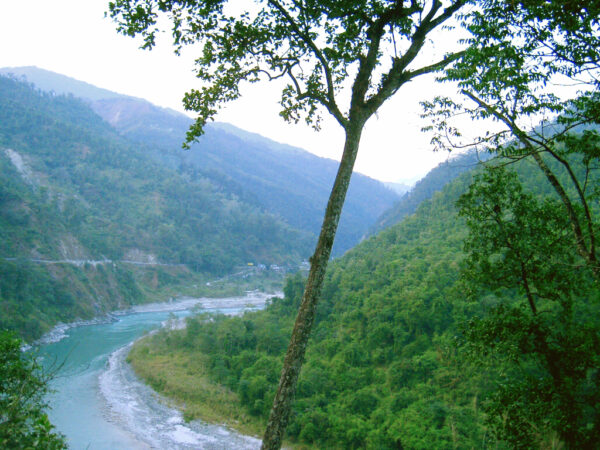
The Teesta is one of the 54 rivers that India and Bangladesh share. A transboundary river originating near India’s border with China, the Teesta passes through the Indian Himalayan state of Sikkim and the sub-Himalayan terrains of northern West Bengal before entering the Bangladesh plains. It is the most important river in both these regions.
In northern West Bengal, it irrigates multiple districts that depend on its waters for farming and daily water needs. In Bangladesh, it provides irrigation and drinking water in the northern Rangpur division. The Teesta River floodplain accounts for 14 percent of the total area under crops and supports 9.15 million people of Bangladesh.
Limited dry-season flow makes sharing of the Teesta’s waters highly contentious, especially during years of low rainfall.
Given its importance to northern Bengal, it will be difficult for the Indian government to cede a larger share of the Teesta’s water to Bangladesh, as it will have to pay a political price in northern West Bengal, where public sentiment is widely against a water-sharing treaty.
While West Bengal BJP leaders had earlier blamed Banerjee’s opposition for the treaty not materializing, it will be difficult for the new BJP government to shift away from Banerjee’s Teesta policy anytime soon.
“I believe no water-sharing agreement that compromises the interests of north Bengal will be implemented,” Jayanta Kumar Roy, a BJP parliamentarian from northern West Bengal, told The Diplomat.
A BJP legislator, who did not want to be identified, told The Diplomat that “giving away Teesta water would be suicidal for the BJP in northern West Bengal.” The party performed exceptionally well in areas dependent on Teesta’s water.
The Teesta water treaty is also important for India’s relations with Bangladesh. Anti-India forces in Bangladesh have long used India’s refusal to share the Teesta waters to foment anti-India sentiment in the country.
Meanwhile, with India dragging its feet on signing the Teesta agreement, Bangladesh has, in recent years, turned to China for support to improve management of the Teesta’s waters within its own borders. The Teesta River Comprehensive Management and Restoration Project (TRCMRP), which was originally conceived by the Sheikh Hasina government, is now being pursued by the Bangladesh Nationalist Party (BNP) government, which came to power in February.
Ahead of his recent visit to China, Bangladeshi Foreign Minister Khalilur Rahman told reporters in Dhaka that his government hopes that the agreement that India and Bangladesh reached in 2011 can be considered again under the current circumstances. But we “cannot just sit and wait for that,” he said, indicating that Dhaka is running out of patience and ready to explore other options.
In Beijing, he discussed the TRCMRP with the Chinese authorities.
According to a senior Bangladeshi politician, who spoke to The Diplomat on condition of anonymity, several factors are working in favor of the China-backed project.
One is that the BNP government is under pressure to settle the Teesta problem. Besides, China’s visible keenness to participate in the Teesta project has created public sentiment in its favor, especially in the context of India’s failure to reassure Bangladesh on the water issue. Finally, the BNP’s local leaders in the Rangpur region have been calling for the implementation of the China-backed project and mobilizing the masses on this issue over the past few months.
“Right now, the diplomatic, political and economic interests of Bangladesh’s ruling force and the opposition converge in favor of the China-backed project,” said the Bangladeshi politician.
Although concerns have been raised about the environmental and financial costs of the TRCMRP, political observers in Dhaka point out that the current public sentiment in favor of the China-backed project overrides those concerns. Officials in Bangladesh say that China is also running out of patience and has given Bangladesh a ‘take it or leave it’ signal on the TRCMRP.
While Bangladesh’s overture to China could be aimed at pressurizing India to stop dragging its feet on signing the Teesta agreement, West Bengal’s internal political reality does not allow the Modi government to take a quick call on it.
Can the Modi government engineer a twist in the Teesta plot? Highly unlikely, especially before India’s 2029 parliamentary elections, feel political observers in West Bengal.
