


US nuclear regulators have approved plans by X-Energy to build four advanced nuclear reactors in Texas, marking a major milestone for the company’s next-generation nuclear technology.
The Nuclear Regulatory Commission (NRC) granted a construction permit on Monday 09 November, for four small modular reactors at chemical manufacturer Dow’s industrial facility in Seadrift, Texas.
The reactors are expected to provide electricity and steam for the chemical plant and could begin operating in the early 2030s.
X-Energy is a leading American developer of advanced nuclear reactors and fuel technology. The company’s Xe-100 reactors are designed to provide reliable electricity and high-temperature heat for industrial facilities and other large energy users.
Small modular reactors (SMRs) are designed to be smaller and potentially cheaper and quicker to build than conventional nuclear power stations. They are already operating in Russia and China, but no new-generation SMR has yet entered commercial operation in the United States.
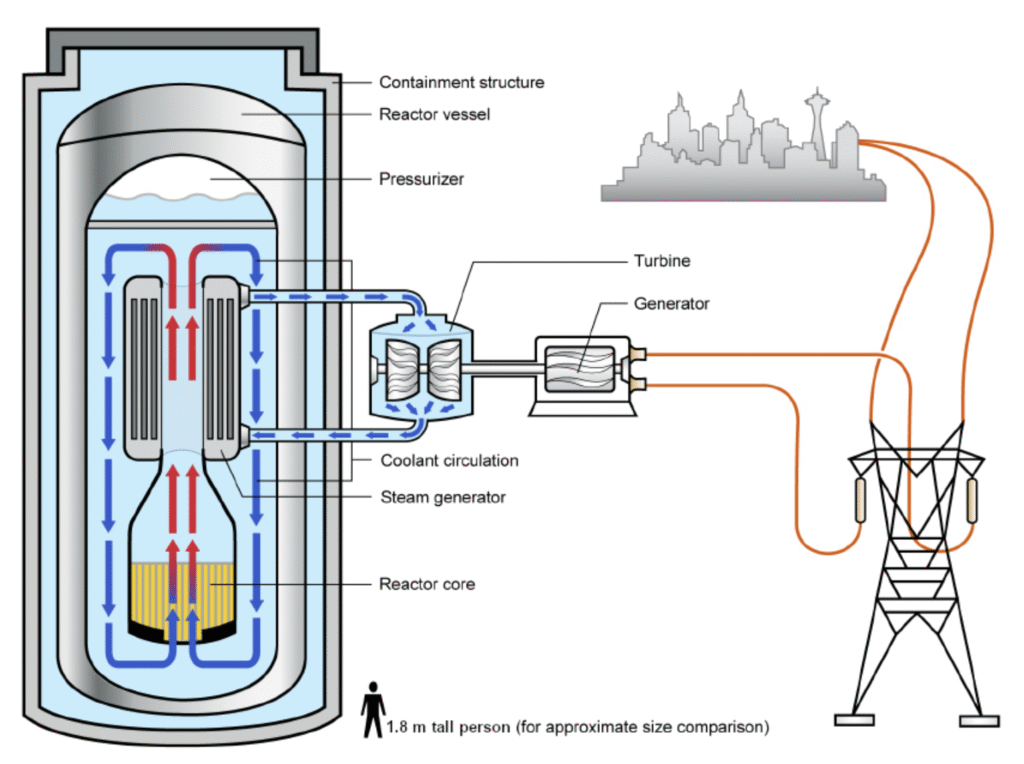
X-Energy’s proposed Texas facility would be the first advanced nuclear plant approved for construction at an American industrial site. The NRC’s decision is also the first US construction permit issued for a high-temperature gas-cooled reactor in nearly 60 years.
The four reactors planned for Texas would generate a combined 320 megawatts of electricity.
X-Energy chief executive Clay Sell said: “This is an important day. Getting the construction permit earlier than expected is reflective of the thorough and efficient work of the NRC, the reforms that have been put in place by the Congress over the last six years, and the phenomenal work of the X-energy and Dow teams.”
The approval places X-Energy among a small group of companies to have secured federal construction permits for advanced nuclear projects in the United States.
TerraPower, backed by Microsoft co-founder Bill Gates, received approval earlier this year for a reactor in Wyoming, while a project involving GE Vernova and Hitachi was approved in Tennessee in September.
NRC chairman Ho Nieh said: “We delivered on the 18-month schedule, proving we can do rigorous safety reviews on predictable timelines that move advanced nuclear technology from design to construction.”
The US government is helping fund X-Energy’s Texas project through the Department of Energy’s Advanced Reactor Demonstration Program, which shares development costs with private companies to accelerate the deployment of advanced nuclear technology.
Mike Goff, a senior Department of Energy official, said: “The NRC’s approval demonstrates meaningful progress toward deploying advanced reactors that can deliver reliable power and industrial heat, strengthen American energy leadership and expand the role of nuclear energy in meeting our nation’s growing energy demands.”
The approval comes as the United States seeks to expand domestic energy production to meet rising electricity demand from artificial intelligence, data centres and manufacturing.
Nuclear power is attracting renewed interest because it can provide continuous electricity without relying on weather conditions, making it attractive to companies requiring large amounts of reliable power.
X-Energy has secured partnerships with several major companies, including Amazon, which has invested in the developer and is supporting plans to deploy more than five gigawatts of its nuclear technology by 2039.
The company has also partnered with British energy supplier Centrica to explore deploying its reactors in the UK, extending its potential role in strengthening energy security beyond the United States.
The Texas project is expected to be among the first commercial deployments of X-Energy’s technology, with the proposed reactors designed to provide electricity and industrial heat for up to 60 years.
Dow is expected to make a preliminary investment decision on the project in 2027.
The construction permit represents an important step towards bringing X-Energy’s technology into commercial use as demand for reliable nuclear power continues to grow.
