

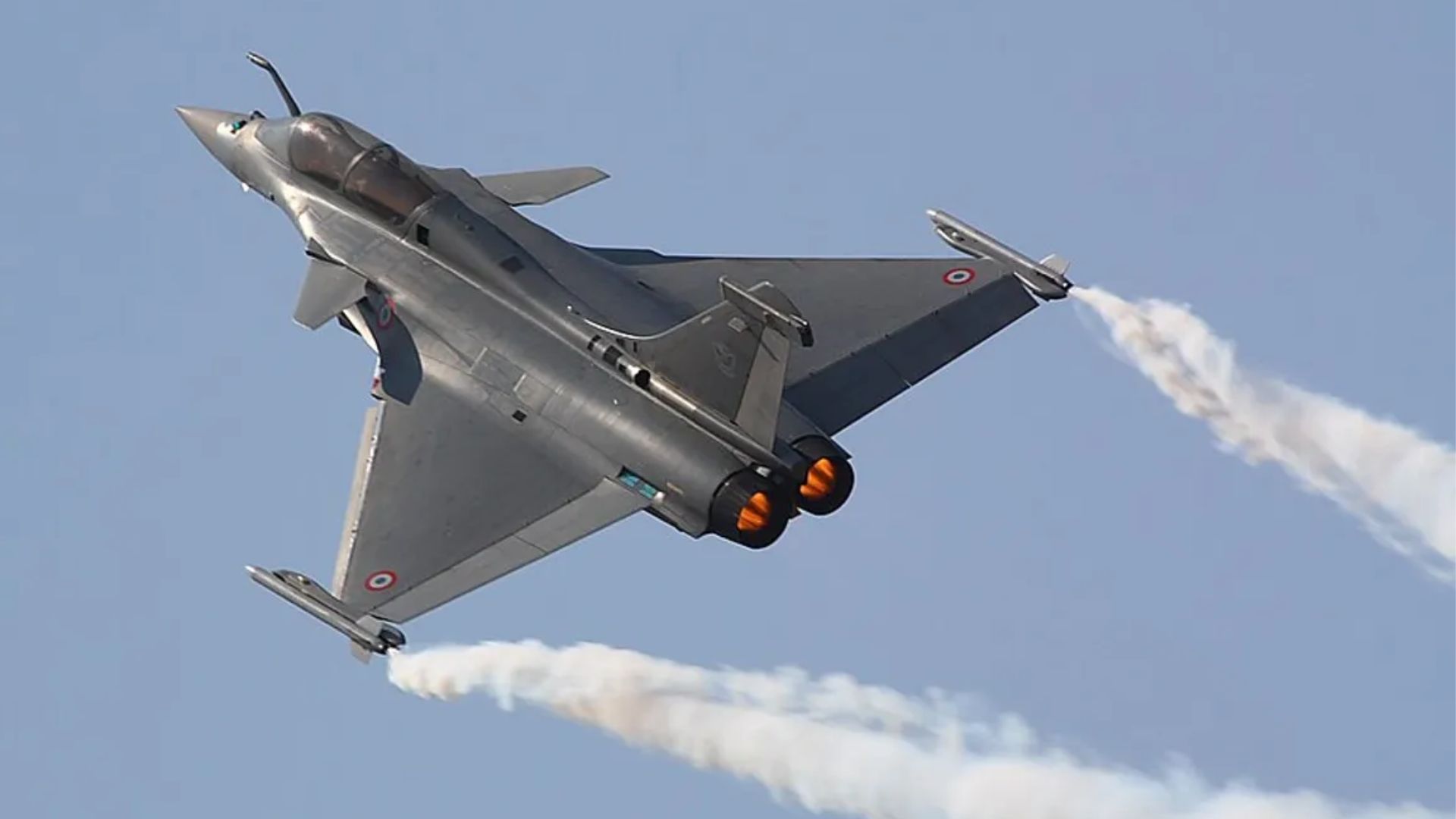
The Indian Air Force (IAF) has finalized the Request for Proposal (RFP) for 114 Dassault Rafale F4s (and potentially F5s), and the document is in “the final stages of bureaucratic processing” ahead of Prime Minister Narendra Modi and IAF Chief AP Singh’s visit to France in June 2026.1
Dassault CEO Éric Trappier aims to sign the contract within 2026, and Indian companies are already undergoing training at Dassault Aviation’s facilities in France, with plans for a second assembly line at Hyderabad for Rafale, if the order is placed.23
The deal – estimated at $36–40 billion – would be the largest single Rafale order in history, comprising 22 fly-away aircraft from France and 92 assembled domestically, though some outlets report a split of 18 and 96, suggesting the ratio is still under negotiation.4 Dassault is already ramping toward four aircraft per month to service a backlog of over 220 orders.5
However, while the deal stems from an urgent IAF requirement, the program is still closer to the start of India’s procurement process than its conclusion, and unless the IAF takes a proactive stance in supporting it through that process, the negotiations risk getting ensnared in delays over technology transfer, offsets, and indigenization.
India’s defence procurement follows a multi-stage bureaucratic process, and the RFP – now finalized – sits at approximately Step 4 of a 12-step sequence that must run its full course before a contract can be signed.8
The Services Qualitative Requirements (SQR) have been defined, the Statement of Case (SoC) was submitted to the Ministry of Defence (MoD) in September 2025, and the Defence Acquisition Council (DAC), chaired by Defence Minister Rajnath Singh, approved the Acceptance of Necessity (AoN) on 12 February 2026 – valid for one year under the ‘Buy and Make (Indian)’ acquisition category.67
What the RFP does is formally invite Dassault to submit sealed technical and commercial proposals, after which the Technical Evaluation Committee (TEC) reviews the technical bid, Field Evaluation Trials (FET) may follow (though these could be abbreviated given the Rafale is already in IAF service), and a staff evaluation is completed.
The difficult negotiations begin after all of that – i.e., at the Contract Negotiation Committee (CNC) and Price Negotiation Committee (PNC) stage, where both sides will hash out source code access, Interface Control Document (ICD) terms, indigenization schedules, offsets, and pricing.8
CCS (Cabinet Committee on Security) approval and CFA (Competent Financial Authority) clearance follow, and only then does the contract get signed – a sequence that, even under smooth conditions, typically requires 12–18 months from RFP issuance for deals of this scale.
Trappier’s ambition to close in 2026 would require extraordinary compression at precisely the CNC stage, where France and India have the most to deliberate upon.9
The fact that Indian defence companies are already training at Dassault is significant, however, as it suggests either informal pre-contract arrangements or very high political confidence that the deal will close regardless of how the CNC plays out. The most likely source of that confidence is the IAF itself, which has driven every stage of this process from the SoC onward.9
The IAF Wants a Platform; the Indian Establishment Wants a Capability
The Rafale deal involves two institutional actors within the Indian system whose core interests overlap to an extent, but are not identical or aligned in every respect. The IAF, which operates the aircraft and wants more of them, and the wider Indian bureaucratic and industry cadres, which want the deal to deliver an industrial program.
The IAF already operates 36 Rafales from the 2016 contract, has infrastructure at Ambala and Hasimara, and has experience with the Meteor BVRAAM, the SPECTRA electronic warfare (EW) suite, the AASM Hammer, and the SCALP cruise missile. In fact, the existing fleet “greatly influenced Indian decisions” to choose the Rafale over competing Russian, European, and American offers. 10
The 2016 deal was structured on French terms with limited technology transfer (ToT), and the IAF was satisfied with the platform; the service’s priority is to get more of what already works and to integrate it seamlessly into its existing architecture.
The MoD under Defence Secretary Rajesh Kumar Singh has a different set of priorities: access to the Rafale’s ICD has become “the cornerstone of this ‘digital sovereignty,’” and “if access to the ICD is denied, the Indian authorities are prepared to halt negotiations.”11
The Defence Ministry has set a stated objective of producing Rafales that are 60% locally manufactured,12 and the delay “appears to be driven by India’s demand for access to the Rafale’s source code and an insistence on the ability to independently modify and upgrade the aircraft.”13
This divergence is shaped by the MMRCA experience – the earlier 126-aircraft Rafale deal that collapsed in the 2010s, partly over technology-transfer disputes – and the defence establishment does not want to sign a $40 billion contract that replicates the 2016 deal’s limited ToT framework on a nearly fourfold scale.
The IAF sees the Rafale as a weapons system; the MoD sees it as an industrial program; and the tension between these two views will shape the contract that emerges from the CNC.
France’s Reluctance Stems from a Deeper Issue. It is Not Biased Against India
There is a tendency to frame the source code dispute as a bilateral problem – i.e., India asks, France refuses – but this framing is incomplete, because France’s reluctance stems from structural pressures within France itself that have nothing to do with India specifically and would apply to any customer making the same demand.
The clearest evidence is the UAE’s experience with the Rafale F5, but the structural pressures are worth examining individually first, as each contributes to France’s position in ways that outside observers often underappreciate.
Domestic Workshare and Fiscal Politics
The Rafale is unique among European combat aircraft in that one country builds it entirely – unlike the Eurofighter Typhoon (four nations) or the FCAS framework – each Rafale unit sustains French workers, French subcontractors, and French tax revenue across the full depth of France’s defence-industrial chain: Dassault for the airframe and integration, Thales for radar and EW, Safran for engines and targeting pods, and MBDA for weapons. Per Dassault:
“…supports a national industrial and technological ecosystem, mobilizing thousands of highly skilled jobs and stimulating innovation in key sectors such as aeronautics, electronics and motorization. Each order… strengthens the Defence Industrial and Technological Base (BITD), a pillar of France’s strategic independence.”14
Rafale exports accounted for two-thirds of France’s €27 billion (USD $31.3 billion) in arms exports in 2022,15 and France is running a fiscal deficit of approximately 5% with a revised Military Programming Law (LPM) that added €36 billion ($41.78 billion) to the defence envelope but remains, by officials’ own admission, insufficient. 16
Every aircraft shifted from French production to a foreign production line directly reduces French employment, industrial throughput, and tax revenue. Moreover, France proposed an indigenization timeline that the Indian side wanted shortened,17, which tells the story of where France’s structural incentives lie.
The MBDA and Thales Dimension
Dassault does not own all of the Rafale’s intellectual property as key systems from Thales (radar and EW), and Safran (engines) sit outside Dassault’s direct negotiation scope.18
Releasing the ICD requires Dassault, Thales, Safran, and MBDA – each with its own commercial interests and technology diffusion risk assessments – to agree, and this is a consequence of France’s decision to build the Rafale as a purely national initiative: strategic independence from European partners came at the cost of making any technology-sharing decision a multi-corporate coordination problem.
The Rafale ecosystem generates revenue at two levels – the airframe (Dassault) and the weapons (MBDA) – and if any customer gains source code access and integrates non-French weapons, such as India’s Astra BVRAAM (which offers competitive performance at lower cost than MICA19), it sets a precedent for every other Rafale operator to demand the same.
Egypt, Greece, Qatar, the UAE, Indonesia, Croatia, and Serbia all fly the Rafale, so the gatekeeping protects a commercial model across the entire global fleet rather than a single bilateral relationship.
This ties back to an oft-discussed theme in past Quwa analyses: scale matters. When France develops advanced platforms and munitions independently, it bears the full R&D overhead for those systems and, as a result, requires export orders to generate the scale needed to spread that overhead across more units. Dassault and Safran are buffered from this, as they take on the most complex parts of the work (i.e., the airframe, flight-control systems, and engine), but MBDA and Thales can technically be removed from the stack. So, if these two companies are unable to leverage the Rafale to drive export orders, their solutions will retain the R&D overhead and, in turn, drive higher per-unit pricing, which affects French procurement and future R&D. Therefore, while it is Thales and MBDA that could stand to lose should India (or, for that matter, another Rafale user’s industry) emerge as munitions and subsystems competitors, the impact resulting from it would also affect Paris and long-term French defence decisions.
In other words, while there are immediate commercial interests in limiting India’s access to the Rafale platform, the main blocker is likely the French government. In fact, France has been a blocker to other countries seeking to leverage it for their own programs and industrial ambitions, such as the UAE.
The UAE is currently France’s largest Rafale export customer, with an 80-aircraft F4 order signed in December 2021 at €16–17 billion – i.e., the biggest export contract in French defence history, with deliveries on track from late 2026.22
Abu Dhabi then offered approximately €3.5 billion – roughly 70% of the estimated €5 billion development cost – to co-finance the Rafale F5, seeking direct access to advanced optronics, mission systems, and other high-value subsystems in exchange.23 France refused.24
President Macron’s December 2025 visit to Abu Dhabi reportedly went badly, and, notably, Macron directed his anger at the DGA and the French military establishment (EMA), not at Dassault,25, which indicates that the structural resistance lies within the government-to-government architecture rather than just the commercial layer. The UAE withdrew from F5 co-financing, leaving France to fund the entire program alone under its revised 2024-2030 procurement roadmap.
France’s Traditional Leverage No Longer Applies to Its Top Prospects
The actual strength of France’s defence export model is its ability to integrate practically every part of the major arms sale process — i.e., the platforms (e.g., Rafale, Gowind, Scorpene, etc), the subsystems, the munitions, the after-sale support and maintenance, and the financing –- into an end-to-end, turnkey solution that engages the customer with the French defence industry for 30-40 years. In other words, the customer pays for a mature, ready-to-use warfighting system, with the option to break the payments into an annual line item rather than an upfront investment.
In other words, the whole point is to buy capability, not to seek knowledge or technology for its own sake. This works for the customer who prioritizes gaining tangible warfighting capability, but not for the one thinking at a broader level, say, of industry or technology sharing. Hence, the easiest customers for France to work with are the likes of Egypt, Indonesia, Greece, Qatar, the UAE (before the rise of its defence industry) or — from the 1960s to the 2000s — Pakistan.
One set of customers was cash-rich and had limited incentives to focus on industrial manufacturing, much less defence and aerospace production, such as Iraq, Libya, Qatar, or the Emirates. The other customer set did have domestic defence industries, but they were (and still are) cash-poor, so they relied on loans/financing to get deals going, such as with Egypt and Pakistan. Indonesia and Greece arguably fall in between, but due to different issues, would tilt to the latter. With such customers, Coface — France’s state-backed export credit agency — would insure bank loans at up to 85% of the loan value.32
In other words, one set wanted to acquire high-quality capability, while the other needed that capability but had to work under Paris’ terms to secure the financing. For example, Egypt accepted Rafales in a reduced configuration (notably without the Meteor BVRAAM33) and did not demand source code or ICD access, because Egypt needed French credit to buy French weapons, and that financial dependence gave France the leverage to dictate the terms. Likewise, one does not expect Croatia, Serbia, or even war-bogged Ukraine to be “picky” about industrial partnerships when, at this time, their capability needs outweigh the financing capacity.
This model breaks when the customer has cash and industrial interests, such as India, Germany, and now the UAE. The dynamic may explain why the previous Medium Multi-Role Combat Aircraft (MMRCA) bids in the 2000s and 2010s all fell through. Granted, this aspect would only explain a portion of the overall issue, but it was likely among the critical factors — i.e., the gap between Paris and New Delhi’s respective industrial interests. The lever that actioned the first 36 fighters was, in actuality, the IAF’s demand for capability, and once again, the IAF is driving the larger 114-jet program.
Breaking the Deadlock, Bridging the Gap
Ultimately, the IAF and the French government likely want this deal signed; the question is: what will move the wider Indian defence-industrial establishment? In this author’s assessment, France’s strategy could be to “sell the future,” in return for owning the present. In other words, the French government could look to give away what it does not have at this time to ensure that French industry (and French labour) benefit today and into the foreseeable future.
In this respect, one could see New Delhi make further headway in negotiating French technology sharing for the inputs necessary for the Advanced Medium Combat Aircraft (AMCA) and Tejas, for example, rather than trying to derive most of the Rafale’s value from Indian production and industry. For example, Safran proposed helping India develop a new engine for the AMCA and, in turn, transfer the complete rights of that engine to India.34 New Delhi could look to dig further to secure France’s industrial support and expertise for key inputs to that engine, such as the blades. Yes, this would be a massive technology transfer, but a 114+ Rafale deal (with France gaining most from munitions sales and upgrades thereafter) could be a fair price for that transfer. It gives the current French government something substantial to offer to France’s industry and labour today, and it offers New Delhi a substantive vision of the future to sell domestically.
If France focuses on India’s future homegrown programs, it could potentially incentivize the Indian government to keep the ball rolling on the current Rafale deal. However, this approach could result in several consequences. For example, the Indian government might look to break the 114-aircraft bid into multiple tranches to keep France on edge and prevent it from taking the Indian market for granted. For the sake of the IAF’s immediate needs, a first tranche could be signed relatively quickly, but subsequent tranches will require France to fulfill its industrial/technology transfer commitments. However, in parallel, the Indian government leaves enough space for other vendors (especially Russia) to remain engaged, giving New Delhi leverage to pressure France.
Endnotes
1 Manu Pubby, “IAF Finalises Rafale RFP, Sets Stage for Fighter Production Before Modi, Chief AP Singh Fly to France,” ThePrint, 14 May 2026.
2 Pubby, “IAF Finalises Rafale RFP.”
3 Pubby, “IAF Finalises Rafale RFP.” Trappier’s March 2026 statement on a second assembly line at Hyderabad was reported in the same ThePrint article.
4 The 22/92 split is from ThePrint (ibid.); the 18/96 split was reported by the Aviationist. See David Cenciotti, “India Greenlights Acquisition of 114 Rafales,” The Aviationist, 16 February 2026.
5 Dassault Aviation, Annual Results 2025 (Paris: Dassault Aviation, 2026). Production rate and backlog figures from Dassault Aviation corporate disclosures.
6 Pubby, “IAF Finalises Rafale RFP.”
7 India’s Defence Acquisition Procedure (DAP) 2020, Chapter II, Section IV. The AoN validity period for ‘Buy and Make (Indian)’ category is one year.
8 For a detailed overview of India’s defence procurement stages, see DefenceXP, “Defence Procurement Procedure in India – A Complete Guide,” DefenceXP, accessed 18 May 2026.
9 Pubby, “IAF Finalises Rafale RFP.”
10 “Rafale F4 pour l’Inde: les enjeux du contrat MRFA de 114 avions de combat,” Meta-Defense.fr, April 2026.
11 “Rafale F4 pour l’Inde,” Meta-Defense.fr.
12 “India Wants 114 Dassault Rafale Fighters, but the Deal Has Hit a Wall,” Military Watch Magazine, April 2026.
13 Harrison Kass, “India Wants 114 Dassault Rafale Fighters. France Won’t Hand Over the Source Code,” 19FortyFive, April 2026.
14 “Rafale: A True Military Superiority System,” Dassault Aviation corporate website, accessed 18 May 2026.
15 Édouard Simon and Rafael Loss, “The Trouble with FCAS: Why Europe’s Fighter Jet Project Is Not Taking Off,” European Council on Foreign Relations (ECFR), 2024.
16 “France: Rafale F5 – the UAE’s Withdrawal Forces Paris to Make Difficult Choices,” AeroTime Hub, 2026.
17 Pubby, “IAF Finalises Rafale RFP.”
18 “Why France Won’t Share the Rafale’s Source Code: Multi-Vendor IP Explained,” DefenceXP, 2026.
19 “India Wants 114 Dassault Rafale Fighters,” Military Watch Magazine.
20 Kass, “India Wants 114 Dassault Rafale Fighters,” 19FortyFive.
21 “French Officials Alarmed Over BrahMos Integration Risk on Rafale Platform,” Military Watch Magazine, February 2026.
22 “Dassault Aviation Unveils First Rafale F4 for UAE at Istres,” Shephard Media, January 2025; Dassault Aviation, corporate press release, January 2025.
23 “France: Rafale F5 – the UAE’s Withdrawal Forces Paris to Make Difficult Choices,” AeroTime Hub.
24 “UAE Walks Away From Financing Rafale F5 Due to Restricted Access to Technology, Reports French Media,” ThePrint, reporting La Tribune, December 2025.
25 “France: Rafale F5,” AeroTime Hub. Macron directing anger at DGA and EMA is from the same report, citing La Tribune’s original French-language reporting.
26 “France: Rafale F5,” AeroTime Hub.
27 Simon and Loss, “The Trouble with FCAS,” ECFR.
28 Aaron Mehta, “France Maps Out Rafale Exports for Saudi, India, but Future Fighter Tension with Germany Lingers,” Breaking Defense, November 2023.
29 “France Wanted to Sell Rafale Engines to India, Now It Will Have to Hand Over All Technologies for a Brand-New Engine,” Defence Express, November 2025.
30 “France Wanted to Sell Rafale Engines to India,” Defence Express.
31 “France Wanted to Sell Rafale Engines to India,” Defence Express.
32 “Egypt to Buy Rafale Fighter Jets With French ECA Support,” ECA Watch, 2015.
33 “Egyptian Rafales Heavily Downgraded Relative to French Air Force Configuration,” Military Watch Magazine, 2024.
34 “France Wanted to Sell Rafale Engines to India,” Defence Express.
