

British High Commissioner to India Lindy Cameron has hailed the India-UK Comprehensive Economic and Trade Agreement as historic, describing it as the fastest trade deal ever put into force between the two nations.
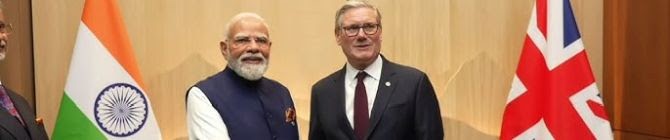
The agreement, signed less than a year ago at Chequers in the presence of Prime Minister Narendra Modi and UK Prime Minister Keir Starmer, will come into effect on 15 July 2026. Cameron emphasised that this rapid implementation underscores the importance of the bilateral relationship and provides a significant opportunity for both countries to reap economic benefits at a complicated time globally.
The deal was announced after a breakthrough at the G7 Summit and aims to double bilateral trade to between USD 100 and 120 billion by 2030. Cameron highlighted that several sectors will benefit, including textiles, footwear, cars, and Scotch whisky.
She noted that the UK will grant immediate duty-free access to 99 per cent of Indian exports, which will particularly benefit labour-intensive industries such as textiles, leather, marine products, and pharmaceuticals. On the Indian side, import tariffs on British Scotch whisky will be reduced from 150 per cent to 40 per cent, a major concession that is expected to boost UK exports.
The High Commissioner acknowledged that steel remains a sensitive issue for both countries. She confirmed that discussions had taken place to address India’s concerns regarding the UK’s steel safeguard measures.
Government sources later clarified that around 85 per cent of India’s steel exports would remain outside the scope of these measures, with concessions negotiated on 188 tariff lines. This ensures that the majority of India’s steel trade with the UK will not be adversely affected.
Indian government sources described the pact as the most aspirational agreement so far, opening up a market worth over USD 500 billion for Indian businesses. They stressed that customs notifications and related processes are being prepared to ensure exporters can avail concessions from day one, with consignments expected to benefit from reduced tariffs starting 15 July itself.
The agreement is expected to provide Indian exporters with an additional tariff advantage of 7 to 10 per cent, bringing India on par with other countries that already enjoy zero-duty access to the UK market. Sources added that over 99 per cent of India’s tariff lines and trade will be reduced to zero duty under the pact.
India currently enjoys a trade surplus with the UK in both merchandise and services. In 2024, India’s services exports to the UK stood at USD 21.6 billion, compared with UK services exports to India valued at USD 13.7 billion.
In 2025, India’s merchandise exports to the UK were USD 13.7 billion, while imports from Britain amounted to USD 9.47 billion. The agreement is expected to further strengthen this surplus, while also expanding opportunities for British exporters in India.
The growing economic engagement between the two countries is evident, with more than 900 Indian companies currently operational in the UK. The CETA is expected to deepen this partnership further, creating new avenues for investment, innovation, and collaboration across diverse sectors. Both governments have described the deal as a landmark achievement that will transform bilateral trade and economic relations.
Alternative Headline:
