

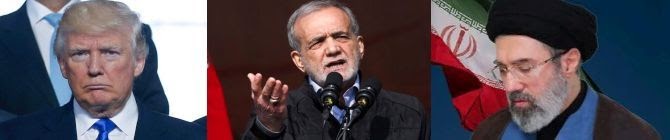
President Donald Trump and Iranian President Masoud Pezeshkian have signed an interim peace accord that immediately waives sanctions to allow Iran to freely sell oil, requires dilution of highly enriched uranium, and reopens the Strait of Hormuz toll‑free for 60 days, reported AP.
The deal halts hostilities, affirms Lebanon’s territorial integrity, and begins a 60‑day negotiation period towards a final settlement.
The agreement was signed on Wednesday at Versailles, where Trump met French President Emmanuel Macron after the G7 summit. Trump emphasised the strength of the memorandum but also warned he could abandon it if dissatisfied, stating bluntly that the US could “go back to shooting at them, dropping bombs.” A video released by the White House showed Trump signing a paper copy beside Macron and handing it to Secretary of State Marco Rubio as attendees applauded.
The text of the agreement has not been formally published, but US officials released draft language outlining key provisions. Iran must dilute its stockpile of highly enriched uranium on site at minimum, and commit never to develop or procure nuclear weapons.
In return, Washington will waive, though not fully eliminate, sanctions, enabling Tehran to resume unrestricted oil exports. This represents a major concession, surpassing the 2015 nuclear deal, which only lifted some sanctions after Iran reduced enrichment.
The accord also guarantees toll‑free passage through the Strait of Hormuz for 60 days, though future transit fees are not ruled out. The strait, a vital artery for global oil and gas, had been effectively closed during the war, causing a historic energy crisis. The agreement stipulates that traffic will return to pre‑war levels within 30 days, once Iranian mines are cleared. The US blockade of Iranian ports will also be lifted.
The deal affirms Lebanon’s territorial integrity and requires an end to military operations there. Israel, however, has rejected withdrawal from Lebanese territory, insisting it will continue to defend itself. This provision remains one of the most delicate aspects of the accord, given Israel’s ongoing operations against Hezbollah.
Iran will also gain access to at least $300 billion for post‑war reconstruction, with Gulf Arab nations expected to provide investment. Yet scepticism persists about whether these states will contribute, given Iran’s attacks on their oil facilities during the conflict. Trump has insisted the US will not fund reconstruction, leaving it to other countries.
The interim arrangement launches a 60‑day negotiation period focused on Iran’s nuclear programme. While Iran insists its programme is peaceful, US and Israeli officials fear it could lead to atomic weapons. The deal opens the door to lifting all US and UN sanctions, including those related to weapons and human rights, though the schedule will be determined later.
Global markets reacted swiftly. Oil prices fell more than 1% after the signing, with Brent crude at $78.66 per barrel and US West Texas Intermediate at $75.81. Shipping companies anticipate a return to normal traffic through Hormuz within weeks, easing supply chains strained by months of disruption.
Despite optimism, Trump’s remarks suggest uncertainty remains. He hailed the accord as “very strong” but admitted “nobody knows what it is.” His willingness to walk away underscores the fragility of the arrangement. Iran’s President Pezeshkian called the deal a “historic document” and stressed peace must rest on mutual respect.
The memorandum restores much of the pre‑war status quo: ending hostilities, reopening Hormuz, and restarting nuclear talks. Yet it offers Iran significant benefits upfront, including oil sales and reconstruction funds, while extracting limited concessions. Critics in Washington argue this strips the US of leverage, while Israeli Prime Minister Benjamin Netanyahu faces domestic backlash as the deal undermines his war aims.
The coming weeks will determine whether the ceasefire holds and whether the interim accord evolves into a lasting settlement. Talks begin Friday in Switzerland, with mediators from Pakistan, Qatar, and Saudi Arabia expected to participate. The world powers will closely watch whether Iran complies with uranium dilution and whether sanctions relief leads to broader stability in West Asia.
Agencies
