

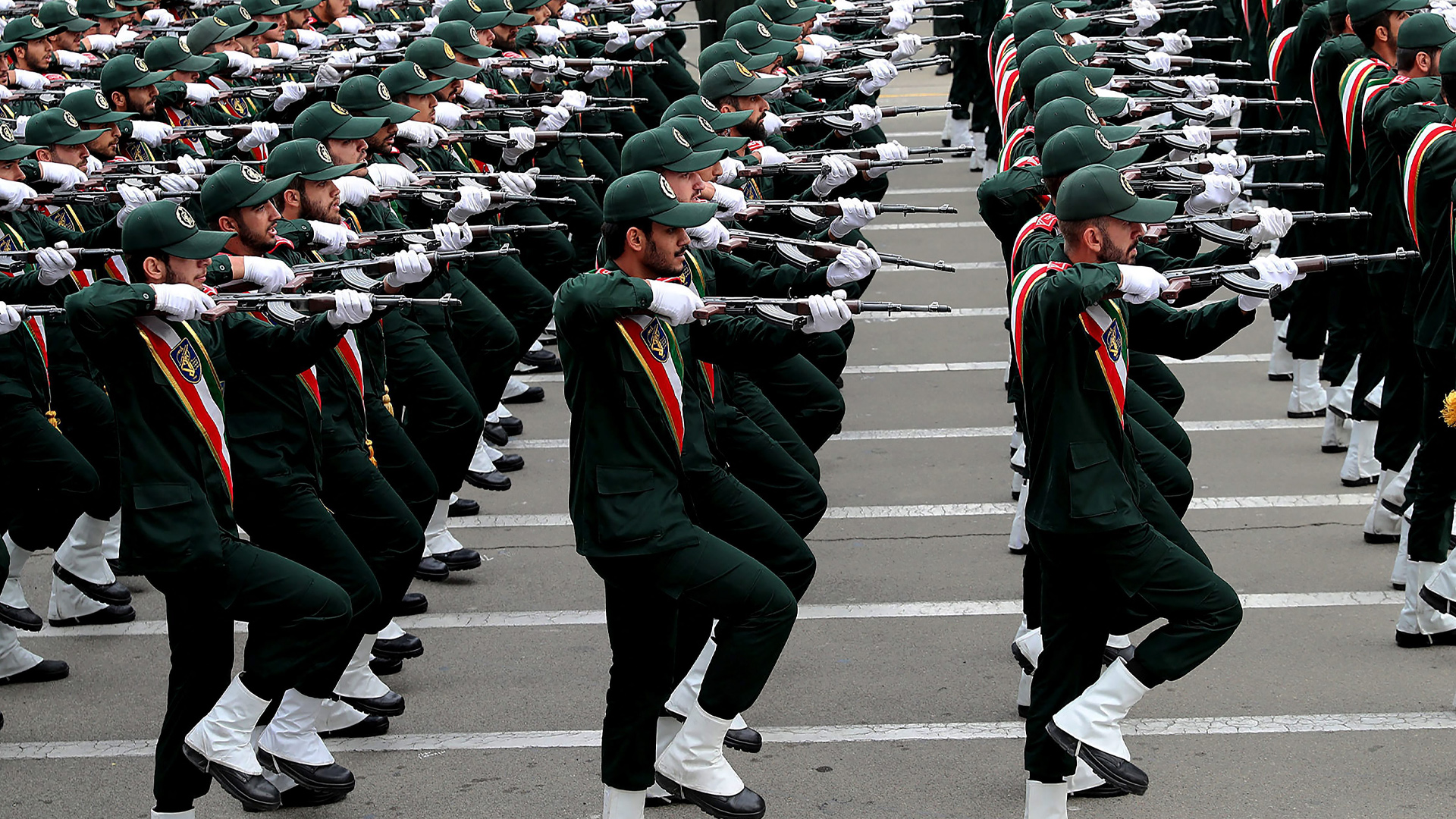
The UK government has announced that Iran’s Islamic Revolutionary Guard Corps (IRGC) will be formally designated as a threat to national security under new legislation aimed at tackling hostile state activity.
Home Secretary Shabana Mahmood said the new powers will make it a criminal offence to support the IRGC in any form, including by expressing approval or providing assistance. Offenders could face prison sentences of up to 14 years.
The government will also designate two additional organisations: the Islamic Movement of Companions of the Right (IMCR) and the volunteer corps linked to Russia’s military intelligence agency, the GRU.
The measures form part of broader efforts to strengthen the UK’s response to espionage, foreign interference, sabotage and state-backed violence. Police and intelligence agencies will receive enhanced powers to investigate and prosecute individuals acting on behalf of hostile foreign organisations.
The IRGC is believed to have been behind seven attacks targeting locations in the UK associated with Jewish and Israeli communities. According to MI5, at least 20 Iranian-backed plots posing potentially lethal threats to people in Britain were identified over the past year.
Prime Minister Sir Keir Starmer, who pledged in April to accelerate the implementation of the National Security (State Threats) Act, said the legislation would ensure Britain is no longer vulnerable to hostile states.
“We will never let Britain be a playground for states that want to spread fear, division and violence on our streets,” he said. “These new powers will make it easier to prosecute and imprison anyone carrying out their work here in Britain.”
If Parliament approves the measures later this week, those convicted of carrying out acts of sabotage, including arson, on behalf of the designated groups could face life imprisonment. The legislation also removes the requirement for prosecutors to prove a direct connection to a foreign power in every case, making prosecutions more straightforward.
Shabana Mahmood accused both Iran and Russia of using proxy groups and criminal networks to operate in the UK.
“I have rapidly designated three groups so those working for them will be tracked down and put behind bars,” she said.
The IRGC was established following Iran’s 1979 Islamic Revolution to protect the country’s new political system. It has since developed into one of Iran’s most powerful military and security organisations, with an estimated 190,000 active personnel and significant influence beyond the country’s borders.
Western governments have long accused the IRGC of supporting terrorism and destabilising activities overseas. The organisation is already designated as a terrorist group by Australia, Canada and the United States. Earlier this year, the European Union also added the IRGC to its terrorist list following its alleged role in suppressing anti-government protests in Iran.
The UK government said the latest measures reflect an increasing threat from state-sponsored hostile activity, which has become more sophisticated and increasingly reliant on proxy organisations.
In a statement to Parliament, Home Office minister Angela Eagle described the IRGC as a core part of Iran’s security apparatus, operating under the authority of the country’s Supreme Leader.
She said the organisation’s role extends well beyond that of a conventional military force, encompassing intelligence operations, the use of proxy groups, and activities designed to advance Iran’s strategic interests abroad.
