

Iran has ruled out direct meetings with senior American envoys in Qatar, even as US and Iranian technical teams continue indirect talks aimed at turning a ceasefire into a wider peace agreement.
Steve Witkoff, President Trump’s Middle East envoy, and Jared Kushner, the president’s son-in-law, met Qatar’s prime minister, Sheikh Mohammed bin Abdulrahman al-Thani, in Doha to prepare negotiations mediated by Qatar and Pakistan. A source with direct knowledge of the talks said the American envoys were not expected to sit down with Iranian officials.
The talks, which began on Tuesday night and continued on Wednesday, are based on a 14-point interim accord signed last month. The agreement halted the war that began with US-Israeli strikes on Iran in February, reopened negotiations for 60 days and set out steps to restore shipping through the Strait of Hormuz.
Iran’s foreign ministry said there would be no direct encounter with the US team. Esmaeil Baghaei, the ministry spokesman, said: “No meeting at any level” had been scheduled with the Americans. Qatar’s foreign ministry spokesman, Majed al-Ansari, said there were no direct meetings planned.
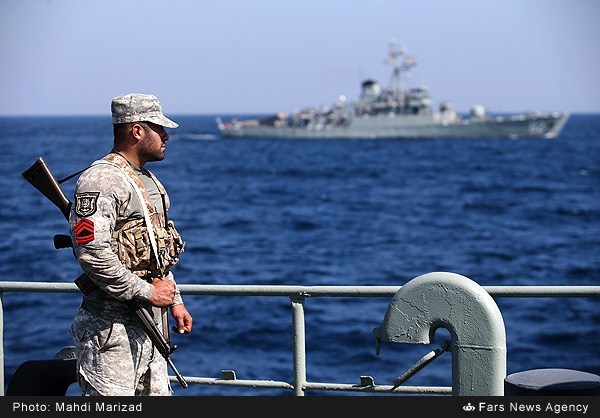
The immediate negotiations are focused on two issues: shipping through Hormuz and access to $6 billion in frozen Iranian assets held in Qatar. The strait handled about a fifth of global oil and liquefied natural gas trade before the war. Traffic has resumed only in part, and Iran’s state media said on Wednesday that a foreign container ship had run aground after leaving a route designated by Iranian authorities.
Washington says its priority is free and safe passage through the waterway. Tehran says it has sovereign rights over the strait, alongside Oman, and wants recognition of its ability to regulate traffic and charge fees once the 60-day window expires. Mohammad Baqer Qalibaf, Iran’s chief negotiator, said on state television: “Sovereignty of the Strait of Hormuz lies with Iran and Oman.”
The asset dispute is unresolved. Iran says the release of the funds is central to it. US officials have said the money would be controlled through a mechanism involving Washington and Doha and used for approved purchases, including American agricultural goods.
Oil prices fell more than 1 per cent on Wednesday as traders awaited progress. Brent crude was down 1.6 per cent at $71.81 a barrel, while US West Texas Intermediate fell by the same margin to $68.39.
The Doha round follows renewed hostilities that exposed gaps in the interim deal. Iran and the US exchanged strikes after disputes over commercial shipping and the strait. Washington said it targeted Iranian drone storage, radar and coastal surveillance sites after a tanker was hit by an Iranian drone on June 27.
The agreement includes provisions intended to end the parallel conflict between Israel and Hezbollah in Lebanon. Reuters reported that diplomatic activity on Lebanon continued until Tuesday evening.
The Lebanon track has become one of the most difficult parts of the broader arrangement. Israel and Lebanon signed a US-brokered framework security agreement last week that is meant to provide a process for Lebanese army deployment, Hezbollah disarmament and a phased Israeli withdrawal from parts of southern Lebanon. Hezbollah, which was not a party to the agreement, rejected it.
Naim Qassem, Hezbollah’s deputy secretary-general, described the framework as a surrender and said the group would not leave the battlefield. Nabih Berri, the speaker of Lebanon’s parliament and an ally of Hezbollah, warned that the agreement would not be implemented and could deepen internal divisions.
Israel has signalled that it does not intend to withdraw immediately. Israel Katz, the defence minister, said Israeli forces would remain in security zones in Lebanon, Syria and Gaza “indefinitely” to protect Israeli communities. He added: “We will not withdraw from the security zones.”
A ceasefire announced on June 19 reduced fighting after Hezbollah attacks killed four Israeli soldiers and Israeli strikes in southern Lebanon killed dozens. French foreign minister Jean-Noël Barrot said then that Israel must respect the cessation of hostilities and Washington should apply pressure to ensure compliance.
US officials say the Lebanon provisions are part of the regional ceasefire framework. Israel says it is not a party to the accord.
