

By Staff Writer,
South African anti-illegal immigration campaigners have vowed to continue nationwide protest marches for six months after an ultimatum for undocumented foreigners to leave the country passed.
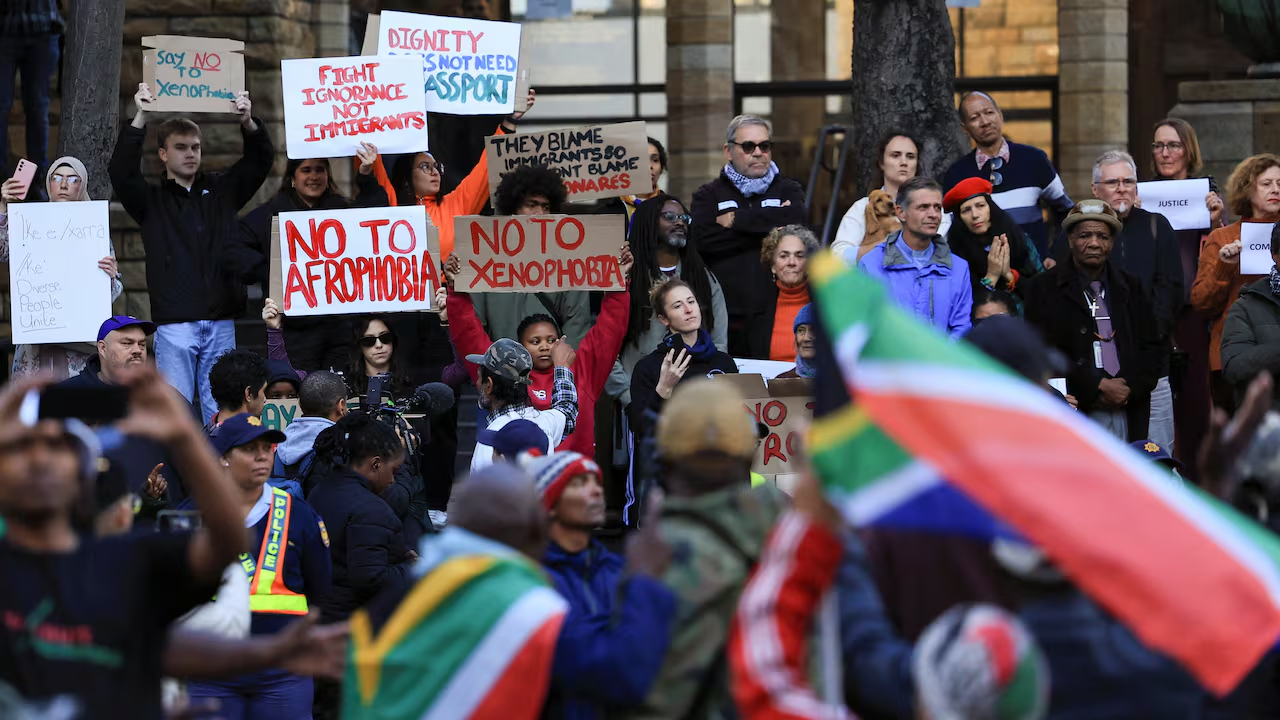
Thousands of protestors marched in cities across the country to mark their unofficial June 30 deadline that campaigners had given for those working and living in the country illegally to depart.
The vow to continue the campaign means illegal immigration is likely to remain a major political issue in the country ahead of local elections in November.
The African National Congress (ANC) led government ordered a massive police deployment to maintain order during the marches.
Large numbers of African immigrants, mainly Zimbabweans and Malawians, have fled in recent days, saying they feared the ultimatum would be an excuse for xenophobic riots and vigilante violence.
Usuf Milazi, a 39-year-old who had spent 10 years in South Africa, said he had taken refuge in a transit camp in Durban to try to get a bus back to Malawi.
He admitted he did not have a valid work permit, but said he had learned to sew and worked as a tailor.
He said: “We were getting threatened by people. I am tired of South Africa. I won’t come back here in South Africa.”
The marches passed off largely peacefully with minor reports of stone throwing and setting vehicles alight.
However there were also reports of armed men forcing their way into foreigners’ homes and demanding they leave the country immediately.
The protest campaign has been focussed in KwaZulu Natal province, where a former local radio present called Jacinta Ngobese-Zuma has founded a group called March on March.
After attending a march in Durban, she said she was satisfied with the turnout and said the marches would continue.
She said: “From now on in the country, for as long as they are all not gone, every Thursday we march.”
African migrant workers have long travelled to South Africa for job opportunities, attracted by its position as the continent’s economic and financial powerhouse.
Yet migrant workers have also long been blamed for crime, and the country’s sky high unemployment rates, which mean around a third of people do not have jobs.
Past waves of anti-foreigner sentiment have resulted in mob violence, particularly in 2008, when 62 people were killed.
The protests’ focus in KwaZulu Natal has also raised fears of a repeat of several days of street violence seen in July 2021, when the state appeared completely unprepared to stop looting and unrest.
Those protests erupted when former president Jacob Zuma, who has his power base in the province, was briefly imprisoned. More than 300 people died and large amounts of property was destroyed.
Opinion polling shows that South Africa has become increasingly hostile to migrants and increasingly likely to blame them for social problems.
The country’s Institute for Security Studies think tank said previous attempts by African countries to expel migrants, such as Uganda’s expulsion of Asians in 1972, had damaged economies.
The think tank said: “South Africa faces a harder version of the same dilemma, where the state did not issue the deadline but hasn’t stopped those who did. Appeasing that pressure will neither repair the economy nor arrest the country’s growing regional marginalisation.”
