

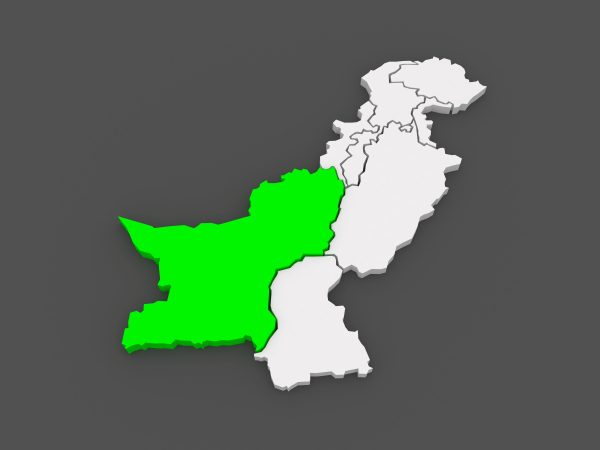
Pakistan has initiated a major military operation in Balochistan aimed at dismantling terrorist networks across the province. Named Operation Shaban, the campaign is being jointly conducted by the Army, Frontier Corps, and Balochistan Police.
Operation Shaban was launched in response to the deadly terrorist attack on July 7 in the Mangi Dam area, which claimed the lives of 27 police personnel.
The operation involves ground troops as well as Air Force-linked operations that are targeting militants in the province’s rugged mountainous terrain. Since its launch, security forces have killed around 123 militants belonging to various extremist groups across the province.
There has been a sharp spike in terrorist attacks across Balochistan in recent months. Militants from the banned Tehreek-e-Taliban Pakistan (TTP), which is allied with Afghanistan’s Taliban, and the banned Balochistan Liberation Army have increasingly targeted state forces, foreign investment projects, and infrastructure in the mineral-laden region.
Earlier this month, the country’s top civilian and military leadership, led by Prime Minister Shehbaz Sharif and Army Chief General Asim Munir, convened in Quetta, Balochistan’s capital, to assess the deteriorating security situation. “One thing is decided: it is a mutual and singular decision of the civil and military leadership that we must end terrorism collectively,” Sharif, who chaired the meeting, said.
Officials familiar with the planning told The Diplomat that Operation Shaban is designed as a sustained military campaign to dismantle terrorist infrastructure, deny militants safe havens, and restore the writ of the state across Balochistan.
According to security officials, Operation Shaban is unfolding across two distinct geographic fronts, which marks an unprecedented scale of simultaneous operations for the province.
In the province’s northern districts, including Ziarat and surrounding areas, the operation is targeting TTP elements and their sanctuaries. Pakistan has repeatedly accused the TTP of using Afghan sanctuaries as launch pads for cross-border attacks. Islamabad maintains that the group continues to enjoy safe havens and logistical support inside Afghanistan, which has enabled it to expand operations into Balochistan.
In southern Balochistan, particularly in the districts of Lasbela and Khuzdar, the military campaign is focusing on the BLA and affiliated separatist groups. These areas have witnessed repeated high-profile attacks due to their strategic location near key infrastructure and trade routes.
More importantly, the mounting convergence of TTP and Baloch militant operations reveals a shifting and highly complex threat environment. By expanding into Balochistan alongside local militants, the TTP has escalated provincial insecurity. This development seems to have compelled Pakistani authorities to design a far more comprehensive security response to deal with the challenge.
Arguably, the launch of Operation Shaban signals that the threat posed by these groups has reached a threshold where significant action was deemed necessary. For instance, coordinated ground assaults, aerial surveillance, and intelligence-led targeting are being employed on a larger scale to systematically degrade terrorist networks. It is possible that the operation will remain in an intense phase for the foreseeable future, going beyond knee-jerk or short-term retaliation. This is about putting lasting pressure on militant sanctuaries.
Moreover, the scale of the operation also reflects that the federal government understands the need to restore normalcy and a semblance of stability in Balochistan. While military action is essential to restore the writ of the state and destroy terrorist infrastructure, however, long-term stability in the province can best be achieved when security measures are complemented by long-term administrative, development and political initiatives. Kinetic operations are going to play a vital role in securing the immediate challenging situation, but these efforts must be accompanied by strengthening local institutions and socio-economic development in order to offer a highly inclusive path forward for the province.
While those who pursue violence and challenge the integrity of the state must be dealt with firmly, the Pakistani government must ensure that the door for reconciliation remains open for those willing to renounce violence and operate within the constitutional framework. Moreover, efforts should continue for a viable political process in this regard, involving political leaders and other stakeholders at all levels.
Operation Shaban will have important implications not only for Balochistan but for Pakistan’s overall internal stability.
If the operation helps in restoring security and creates space for development and dialogue, it could mark a significant step toward normalizing conditions in one of the country’s most strategically important regions.
