

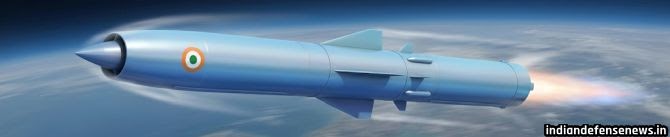
The BrahMos missile program is undergoing a transformative phase, with the next generation of variants being designed to be lighter, stealthier and longer‑ranged. The current BrahMos weighs around three tonnes, but the BrahMos‑NG is expected to be substantially smaller and lighter, at around 1.2 tonnes, thanks to the use of advanced composite materials.
This reduction in weight will allow fighter aircraft to carry more missiles per sortie, significantly enhancing combat effectiveness and broadening deployment options across platforms.
Operational deployment during Operation Sindoor provided real‑world validation of the missile’s battlefield effectiveness. The missile, already inducted into the army, navy and air force, has proved itself across land, sea, submarine and air platforms.
Initially restricted to a range of 290 kilometres, the BrahMos was extended to over 450 kilometres after India’s entry into the Missile Technology Control Regime, which lifted earlier limitations. There is now speculation that future variants could reach ranges of over 1,500 kilometres, though the final figures have not yet been confirmed.
Jaiteerth R Joshi, CEO and MD of BrahMos Aerospace, has confirmed that the Indo‑Russian joint venture is pursuing multiple next‑generation versions, including the compact BrahMos‑NG and extended‑range missiles capable of striking targets at much greater distances.
He emphasised that the redesign involves extensive use of advanced composite materials to make the weapon sleeker, lighter and more survivable against modern air defence systems. Experts note that this will allow integration with a wider range of fighter aircraft and naval systems, including future platforms.
Sudhir Kumar Mishra, former MD and CEO of BrahMos Aerospace, highlighted that the missile has evolved dramatically over the past 15 years in terms of range, accuracy and destructive capability. He explained that the BrahMos‑NG will incorporate futuristic technologies, enhanced stealth features, advanced materials and improved survivability. This evolution ensures that the missile remains world‑class and adaptable to emerging threats.
The program is also being driven by a major push towards indigenisation. Several critical components, including boosters, were originally sourced from Russia. In 2018, technology transfer enabled Solar Industries to begin domestic production of boosters, with deliveries starting in 2022.
The company has now delivered its 100th indigenous booster and increased production capacity from one per month to six. Indigenisation is also being extended to warheads, which were previously imported. Multiple companies are participating in this effort, ensuring a broader industrial base.
Cost reduction is another priority. BrahMos Aerospace has launched a value‑engineering program to improve efficiency and optimise production processes. Mishra stated that raw material costs have been reduced by 24 per cent, while component and manufacturing costs have dropped by 10 per cent.
Overall, the missile’s cost is expected to decline by nearly 20 per cent within the next two years. These savings, combined with combat validation during Operation Sindoor, are expected to boost exports further.
Exports have already become a major success story for the BrahMos project. Following the landmark contract with the Philippines, BrahMos Aerospace is now in advanced talks with Vietnam, Indonesia and the UAE.
Joshi confirmed that a deal with Vietnam is close to being finalised, with only minor clearances remaining. He added that negotiations are also progressing with countries on both the eastern and western sides, signalling strong international interest in the system.
The BrahMos missile, already recognised as the world’s fastest operational supersonic cruise missile, is now poised to become even deadlier. With lighter, stealthier and longer‑range variants under development, India’s precision‑strike capabilities will be redefined.
The combination of combat validation, indigenisation, cost reduction and export success ensures that BrahMos will remain a cornerstone of India’s defence strategy and a powerful symbol of Indo‑Russian cooperation.
Agencies
