

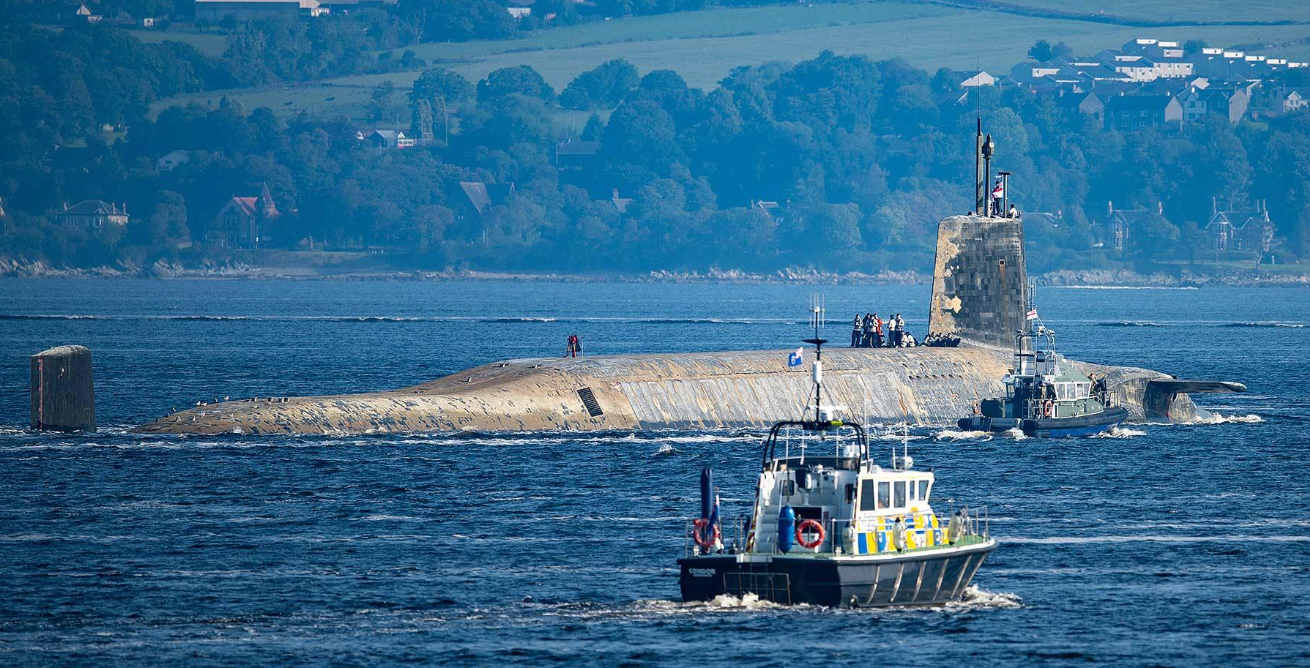
Britain is investing £8 billion to improve submarine maintenance and strengthen the country’s nuclear deterrent.
The five-year contract, awarded to British defence company Babcock, aims to tackle maintenance delays and increase the number of submarines available for operations.
The investment comes as the Royal Navy faces growing pressure to sustain its ageing Vanguard-class fleet while awaiting the arrival of replacement submarines.
Defence Secretary Wes Streeting announced the Gateway Agreement on November 26 during a visit to His Majesty’s Naval Base (HMNB) Devonport in Plymouth.
Streeting said: “Our nuclear submarines are the cornerstone of our national security. Every minute of every day, they deter our adversaries and keep our country safe. The deterrent is only as strong as our ability to keep it at sea.”
Under the agreement, Babcock will receive financial incentives to complete maintenance work more quickly.
Britain’s nuclear deterrent relies on four Vanguard-class ballistic missile submarines armed with Trident nuclear missiles. At least one submarine is on patrol at all times under a policy known as the continuous at-sea deterrent (CASD), which Britain has maintained since 1969.
The Vanguard-class submarines entered service in the 1990s and are being retained beyond their originally intended service life until the replacement Dreadnought-class submarines enter service from the early 2030s.
William Freer, Research Fellow (National Security) at the Council on Geostrategy, told National Security News (NSN) that historic underinvestment has placed considerable strain on the fleet.
He said: “CASD is the single most important item in the UK’s defence spending portfolio. The legacy of underinvestment in support infrastructure and the decision to delay the process for beginning the replacement programme for the Vanguard-class has stretched the ability for the Vanguard boats to fulfil the requirements of CASD.”
Freer added: “Crews and boats are now doing 200+ day patrols, more than double what they were designed to do.”
He pointed however to signs of improvement following increased investment, including an occasion this year when three Vanguard-class submarines were at sea simultaneously.
The agreement will also benefit the Royal Navy’s Astute-class nuclear-powered attack submarines, which undertake conventional military operations, including intelligence gathering, anti-submarine warfare and the protection of Britain’s nuclear deterrent.
Dr Rowan Allport, Deputy Director of the Human Security Centre, told NSN: “The contract with Babcock represents a further critical investment in the UK’s submarine force. The Royal Navy’s Astute-class attack submarines have suffered from extremely low levels of availability, in part due to shortfalls in support and maintenance provision, and this agreement is an important step on the road to addressing these issues, alongside wider challenges relating to the availability of suitably qualified personnel, maintenance infrastructure and specialist supply chains.”
The Ministry of Defence (MoD) expects the agreement to create around 3,000 skilled jobs and 2,500 apprenticeship and graduate opportunities, primarily across Plymouth, Clyde and Bristol, while supporting 8,500 existing jobs.
Prime Minister Andy Burnham said: “Keeping the public safe will always be my top priority. This investment is a clear demonstration of that commitment – supporting not just the submarines that maintain our nuclear deterrent but also the people who build and maintain them.”
Around £2.4 billion of the contract will be spent across the wider British supply chain, including approximately £1 billion directed towards small and medium-sized businesses.
Workforce demand across the Defence Nuclear Enterprise, which brings together the government and industrial partners responsible for delivering and sustaining the nuclear deterrent, is forecast to rise from around 47,000 jobs to approximately 65,000 by 2030.
Streeting raised the prospect of diverting funding from other government departments.
He said: “We’re not going to repeat the mistakes of the past, where investment in our nuclear capability was delayed. Even when we have to move funding from other departments, we will prioritise our nuclear deterrent and getting Britain warfighting ready.”
The agreement sits alongside Project Royal Oak, a £26 billion, 10-year programme to modernise naval infrastructure and accommodation at Devonport, Clyde and Portsmouth.
New engineering facilities are planned at HMNB Clyde, home to the Royal Navy’s Submarine Service, to enable maintenance of current and future nuclear submarines out of the water during the 2030s.
Improving submarine availability will also support Britain’s commitments to NATO and AUKUS, the trilateral security partnership between Australia, the United Kingdom and the United States.

Allport said: “The Vanguard-class ballistic missile submarines that carry the UK’s nuclear deterrent face increasing challenges as the class is being retained well beyond its originally envisaged service life. Ensuring that they remain operational at the level required to sustain the continuous at-sea deterrent will tax even the most comprehensive support system.”
He added: “Fundamentally, ensuring the long-term sustainability of the deterrent depends on the transition to the replacement Dreadnought class proceeding as scheduled from the early 2030s, and the contract is designed to support this transition.”
