

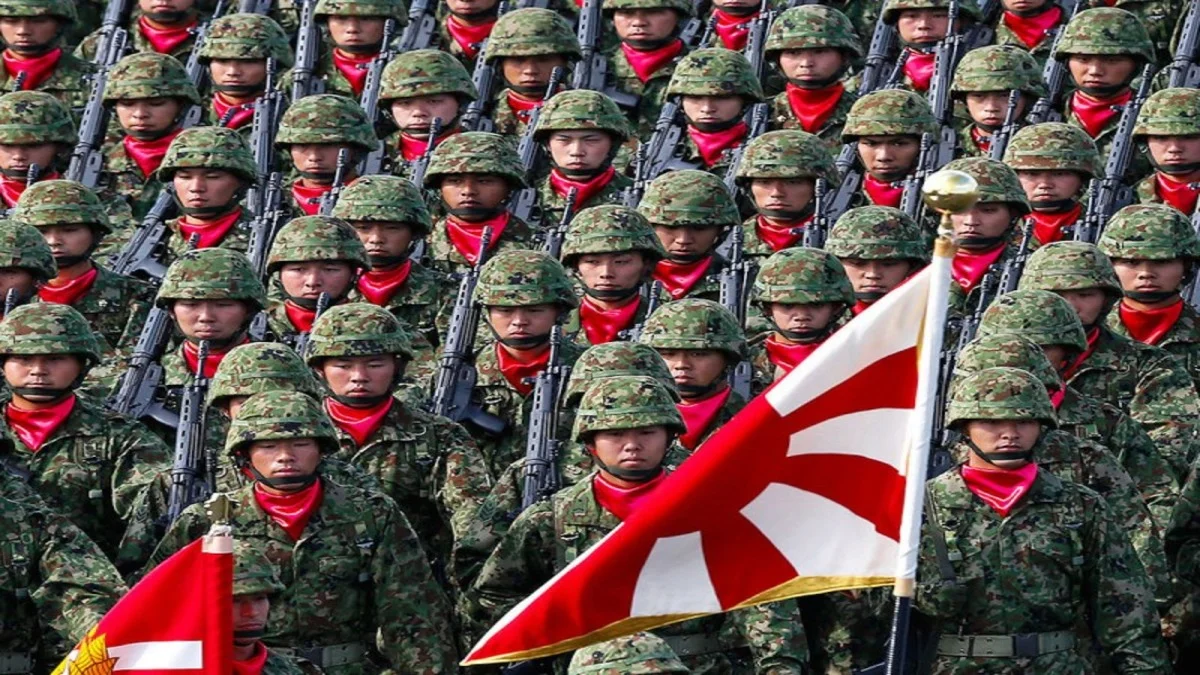
As the world navigates through the Trumpian era of global volatility, nations have initiated a process of internal restructuring to weather the shifting geopolitical tides. Consequently, Japan is undergoing one of the most consequential transformations in its post-war history. For decades, Tokyo adhered to a pacifist security doctrine shaped by the legacy of World War II and anchored in its alliance with the United States. However, China’s military expansionism, growing tensions in the East China Sea and uncertainty over American security guarantees have prompted a genuine reassessment of Japan’s defence posture. In response, Japan has initiated its comprehensive programme of military modernisation, defence industrial revitalisation, and strategic partnership-building aimed at enhancing its ability to deter emerging threats. This shift from post-war pacifism towards a more proactive security role is reshaping the Indo-Pacific balance of power while paving new opportunities for India to deepen security cooperation with Japan.
FROM PACIFISM TO PREPAREDNESS: RETURN OF JAPAN’S HARD POWER
One lesson that the world took note of from the series of recent conflicts is the re-emergence of military hard power in the security policy calculus. The recent capture of President Maduro or the ongoing Iran and Ukraine crises reiterated the age-old adage that might makes right. Japan picked all the right cues and recognised the fact that it couldn’t outsource its security and had to rebuild its hard power. This realisation was reflected in Japan’s 2022 National Security Strategy, which identified China as its greatest strategic challenge. Furthermore, to bolster its capabilities, Japan announced it would increase its defence spending to 2% of GDP by 2027. This hike will support the acquisition of over 140 F-35 fighters, the modification of helicopter carriers into aircraft carriers, and militarising islands stretching towards Taiwan.
Japan has shifted from a defensive to an offensive military outlook. Tokyo is now focusing on long-range cruise missiles, air defence systems, and rapid deployment forces. Through these deployments, Japan aims to counter China’s military activities around the East China Sea and Taiwan. To protect its critical infrastructure, Japan has established dedicated cyber defence units, space operation units and electronic warfare capabilities. For decades, Japan banned arms exports; however, with recent reforms, Japan has allowed the export of offensive defence equipment. The recent deal for the sale of 11 Mogami-class Japanese frigates to the Royal Australian Navy is a testament to Japan’s renewed defence outlook. Expansion of security partnerships beyond america is another key focus for Japanese policymakers. While the U.S.-Japan alliance remains central, Japan has expanded defence ties with India, Australia, South Korea, etc. This cooperation includes joint military exercises, intelligence sharing, technology transfers and reciprocal access agreements.
UNDERSTANDING JAPAN’S REARMAMENT: KEY DRIVERS
Japan’s plan for rearmament isn’t a new phenomenon but rather a well-calibrated, long-drawn work in progress. Former Prime Minister Shinzo Abe laid the foundation for this policy shift by advocating a more proactive military posture. In 2014, his government reinterpreted Article 9 to permit collective self-defense, enabling Japan to assist allies under attack even when Japan itself is not directly targeted. In 2015, Japan passed security legislation implementing this reinterpretation. This significantly expanded the role of the Japan Self-Defense Forces (JSDF). What started as a mere legislative interpretation has now culminated into a holistic strategic program. Current PM Takaichi’s recent decision of export relaxation on offensive military equipment is seen as a continuation of this shift.

However, it’s important to note Japan’s rearmament drive isn’t about being a hegemon or completely abandoning pacifism. Tokyo’s policy shift is more about seeking military expansion for its own sake. China’s belligerence in the East China Sea trying to breach First island chain and its claims over Senkaku Island, coupled with North Korea’s frequent nuclear missile launches over Japan, have reinforced Japan’s perception of vulnerability. This vulnerability was further accentuated by Trump’s ambiguity over Taiwan security and overstretching of US forces in Ukraine and the Middle East. The combination of these factors and uncertainty about the future international order has convinced Tokyo that maintaining peace now requires stronger military capabilities. This explains why Japan’s current strategy is often described not as a rejection of pacifism, but as a transition from “pacifism through restraint” to “pacifism through deterrence.”
LEVERAGING JAPAN’S STRATEGIC SHIFT: OPPORTUNITIES FOR INDIA
India and Japan have a lot in common when it comes to their strategic objectives. Both face threats from China, both are undertaking defence modernisation programmes, and both seek to achieve greater supply-chain resilience. This convergence of interests opens a wide window of opportunities for both nations to collaborate in achieving their shared goals. Fortunately, India and Japan are already collaborating through joint forums like the Indo-Japan 2+2 dialogue and also partake in joint defence exercises. For India, Japan offers advance military technology, investment in deep-tech and a reliable partner. A recent offer from Japan to share advanced Mogami frigate technology is one such example. For Japan, India offers geographic depth, military scale, and a strong presence in the Indian Ocean. Together, the two democracies can contribute to a more stable Indo-Pacific by strengthening deterrence, securing critical sea lanes, enhancing technological resilience, and balancing regional power dynamics.

CONCLUSION
Japan’s strategic awakening reflects the profound changes unfolding across Asia. The nation that once defined itself through post-war restraint is now carefully rebuilding the instruments of national power, not out of ambition, but out of necessity. As China’s rise reshapes the regional landscape and global uncertainties multiply, Tokyo has concluded that peace can no longer rest solely on historical arrangements. For India, Japan’s transformation offers both a valuable partner and a strategic lesson: resilience in an uncertain world requires preparation, partnerships, and long-term vision. As the Indo-Pacific enters an era of heightened geopolitical competition, New Delhi and Tokyo are forging one of the region’s most consequential strategic partnerships, driven by a shared understanding of the challenges and opportunities that lie ahead.
