

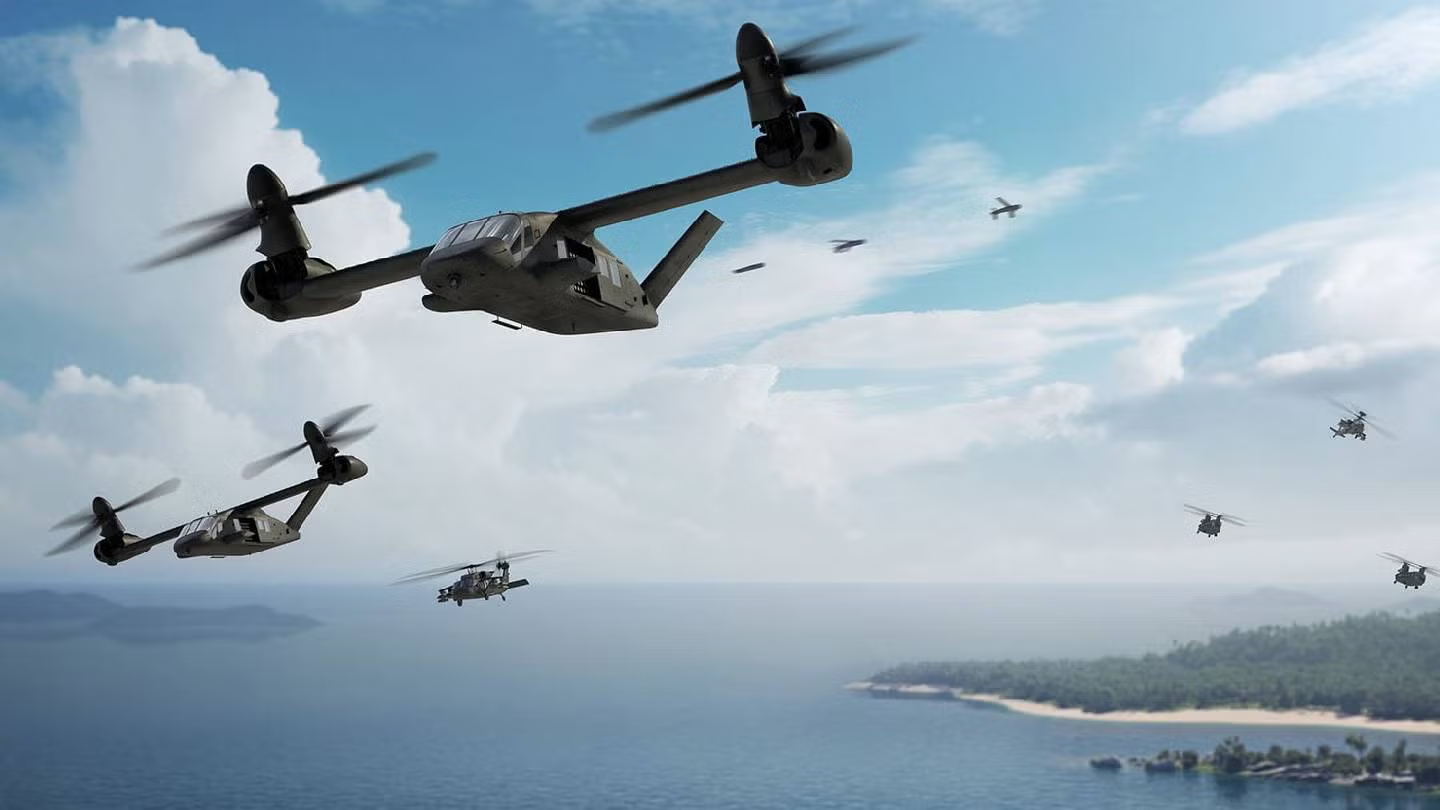
Collins Aerospace, part of RTX, received several contracts from Bell Textron to supply five primary systems for the US Army’s Future Long Range Assault Aircraft (FLRAA), designated as the MV-75.
The selection of Collins Aerospace is part of the US Army’s ongoing modernisation programme for vertical lift aircraft, which aims to equip both the Army and US Special Operations Command with next-generation tactical assault and utility capabilities.

Discover B2B Marketing That Performs
Combine business intelligence and editorial excellence to reach engaged professionals across 36 leading media platforms.
Under the agreement, Collins Aerospace will deliver main power generation, interconnect drive, SmartProbe air data, cockpit seating, and ice protection systems for the aircraft.
The company will provide some of these solutions through commercial acquisition channels.
Work will take place across several US states, including Colorado, Illinois, Iowa, Minnesota, New York, Ohio, and West Virginia.
Collins Aerospace president Troy Brunk said: “The Army’s new generation of rotorcraft needs to fly farther and faster, and we’re committed to helping Bell accelerate delivery of that advanced performance with Collins’ military-grade commercial technology.
“We have ready-now manufacturing and service capabilities around the globe to ensure the Army can urgently deliver, modernize and sustain the MV-75 FLRAA for the next 50 years.”
The US Army launched the FLRAA programme in 2019 as part of its wider Future Vertical Lift modernisation effort, with the objective of replacing part of its existing assault and utility helicopter fleet.
In May last year, the Army formally assigned the MV-75 designation as the mission design series for the programme.
The initial prototype is set to be designated YMV-75A, following established military aircraft naming conventions.
The FLRAA will provide combat aviation brigades and special operations aviation units with a long-range, high-speed platform that can function in contested environments. It will operate alongside the Army’s existing UH-60 Black Hawk helicopters.
According to programme details, the FLRAA is designed to achieve double the speed and range of existing Army helicopters.
The platform utilises digital engineering and a modular open systems architecture, which supports rapid and cost-effective future upgrades in response to evolving mission requirements.

