

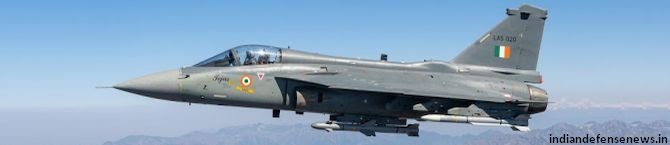
The Defence Ministry has indicated that between 18 and 24 TEJAS MK-1A fighter jets could be ready by the end of this year, marking a significant step forward in India’s indigenous combat aircraft program.
Sources cited by ANI revealed that Defence Minister Rajnath Singh recently reviewed the Light Combat Aircraft (LCA) program and assessed its progress.
At present, six MK-1A aircraft equipped with engines are ready, while the target of 18 to 24 aircraft by year-end depends on Hindustan Aeronautics Limited (HAL) meeting the remaining Air Staff Qualitative Requirements (ASQRs).
Officials expressed optimism that the outstanding requirements would be addressed later this year, though they cautioned that delays could attract penalties, with HAL directed to adhere strictly to prescribed timelines.
The program has faced setbacks due to delays in the supply of GE F414 engines from the United States, which slowed production schedules.
Despite this, several milestones have already been achieved under the indigenous initiative, and the Defence Ministry remains hopeful that HAL will overcome the remaining challenges.
HAL currently maintains a production capacity of 24 aircraft annually, but with 180 MK-1A jets ordered by the Indian Air Force (IAF) under two contracts, the scale of the task is considerable.
The first contract, signed in February 2021, covered 83 aircraft, including 73 fighters and 10 trainers, while a second order for 97 additional aircraft was placed in September 2025 at a cost exceeding ₹62,370 crore. At the current rate, deliveries are expected to take more than seven years, with full induction projected by around 2033.
The TEJAS MK-1A is a 4.5-generation, single-engine, multi-role fighter designed to replace the IAF’s retired MiG-21 fleet and bolster squadron strength.
It introduces key upgrades over the earlier MK-1 variant, including an Active Electronically Scanned Array (AESA) radar, an indigenous electronic warfare suite, air-to-air refuelling capability and improved maintenance systems.
Indigenous content exceeds 64%, with 67 additional Indian-origin components integrated into the platform.
The AESA radar enhances detection and tracking, enabling simultaneous air-to-air and air-to-ground engagements, while the electronic warfare suite improves survivability through threat detection and jamming. Improved maintainability is achieved through Line Replaceable Units and advanced diagnostic systems, reducing turnaround times.
Operationally, the MK-1A is capable of carrying a wide range of weapons, including beyond-visual-range missiles, close-combat missiles, precision-guided bombs, laser-guided munitions and anti-ship missiles.
It also features a 23 mm internal cannon and multiple hard-points for weapons and external fuel tanks.
The IAF currently operates 40 TEJAS MK-1 aircraft in Initial Operational Clearance (IOC) and Final Operational Clearance (FOC) configurations, and the induction of 180 MK-1A aircraft is expected to form a critical component of India’s fighter fleet until more advanced platforms such as the TEJAS MK-2 and the Advanced Medium Combat Aircraft (AMCA) enter service.
In a separate development, the Defence Ministry has outlined plans under the Great Nicobar Islands development project, which involves an investment of ₹13,000 crore for the construction of an airport and runway designed for dual use by the Indian Navy and civilian operations.
The project is expected to be completed within five years, with funding shared between the Defence Ministry and the Ministry of Civil Aviation.
This initiative underscores India’s broader strategy of strengthening military infrastructure while simultaneously supporting civilian connectivity in strategically important regions.
TOI
